Anarchism, Again
Josep Rafanell i Orra
In December of 2025, a new journal appeared in France entitled À bas bruits [Under the Radar]. In the opening article of its first issue, Josep Rafanell i Orra argues that anarchism has always functioned as an escape route for communities fleeing the iron cage of society. Among the many competing conceptions of what an anarchist politics today could or should look like, Rafanell’s stance is anti-social, yet non-nihilist. On the one hand, he rejects as internalized domination any affirmation of the social identities thrust upon us by commodity society and the state. This rejection demands that we abandon any quest for hegemony within the so-called public sphere, which always devolves into a sad clamoring over credit within today’s “reputation economy.” It also entails a refusal of any model of organizing premised on the noisy self-promotion of entrepreneurs masquerading as political avant-guards. The light of the Spectacle only blinds, and never clarifies. This negativist posture is, however, counterbalanced by the author’s insistent affirmation of the experience of community, which he sees as overlapping worlds in a process of becoming. Offering the example of a longstanding experimental mutual aid project in a proletarian neighborhood of Paris, Rafanell envisions self-organization as the elaboration of insurgent environments and territories operating in the opaque zones of everyday life, whose mode of existence involves a continuous detachment from the policed premises of metropolitan society. Even in a major French city, he argues, anarchic forms are not primarily social in nature, but cosmological: what is in question is a tissue of attachments, practices of sharing and reciprocal encounter that give a common form to their environment, while remaining nonidentical with themselves. If there are ungovernable futures that lie ahead for us, insurrections still to come, they emerge from this "patchwork" of conflictual practices and bonds that inhabited cities foster. Rather than struggling for control over a hostile public sphere, which only destroys the spaces of community that matter the most, Rafanell calls us to produce an "archive of communal forms," a cartography of divergent, migratory potentials within the uncertain contours of everyday life. It is here that the ethical and the practical reunite, allowing mutual aid to engender combative conspiracies.
Other languages: Français, Español
Let's start at the beginning — which is to say, from the middle. Take, for example, a neighborhood marked by exile, migration, and transience: early in the morning at the Jardin d'Éole in Paris’s 18th arrondissement, a plot of land fenced off by local authorities to prevent exhausted migrants — condemned to wandering the streets — from settling there, a space bordered by an urban farm with a handful of sheep to add an eco-friendly touch to this neighborhood where exiles loiter, but also crackheads wandering like zombies, both groups harassed by police evictions. There's also an annex to the Théâtre de la Villette, barricaded behind wire-mesh walls plastered with portraits purporting to represent "the neighborhood’s diversity,” a clumsy attempt to convey the cultural facility's integration into this working-class area. It's here, inside yet another fence, that migrants gather for breakfast. There stands a heavy Algeco prefab unit, its ugliness concealed as best as possible by a coat of paint. Inside, shelves are stocked with foodstuffs, hygiene products, along with a sink and a worktop with an electric hotplate. And then there's Latifa, in her fifties, in front of a large cooking pot, overseeing the meal preparation, surrounded by others preparing the breakfasts that will be served this morning. Outside, in the bitter February cold, under an insistent drizzle of rain, a group of Afghans are busy setting up tents under which the food distribution will take place. Young men and women from the neighborhood, members of various collectives, some traveling from a fair distance away, set about arranging the food, fruit, and thermoses of coffee and tea on the tables, donated by nearby businesses. The meal is served, and conversations begin among this small crowd of migrants, squatters, and volunteers. Someone turns on the speaker on their cell phone, and music from other worlds inspires a few impromptu dances. This has been going on for nearly a decade. A whole constellation of connections has taken root, built upon the palimpsest of the neighborhood's history, its struggles and solidarity, its tradition of mutual aid. But there remains a troubling asymmetry, the terrible risk of instituting the abjection of a charity system.
“The life of a neighborhood that remains vital consists of ‘influence peddling,’” as Isaac Joseph cleverly remarks in the preface to Ulf Hannerz's Exploring the City. It’s a composition of determinations that thwart preestablished social repertoires. Forms of community made breathable by the figure of the stranger, inscribed in the interstices of existential geographies. Ungovernable futures emerge from this stubborn weaving that forms a patchwork of relationships, affections, bonds, places, practices, forms of survival, conflicts, mutual aid and attentions — from which the shifting regimes of sensibility that make up the texture of an inhabited city emerge. There are always potential counter-cartographies that silently resist the suffocation of administered and policed space. And there lie new forms of knowledge that our investigations can bring to light, if we cross the thresholds between disparate worlds. Knowledge that’s not about identities and their representations, but about modes of experiencing existence, where attachments and interdependencies form despite adversity. And where, sometimes, suddenly, an uprising bursts forth with brilliance.
If we speak of knowledge here, it’s a migratory knowledge that is in question.1 The kind that emerges within constantly shifting borders: a "mosaic of small worlds," where the transitions from one world to another unravel the social totality. A “society of societies," as Landauer put it; the resurgence of the community that slumbers within the enclosures of the social body, with its assignments and its subjects. It is the pornography of representation that is thus conjured. It is the imagination that is thus revitalized. For what is imagination, if not the experience of becoming-other, of metamorphoses, undoing identity to and for oneself, when we encounter those who make us strangers to ourselves? What an inestimable advantage it is to be able to become strangers in this world, overrun as it is by the frenzied proliferation of connections between atomized selves, where the overexposure of images rests on the negation of presence, annihilating the experience of sharing that brings spaces of community into being, the ethopoïetics of living worlds.
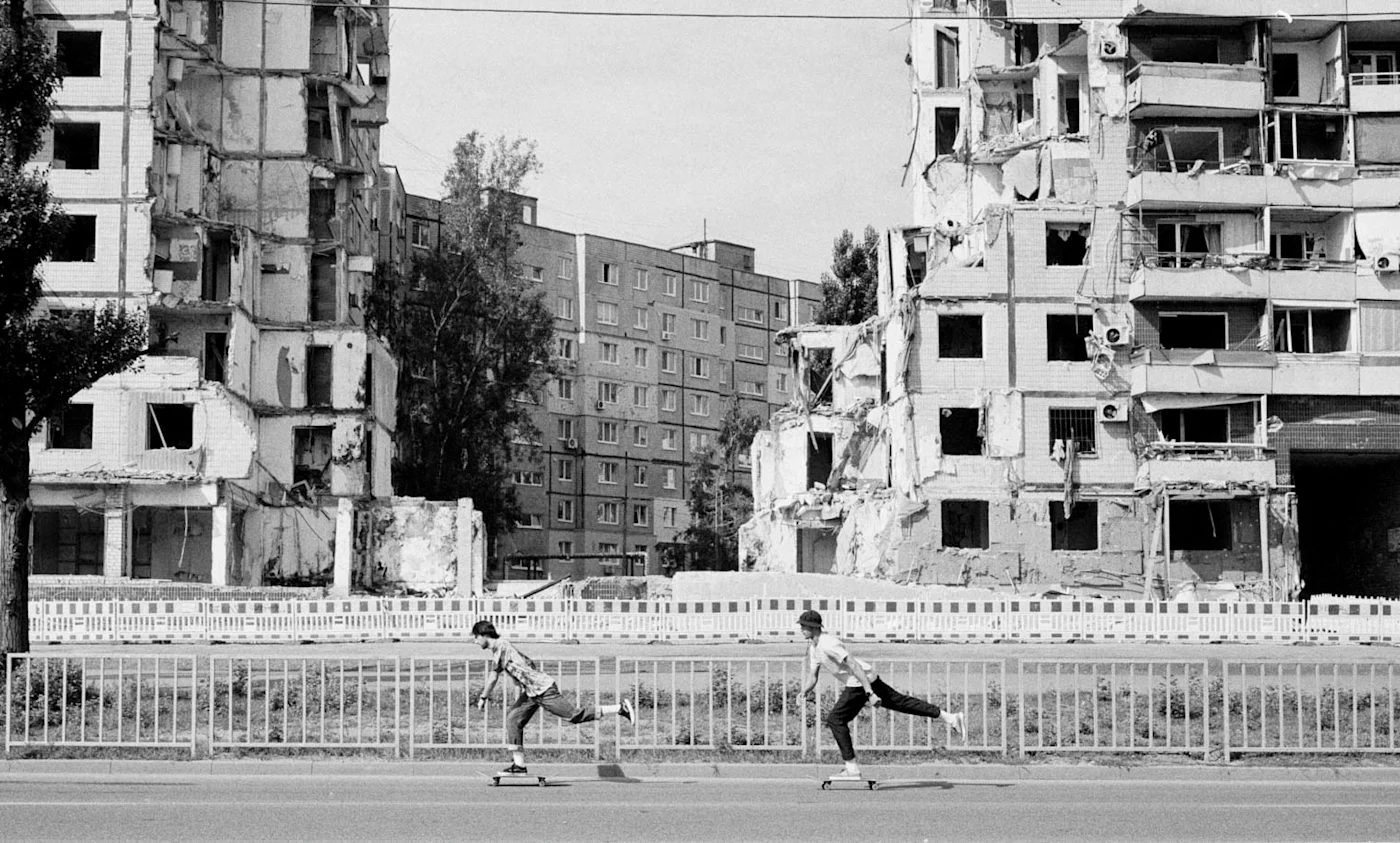
In these worlds still taking form, if we choose to engage with them, it’s always a matter of bringing them to life — a place where we can forge a soul through encounters with other souls. But to do so, we must twist free from the detestable familiarity imposed by representation, which hinders the becoming of what we are not yet.
To avoid ceding our world to representable subjects, we must break loose from the clutches of identity. Disidentification becomes the condition for a community in which we can become an “ambulant people of relayers,” as Deleuze and Guattari put it.2
Deleuze and Guattari also warn us: when thought draws its form from the model of the state, it remains captive to the two poles of the foundation of its sovereignty — poles that might appear to be in tension, but are in fact complementary: mythos, the archaic foundation that operates through magical capture; and the pact or contract between "reasonable people," that is, those subject to the rationality of the state ("always obey, for the more you obey, the more you will be masters..."). This is a kind of fascism that lies dormant. Yet neither pole can exist without an "outside" traversed by nomadic thoughts that disperse the two universals: that of totalization as the horizon of being, and that of the Subject as the condition for subjugation (or the "being-for-us" of the social contract).
But there are also other beginnings to be found, the emergence of other times that drift off course. Such was the case with the Yellow Vests uprising, during the hundreds of blockades across France. Those moments when countless occupied roundabouts became wild assemblies where people gathered, shared stories, built narratives and shelters, aided one another, and hatched conspiracies.
December 1, 2018: as in the weeks before and after, tens of thousands of people descend upon the capital's affluent neighborhoods. By early morning, a myriad of gatherings formed. The same was true in dozens of other cities, with no organization having issued any instructions other than a surge of haphazard calls that spread like wildfire. The Champs-Élysées drew jubilant crowds. Luxury stores are looted; burning barricades punctuate the unplanned wanderings. At times people stroll, other times racing frantically, facing or fleeing police charges amid air saturated with tear gas and the deafening explosion of stun grenades and flash-ball rounds. People chat, tell stories, sing, shout; jokes fly; thousands of graffitis offer a visual record of this tidal wave. The Arc de Triomphe is ransacked. Elsewhere, everywhere, buildings are attacked, set on fire, looted: prefectures, toll booths, gendarmerie stations, stores and supermarkets... During this insurrectionary movement, which lasted several months, tens of thousands of rounds of ammunition were fired at protesters and rioters. The number of people maimed by police weapons steadily rose. In Marseille, Zineb Redouane, an 80-year-old woman, was killed by CRS officers3 when a grenade struck her in the face. Since then, as we know, the embers have not gone out; the riot lies dormant. It could flare up at any moment, as it did in the summer of 2023 following the police murder of Nahel Merzouk. Or in New Caledonia, where a recent uprising resulted in the murder of at least ten Kanaks.
Neo-fascism. Liberal-fascism. Capitalo-fascism. Techno-feudalism. Cyberfascism... The semantic field keeps expanding, as it struggles to respond to growing disbelief concerning the upheavals plunging our world into a monstrous cacophony, and the sensational stunts and brutal eccentricity of the figureheads who reign supreme on the stages of power. There are, of course, national atavisms that give these new fascisms their unique character; but the fact remains that the logics of destruction, on every latitude, carry with them forms of homogenization — a new contract, neatly summarized by the word "occupation.” The absolute occupation of the Earth by commodities destroys the many singular ways of inhabiting it; but so does the occupation of souls, which turns them into beings preoccupied with themselves, captive to a mad restlessness.
There's no doubt that our epoch is adept at prolonging its terminal phase. In the liberal world, the social contract has been hacked by socio-technical mechanisms, while the neo-Nazis at the helm attempt to revive a phantasmal archē. The international legal order has become the mop with which we no longer even bother to clean the floor where the slaughtered lie. The old coordinates of political discourse, the orderly conventions of the public communication regime are collapsing. Have we not heard that the Gaza Strip, transformed into a field of ruins by heavily armed psychopaths, after the tens of thousands of people massacred, after the impending deportation of its inhabitants, could be transformed into an amusement park, a new investment plan for a deranged planetary bourgeoisie?
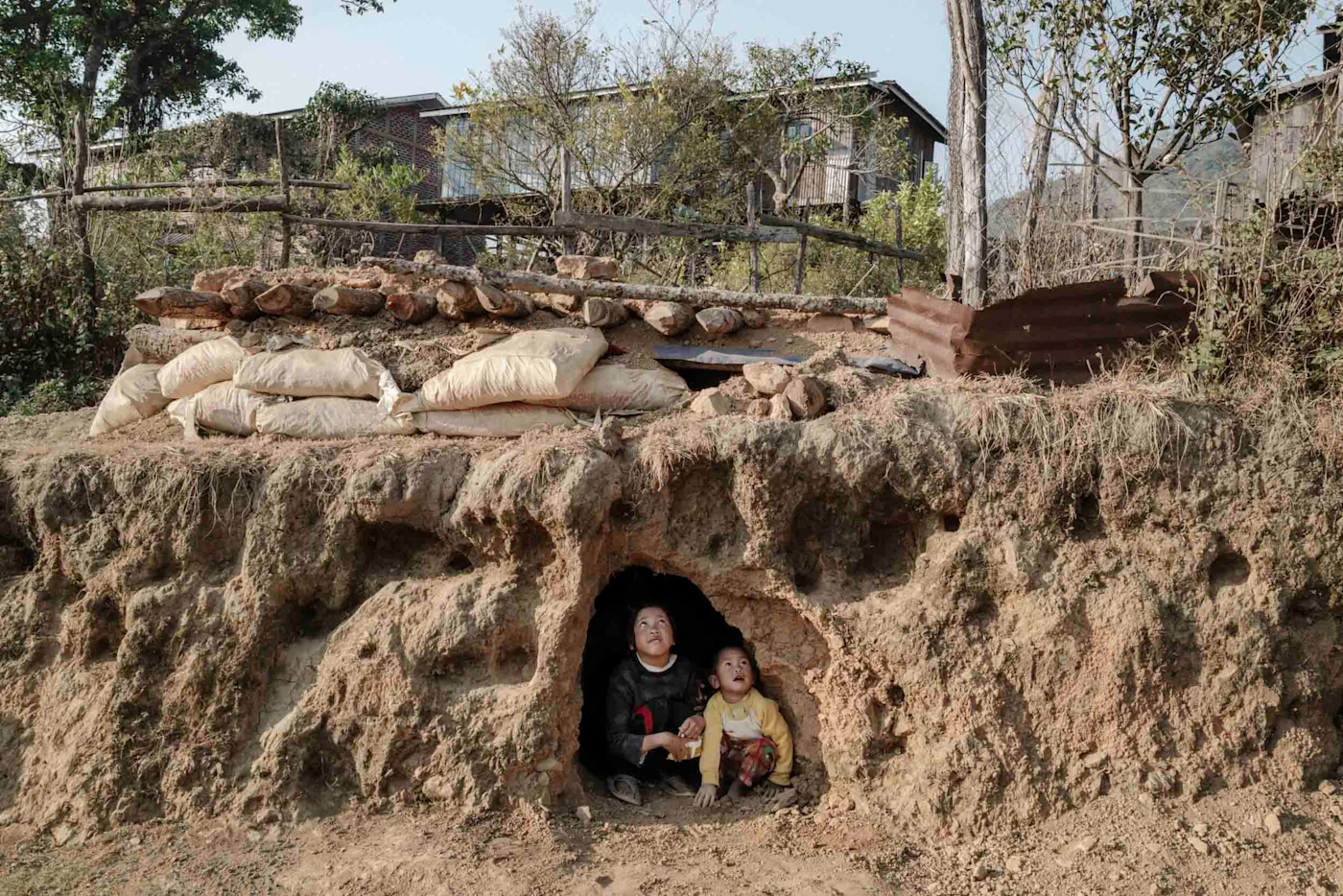
Masses of atomized people are falling prey to identity-based consolidations across the globalized world. Even the French Socialist Party, never one to shy away from disgrace, not long ago proposed to debate the identity of the French people. The old antagonisms, driven by a class-based subject and capable of instituting divisions, have evaporated; this, despite the self-proclaimed emancipators who wriggle around in their media jars, stubbornly imposing their fantasized narratives upon a devastated social landscape in a desperate attempt to remain relevant. But in the game of propaganda, cybernetic fascism will always have the upper hand, from here on out. A word to neo-leftists: it's a lost cause to try to compete with Elon Musk and his cronies in the flashy terrain of representation, via digital platforms, the new demented polis where recognitive processes play out, absorbed by the predatory logics of a reputation market.
It might be that the political arena always carried within it the seeds of its own decay. That the Greek polis was, from its very origins, haunted by predators — those "programmed citizens," as Marcel Detienne tells us in The Gods of Orpheus, "trained to kill one another around their bloody altars." Today, the demos, with its sacrificial altars, unfolds behind a mesmerizing touchscreen in the mad rush for followers, in practices of seduction that perforate fragments of public space, that purport to be political but ultimately do nothing but contribute to a universal isolation. An absolutist realm of a politics of communication, a metapolitics that assassinates language and presence, with its zones of opacity. In their obsession with mimetic communication, the new leftists thus condemn themselves to abandoning the realms where the languages of the people, those of the community, unfold — "all that shadow, that sense of indeterminacy and nuance, that kind of thrill that can only be expressed in the language of the people and the language of the heart.”4 With all due respect to the neo-Bolshevik apparatchiks, community can only exist if it is pluralistic.
We must break free from the presentism imposed by governmentality, with its projections toward a future that is already present. The bankrupt projections of the decrepit and crumbling institutions of the State, the failures of planning, have been replaced by those of algorithmic machines that depopulate the world, transforming it into a monstrous trash heap where clichés pile sky high. We must break free from the prison of what is, to rediscover what differs. And in doing so, to venture into "the border of time that surrounds our presence, which overhangs it, and which indicates it in its otherness,” where untimely becomings are born that dispel the identity "in which we are pleased to look at ourselves."5
Forms of life become anarchic modes of existence when they cease to claim their foundation, when they refuse the deterministic chain of causes and effects and no longer take pleasure in the morbid circularity of their status as the dominated — in sum, when they confront their dispossession, and thus venture into the transitional zones of experience between beings, where what is proper to them — their relational properties — becomes singular, and where regions of sensibility are established during encounters that allow a multiplicity of times to be woven anew.
We need an archive of communal forms wherein ways of being intertwine, interdependencies that alone will enable us to escape the epoch of vectorized disaster. How can we make their legacy possible? How can we gather up the traces of things that were unable to take shape, of what might have been — building, where possible, upon the wake of what was, in order to rediscover its virtuality? To remain awake, despite the blindness induced by an excess of light projected onto the world, which makes us close our eyes. Jean-Christophe Bailly evokes these singular cartographies — partly erased, partly to come — that emerge when we look at a gaze. Here is where community is established: a "community of gazers" whose gazes bring fragments of the world into being, inviting us to cross boundaries — beginning with the boundaries of the self — and engage in the becoming of what we are not yet. As old as revolutionary thought itself, the world's untimely and radical plurality can resurface if we pay attention to it, if we take care of it. But these lines of plural time, with their bifurcations that bring singular living environments into being, are not simply given to us: they are to be created. It's this work, forever unfinished, that we call (once again) anarchism. A relation to the world, between beings, that draw neither an origin nor a commandment from any reason that precedes us. The actualization of revolutionary virtualities today, as it was in the past, depends upon gestures of desertion from what the machinery of government aims to consign us to: the identity of our status as subjects.
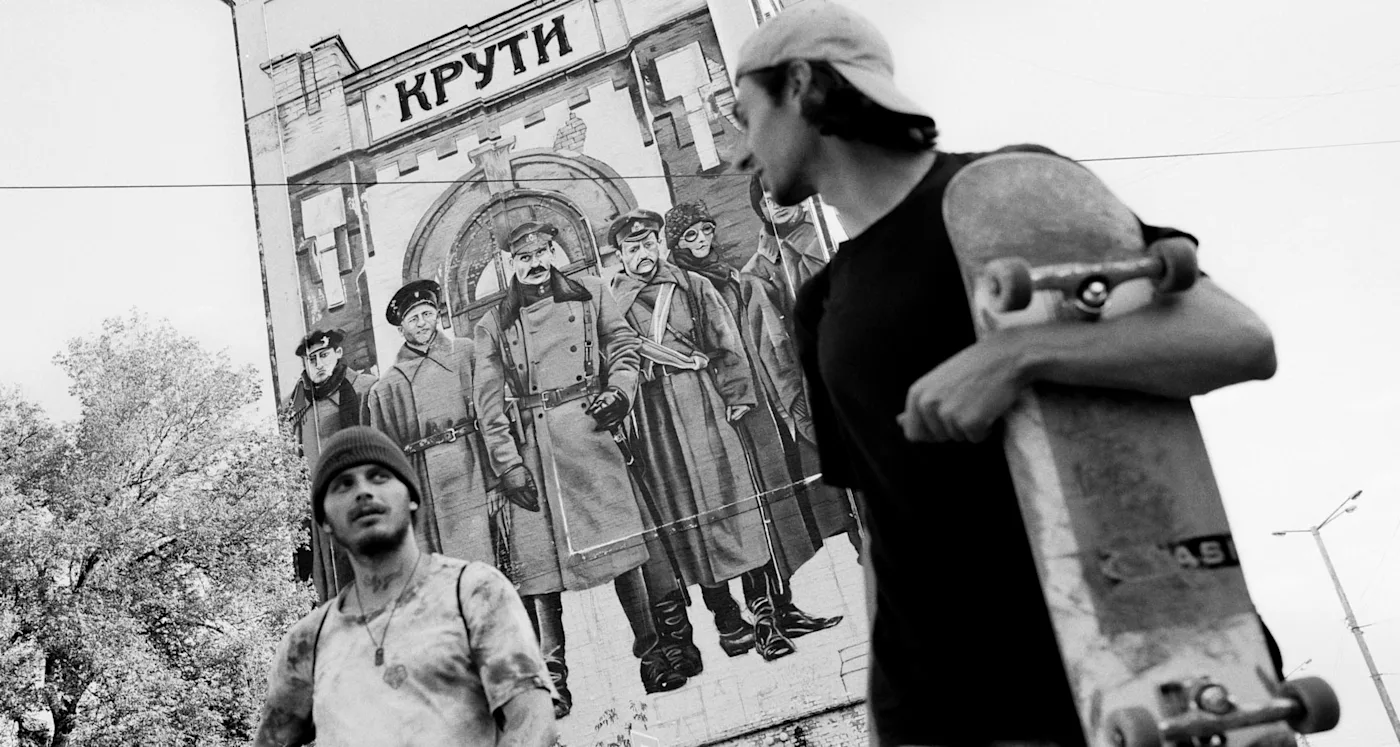
Resurgences and insurgencies once again begin to take shape. This has been the story of anarchism, whose eruptions have pierced the flow of time and ushered in new beginnings. But it is also the story of the slowness of communal forms, of transmission, of bonds created sparingly against the ruthless socialized brutality that tends only toward atomization and obedience. We must test out the means at our disposal to inherit this legacy, in an era where the Earth's habitability itself stands in danger. We affirm that anarchic forms of life will no longer be social. They will instead be cosmological: populated by an infinite variety of beings and environments. Inhabited by strangers and foreigners [des étrangers], emigrants who carry with them a plurality of worlds populated by forms of other-being that subvert the reproduction of the same. It's in the half-light of shadows, far from the clarity claimed by our representatives, with their catechisms and clichés, that new ways of relating, new sensibilities, are born.
My sense is that true struggles are always struggles with the shadow. There are no other struggles than the struggle with the shadow. Clichés abound. They are everywhere, in my head, within me.6
In 1919, the year Landauer was brutally murdered, Martin Buber, in an essay on community, recalled the words of Ferdinand Tönnies, invoked to acknowledge the death of culture — a culture that had succumbed to the combined effects of commodity exchange and state apparatuses, leading to industrialized massacres. But he also spoke of his hope: that of a new culture quietly blossoming from the scattered seeds of community — buried, but still alive. Here we are, once again: cultivating this quietness. The chatter about monumental social theories is over. We want nothing to do with the noisy scenes of the avant-garde that political entrepreneurs seek to resurrect. We want to cultivate attention toward the vulnerable experience of community that resides in ordinary, shifting worlds that cannot be represented. And it is in this experience, through presence, sharing, mutual aid, and pooling our resources, that we will bring to life places worth inhabiting.
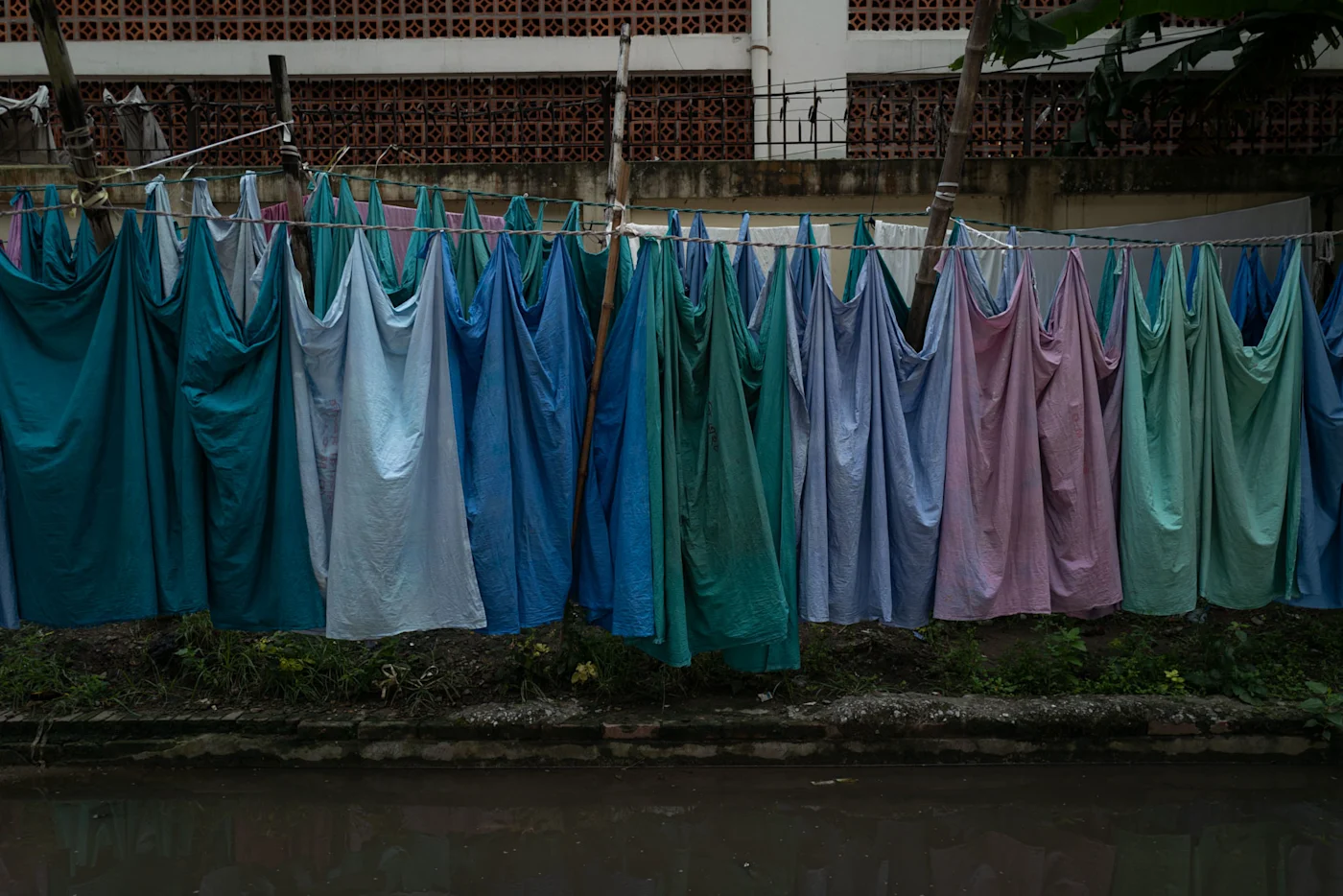
Community is not about exceptionalism; it is a web of connections that can be fully lived out only in ordinary worlds. But it is also about hospitality: welcoming the anomalous, the irregular, the foreign, and that which makes it different. How could we fail to notice the shared commitment that keeps an exhausted medical team going after a night spent in the emergency room of a hospital in Seine-Saint-Denis? Or the caregiver who, having fled a blood-soaked Haiti and after ten years of struggling to obtain her papers, cares for the elderly at the end of their lives in a nursing home run by a mafia that contributes to the CAC 40?7 Or to the child shattered by domestic violence who mobilizes a small crowd of social workers baffled by her strange trance-like seizures? Or to those eccentric madmen who wander the city, having escaped the clutches of the psychiatric system? Or to that Kabyle bar on the corner of a street in my neighborhood, where a silent old man, with long white hair and the air of a prophet, has found a place to live — a substitute for a psychiatric institution that would have confined him to his status as a schizophrenic, deadening him with antipsychotics?
We must bear witness to the worlds that allow us to begin "reclaiming our relationships" (Landauer), precisely so as to "seize hold of something external and foreign" (William James). We must pay attention to what diverges within the uncertain contours of everyday life: it is here that we find the migratory potentials that form the backdrop to insurrections.
It's not a matter of invoking a mystique of community, but rather the power of generative bonds in place of the social reproduction of atomized subjects. It's about convening hospitable communities, caring for vulnerability, and cultivating an attention to what makes them different — communities that flee and ward off the social cages into which we are meant to be confined. In anarchic landscapes, alliances can form without any condition of identity. Differences communicate with one another through differences of differences, as Deleuze says. "Crowned anarchies are substituted for the hierarchies of representation; nomadic distributions for the sedentary distributions of representation."8 Cultivating relationships with otherness means learning that others always have their own others. That our here will always have its own elsewheres, with their own elsewheres. And so on...
This is how open communities are born, rendering the world habitable.
Anarchy, however, is neither as easily achievable, nor as morally harsh, nor as clearly defined as these anarchists would have it. Only when anarchy becomes, for us, a dark, deep dream, not a vision attainable through concepts, can our ethics and our actions become one.9
First published in À bas bruit, December 1, 2025.
Translated from the French by Ill Will.
Images: Robin Tutenges
Notes
1. David Lapoujade, Fictions du pragmatisme, Minuit, 2008. ↰
2. Gilles Deleuze and Felix Guattari, “Treatise on Nomadology,” in A Thousand Plateaus, trans. Brian Massumi, Minnesota, 1987, 377: “The problem of the war machine is that of relaying, even with modest means, not that of the architectonic model or the monument. An ambulant people of relayers, rather than a model society.” ↰
3. [The CRS is the French riot police. —trans.]↰
4. Gustav Landauer, “Lernt kein Esperanto.” [In this case, we have translated the selected passage directly from the author’s French rendering in order to preserve its contextual meaning. The standard English rendering can be found in Landauer, “Do Not Learn Esperanto,” in Revolution and Other Writings: A Political Reader, edited and translated by G. Kohn, PM Press, 2010, 278. —trans.] ↰
5. Michel Foucault, The Archaeology of Knowledge, trans. A.M Sheridan Smith, Routledge, 1989, 147.↰
6. Gilles Deleuze, On Painting (Courses, March–June, 1981), translated by C.J. Stivale, Minnesota, 2025, 40. ↰
7. [CAC stands for Cotation Assistée en Continu, or "continuous assisted trading." It refers to automated trading system introduced when the Paris Bourse modernized in the 1980s. The “40” represents the forty largest publicly traded French companies by market capitalization. —trans.]↰
8. Gilles Deleuze, Difference and Repetition, trans. P. Patton, Columbia, 1994, 278.↰
9. Gustav Landauer, "Anarchic Thoughts on Anarchism," in Revolution and Other Writings, 91. ↰