The Revolution Nationalists Cannot Join
Nandita Sharma and Ralf Ruckus
In this conversation, Ralf Ruckus talks to Nandita Sharma, author of Home Rule: National Sovereignty and the Separation of Natives and Migrants (2020), about the emergence of nation states, the construction of the “migrant,” the role of left-wing nationalism in the failure of anti-imperialist struggles, and whether the No Borders movement points toward a revolutionary strategy for overcoming working-class divisions.
Ralf Ruckus: In a short 2019 text, “What is the Left Case for Open Borders?",you state: “We live in a world that is defined by two inter-related forces of domination: a globally operative capitalism and a world system of nation-states.”1 In your view, how did that relation between capitalism and the system of nation states evolve in historical perspective? In other words, what makes “nation” as an organizing factor relevant for the construction of the state in capitalism?
Nandita Sharma: The understanding that capital proceeds and is reproduced in part through the state is crucial for understanding what is wrong with nationalism. The national form of state power became crucial and important through a twofold process. The first nation states in the world arose in the Americas because of a struggle between two groups of elites, the elite in the imperial metropole and the elite in their colonies in the Americas. The elites in the colonies were able to marshal the popular support they needed to overthrow the empire’s control over the territory through nationalism. The nationalist idea that people in the colony were a unique, historically distinct group different from other people was crucial for their political success.
At the same time, nation states also arose in the aftermath of the abolition of slavery. Capital and the state both had learned that they could use racist agitation to divide the working class. Slavery would not have been possible had the working class not been divided by ideas of race. Some people were made white, other people were made black, and blackness was made a condition for enslavement. When capturing people as slaves was no longer politically legitimate, thanks to the abolitionist movement that made slavery anathema, capital wanted to secure another form of unfree labor. It began capturing people as indentured laborers and established the so-called “coolie” trade of people primarily from colonized places in Asia. In the process, the key attribute that differentiated workers became nationality or citizenship status.
Racism did not disappear when slavery was abolished, of course, it was reorganized into new shapes and remained a major dividing force for capital. For example, in the United States, the construction of the nation as white led to agitation to eliminate what white workers saw as competition, the labor force of people called “Chinese coolies.”
The idea of the nation and a national form of state power is perhaps the form of state power that so far most successfully conceals these practices of ruling. Because the nation stands for who the state is ruling for. People confuse themselves with the state itself. Rulers realized that nationalism was the glue that held “imagined communities” — a famous phrase of Benedict Anderson — together.2 The class organization of these societies supposedly no longer mattered. For nationalists, class was no longer a point of conflict but a point of collaboration.
Today, the fundamental relationship between capital and the nation-state is critical. The problem with the part of the left that remains nationalist is not only that it does not have a critique of nationalism, but that it does not have a critique of the state either.
Let us talk a bit more about the emergence of indentured labor. In the museum on overseas Chinese migration in Beijing, there is a section dedicated to “coolies,” or indentured laborers. Seven million people from China were made into “coolies,” a number that, combined with indentured labor from South Asia, approaches the scope of the transatlantic slave trade. The descriptions of indentured labor from China include kidnappings off the street and the enforcement of indentured labor. The Chinese word used for “coolie” was 猪仔 (zhu zai), which means “pig,” and this dehumanizing term brings it closer to slavery again. The women among the indentured laborers were called 猪花 (zhu hua), where zhu is pig and hua flower, a dehumanizing term combined with a sexist description.
You have claimed that, when slavery was abolished, indentured labor or “coolies” were brought in as a substitute supply of labor power for centers of capitalist production such as plantations or mines, and that this required the parallel development of border regimes restricting immigration. Could you elaborate on this emergence of immigration control measures or border regimes?
Radhika Mongia has done important historical work on the emergence of the first immigration controls in the British Empire.3 The British government abolished the slave trade in 1807, and began to end the labor relations of slavery in 1835. That is also the year the British Empire first enacted immigration controls. Sugar plantation owners were upset and concerned with how their plantations were going to remain profitable in the absence of the discipline that the institution of slavery imposed upon workers. They questioned how they could continue to capture workers and keep them in life-threatening working conditions if they were “free.”
The British government also had to contend with the success and ongoing organizing of the movement to abolish slavery. It could not reenact slavery with a different group of people, because that movement was watching. “Coolies” therefore were made to sign a contract of indenture that they needed to present at the port of entry, otherwise they would not be admitted.
Tellingly, the abolitionist movement in Britain, increasingly informed by a sort of moral reformism, declared coolieism a new form of “slavery,” but their solution was not the freeing of those made “coolies” but, instead, prohibiting them from freely moving out of British controlled parts of China or out of British India. Here, we see an example of how liberals, if not the left, were engaged in setting up new systems of domination.


Still, why were people signing contracts of indenture in order to be admitted to plantation economies? It was not “willingly,” but as a result of the coercion that is fundamental to capitalism. Whether it was people from China or British India, capitalism increasingly removed their access to land and expropriated any means of life other than wage labor. The economies they were coming from were ruined by colonialism. They had been impoverished, and they did not have any other options. That is why they signed contracts of indenture or mostly marked with an X, because they could not read or write.
For the British abolitionists of slavery, the solution was not to abolish capitalism, which had created the conditions in which new super-exploitable workforces were created. Instead, they strove to ensure these people did not move, but stayed in British India or in China. Here we already find this notion that removing people’s ability to move is somehow going to solve the problem. In this, it is not unlike today. Movement is crucial to life and can, indeed, be life-saving; yet then and now, liberals, and part of the left, argue for stasis and border controls. They are broadly unwilling to address the reasons that movement is life-saving, which would require addressing why not moving might be life-threatening.
Meanwhile, the impetus for capital was very clear. Immigration controls offered a new mechanism by which to create the conditions of labor exploitation that capital wants. The contract of indenture served as the world’s first immigration papers, and created an unfree labor force, one which was not free to change jobs or change geographical location within a certain state’s territory. It created a new and enormous power for the state to enforce the contract on behalf of the employer. If you left your contract early, you could be sent to prison at the behest of the courts of that state. This gave employers enormous authority over corporal punishment. “Coolies” were whipped or even killed by overseers to keep them doing what the plantation bosses wanted.
Immigration controls were another way of capturing people and imposing unfree conditions of labor and work discipline upon them — indeed, even the very condition of being able to sell one’s labor in order to live as such. However, at that early stage, in the mid-19th century, such controls, in comparison to today’s immigration controls, were not comprehensive. “Coolies” were subjected to immigration controls, but other people who were not “coolies” were still able to move around without immigration controls.
By the time we get to the period around WWI, in the early 20th century, this changes. Some major empires are collapsing or have already collapsed, including the Russian, Austro-Hungarian, and Ottoman empires. Nationalist ideologies were on the rise in Europe and the Americas, and states became more and more concerned about who was to be allowed in and who was not. After WWII, the rise of immigration controls unfolded in lockstep with the rise of anti-colonial or national liberation movements. These movements arose across Asia, Africa, the Middle East, and elsewhere.
By the 1960s, when most of the former colonies had become nation-states, each of them had immigration and citizenship controls. By then, the two biggest empires entering WWII — the British and the French — had crumbled, and both nationalized their state sovereignty by also enacting their first immigration controls. This cemented a world in which free mobility across state borders was no longer possible. From then on, a successive intensification of immigration controls took place that went hand in hand with the intensification and hardening of nationalism.
While liberals, as well as most people on the left, understand decolonization to have emerged exclusively as a result of national liberation struggles, you explain how breaking up the world-system of empires in fact aligned rather neatly with the interests of the ruling class of the new hegemonic power, namely, the United States. This point feels important for discussions on the left these days. Could you elaborate?
The rise of the world of nation-states is often credited to national liberation movements, and they have become synonymous with decolonization. This is a real travesty, because we are clearly not living in a decolonized world, or, at least, not a world of liberty.
First, it was not only those fighting for national sovereignty who were interested in establishing a world of nation-states. The United States was too. By the end of the 19th century, the United States had begun the process of nationalizing its state sovereignty. It enacted its first immigration controls in the late-19th century, and these have been intensified ever since. By this point, the U.S. was less interested in turning people from far-flung parts of the world into US citizens, and more interested in establishing a national form of state power. As a capitalist state, it wanted to rise and become the world’s hegemonic power, something that until the end of WWII was still impeded by the empires, particularly the British and the French.
These empires had closed imperial economies. For example, if a capitalist based in New York wanted to invest in British India, that was not easy, because the British Empire gave preferred access to capital to investors in the British Empire. In that way, capital from the US was shut out of a large part of the world.


The US government understood that turning former colonies into nation-states would give capital headquartered in the US greater access to resources, including the labor of people around the world. During WWII, the governments of Britain and France were in a weak negotiating position. Early on in the war, and long before the US officially entered WWII, France had already been occupied by Nazi Germany, while Britain was being bombarded during the “Blitz.” In 1941, US-President Franklin D. Roosevelt told Prime Minister Winston Churchill that the US had the money to buy more military equipment for Britain to defend its territories, but, in exchange, the British government had to declare that after the end of the war, it was going to grant the people in its colonies national self-determination.
Why did Roosevelt say that? Is it because the US was, according to its own oft-used rhetoric, “the bringer of freedom and democracy” to the rest of the planet? No, that claim was as false then as it is now. The US government wanted imperial markets to be opened up. The way to open them up was to turn those colonies into “independent” nation-states so that, when the US government or US capital came knocking on the door, either with contracts in hand or guns, those smaller nation-states — small in terms of power if not in geographical size — were not strong enough to tell the US to back off. Of course, after WWII, the USSR — a state capitalist society — also joined in the same game.
That was the essence of the new world order of nation-states after WWII. I honestly do not understand how this is not visible to people in those former colonies that are now nation-states, or to the left in the Rich World. How is it possible not to see what happened with national self-determination? National self-determination was trumpeted by the United Nations in its founding documents in 1949. “United Nations” is itself a term that President Roosevelt coined during WWII, and Bretton Woods institutions such as the World Bank and the International Monetary Fund were constructed, led, and dominated by the US precisely because national self-determination opened the world up for capital much more than it had been opened up during the age of the empires.
Instead of seeing this as the horror show that it was for the people that had to live through this, particularly in the former colonies, it is still seen as a form of liberation. There is some serious rethinking that needs to happen.
I think the dominating narrative, now and back then, includes that there was a material interest in getting rid of the colonial powers. And that dominating narrative is based especially on the histories of Russia 1917 or China 1949. Both cases followed Lenin’s and Stalin's concept of national liberation. Lenin coined the leftwing understanding of national self-determination, and later Stalin pushed through the concept of “socialism in one country” in the Soviet Union, and the Chinese Communist Party followed Stalin’s concept, too.
It is easy to see through this seventy or a hundred years later; but at the time, the main forces in the anti-colonial movements, including the intellectuals, actually believed that this was the way to liberation.
I am not as generous as you are. For example, I was born in India. My parents were born as British subjects of the colony of India. My grandparents were fighters in the anticolonial movement. I think it was very clear who was going to lead India after national independence, and it was not going to be the peasants or the workers. It was clearly an elite project. And the racism embedded in each national liberation project was part of this false hope that if someone is in the same so-called race as you, they are going to have your best interests in mind. For instance, being led by Nehru was going to be so much better than being led by the British king or queen. There is a fundamental racism that lies at the heart of these national liberation movements that, like every other form of racism, rests on a binary of Us and Them. The notion that “we” are the same race while “they” are another authorizes us to ignore the class divisions that form the basis of rule.
Ignoring the class basis of ruling enables that kind of ruling to continue, because we are not fighting the foundational reason for ruling. We know what happened to India when it was not ruled by the British Empire any longer, but by Indians. Life became much worse. The disparity between people in India is far greater now than it was under British imperialism. That is not an argument for the return of imperialism, of course; it is an argument against nationalism. Nationalism does not solve problems. India declared independence in 1947. It directly expropriated people’s lands for “development” projects and allowed capital to do the same. People’s labor was made available for exploitation. At the time, some people saw and understood what was happening — especially those left bereft of their land and impoverished: that a new set of rulers were in power. So how can it be that eighty years later, the rest of us can still not see this?
I agree, but I think there are differences between the various anticolonial movements, in this case between India and China. In China, many people in the 1930s and 1940s, including peasants and workers, as well as intellectuals and feminists, really believed that, after national liberation and the civil war, they would end up with a situation that is a lot better than before. In India in the late 1940s and early 1950s, what were people hoping for at that time? I agree with you on the final results of decolonization in these cases, but how strong was the hope for improvements through self-determination back then?
I am not trying to say that the people behind those revolutions did not believe that the revolution would result in something much better than what they were living in — and certainly much better than what they got. They had enormous dreams and hopes of liberation. And not all anticolonial movements came in a nationalist form. There is really a dearth of historical examination of those non-nationalist or even anti-nationalist liberation movements. We do not really know enough about what those looked like, what their demands were, and how they were defeated.


What I am trying to say is that I am not convinced that the leaders of those national liberation movements did not understand what they were doing by arguing for a nationalist version of liberation, rather than a different kind of liberation through anticolonial struggle. I do not think that someone like Nehru, despite all the rhetoric of socialism he employed, had any serious concern for the life of a peasant or the life of an impoverished waged worker in India.
As you say, in the 1960s and 1970s, nationalism and nation-states had become the worldwide norm. In those decades, a development started that was later called globalization, a period where supposedly the influence of the state was diminished and capital moved around the globe more unrestricted. According to the book The New International Division of Labor by Folker Fröbel, Jürgen Heinrichs, and Otto Kreye, originally published in the late 1970s, capital fled rising wages and intensified struggles in the “core” states and relocated to other regions of the world.4 Such relocations then triggered waves of labor migration towards new industrial centers, filling jobs in manufacturing, mining, agriculture, or domestic services. At the same time, border regimes were tightened again, both in terms of access restrictions and the militarization of borders.
I know you have been involved in the No Borders movement, which started in the 1990s. How do you explain the fact that migration controls continue to tighten further, with borders becoming increasingly militarized over the past few decades?
The increase of international migration starting in the 1980s corresponds exactly with the political maturation of neoliberalism. I would say that neoliberalism began already in the late 1960s but that it only became politically mature by the 1980s, as epitomized by Margaret Thatcher, prime minister of Britain, who said, with little objection, that “There is no alternative” to neoliberal austerity through the dismantling of the Rich World’s welfare and regulatory states.
Neoliberalism included the expansion of capital. More and more of people’s land was taken over or stolen by the state for development projects. A big part of small subsistence-scale agriculture was consolidated into large-scale capitalist agriculture. Rural economies across Asia and Africa were destroyed. The process of urbanization accelerated as people fled to cities. They went there to find wage labor, which was now their only means of survival, as they lost access to any alternatives. In the cities, they were still unable to earn the wage they needed to live. The increase of international migration in the 1980s was a rejection of neoliberalism. People were leaving states where they could no longer live.
As international migration was increasing, states around the world, and in particular in the Rich World, not only further restricted immigration, but further controlled what happened to people once they crossed the border. For example, many rich world states enacted policies that no longer gave most people crossing into their territories a lawful and permanent immigration or residency status. At best, they were issued a temporary status, which kept them more vulnerable as a workforce in the face of employers’ demands. States introduced more temporary work programs, which were essentially indentured labor programs. Migrant workers were not allowed to change their employer, and they have not been given access to permanent residency. At the same time, the state category of “undocumented migrant” grew. In places like the United States, the vast majority of people entering in any given year have been given no status at all. They have been made “illegal” and, therefore, rendered even more vulnerable to the demands of employers.
In the 1980s, the far right also rose again across the world. The fascist regimes in power today might have origins even before that, but the 1980s were an important period. These fascist forces were rising again precisely in defense of the nation. They claimed that the nation was being “overrun” either by people “who do not belong here” or by “foreign capital.” All of the problems in the world got bundled into this shadowy group called “foreigners.” The fascists claimed that everything would be fine if a “national” territory had its “national” workers and its “national” capital, and a strong nation-state that protected its “nationals.”
The left failed spectacularly in its analysis of, and response to, these processes. At the core of this failure is the idea that capital was “national.” This goes back to, for instance, Frantz Fanon and his warning in the 1950s of the “national bourgeoisie.” What about the “global bourgeoisie”? What about capitalism, which is not a “national” process but a global force under imperial states and later nation-states?
The failure of the left was that it did not deal with capital’s global operations and the power they have over individual nation-states. As capital became more expansive, touching more and more places and people, the left-wing political response was to shrink the political community that needed to respond to this. It was confined to the nation, which led to the question of who was a “real” member of the nation and which groups were being excluded. As capital expanded globally, politics were confined to this nationalist shell, and more and more people were declared to be non-members of the nation.
Let’s shift to the present moment. When we discuss nationalism, it is clear there is a history of the ruling classes’ interest in using nationalism to divide forms of social resistance or revolutionary activity. However, nationalism gets utilized not just from above, but also from below. From below, there is the short-sighted ambition to use nationalist and racist categories for what Beverly Silver called “boundary drawing.” While this plays a role in the American MAGA movement and rightwing movements elsewhere, it is not unique to the right, but also is found among certain leftwing mobilizations. I’d be interested in your take on this, and specifically on the rationality and motivation behind the use of nationalism from above and from below, and how they are connected.
What connects the two is anti-immigration politics. This is a politics that misidentifies the cause of many real problems as “the foreigner” and, in particular, “the migrant.” These politics suggest that if the migrant disappeared, all would be well again. People would have good jobs, health care, housing — all things migrants are apparently taking away from people.
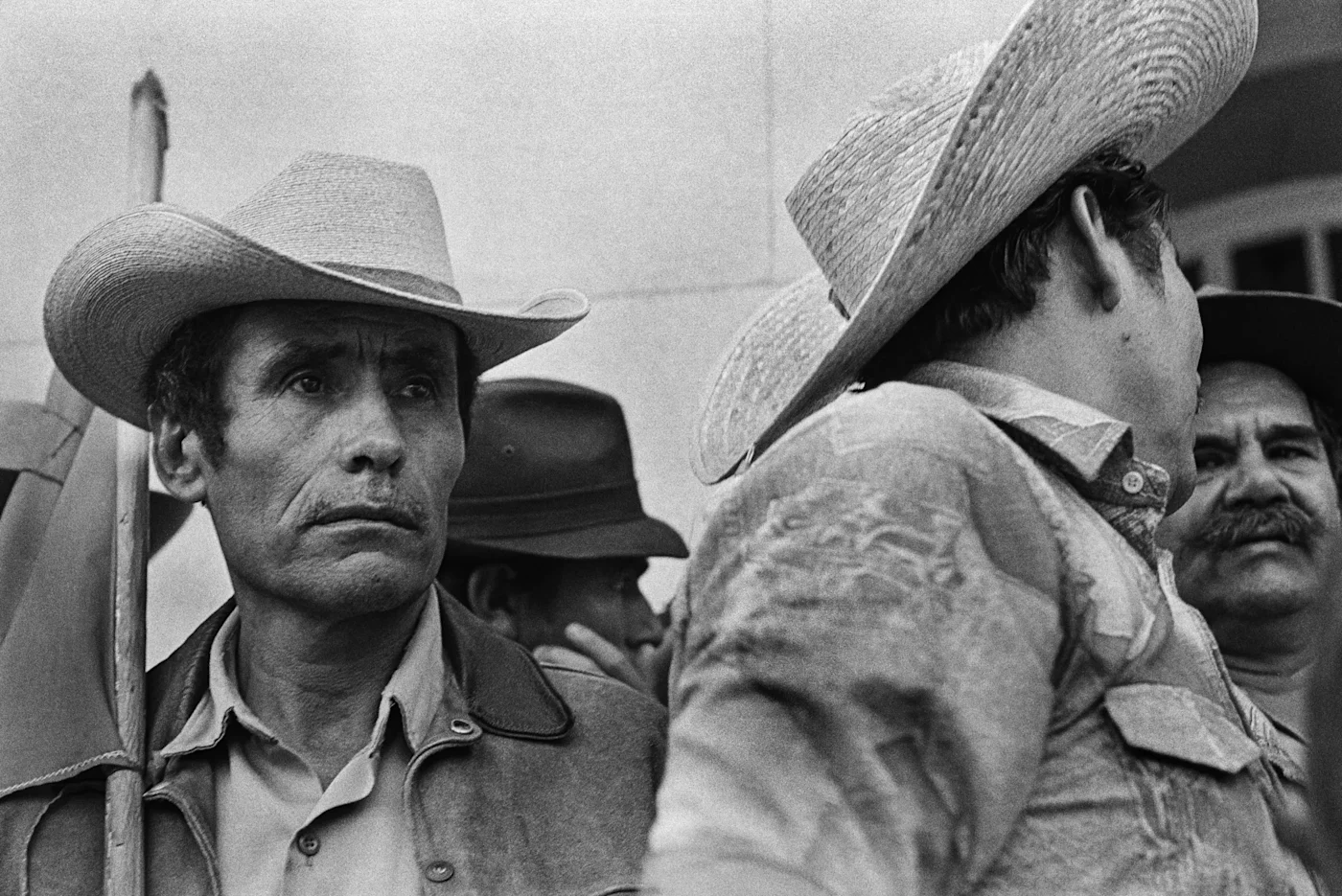
This phenomenon is found all across the world. In India, prime minister Narendra Modi is creating migrants out of people such as Muslims, Christians, or Sikhs. He demands that they prove that they are part of the Indian nation, and if they cannot produce the documents, they are denied Indian citizenship and become migrants or non-citizens under the law. We see similar developments in the US, where president Donald Trump is trying to transform people who were lawfully in the US into “illegal migrants.” The same kind of arguments is today found among far-right parties that are on the rise across Europe.
The hatred of migrants, their demonization and dehumanization, is what unites the two different politics. Yet the migrant is a creature of nation-states. It is a figure that is constructed by the immigration and citizenship laws of nation-states. When we talk about why we do not have good jobs, no good health care, no affordable housing, why we fail to take care of each other, more people point to the “migrant” than to the nation-state, or to the forces of global capital that have power over each and every nation-state.
At best, we might point to one government — as when people say that “Trump is bad, but we just need to wait until we get another person in power and everything will be much better.” But we mostly do not point to the structure of the nation-state itself, and how it is a part of how global capital operates. We can speak all day about the myths that anti-immigrant politics purport: it is not true, for example, that immigrants are more likely to be criminals, that they don’t contribute to the national economy, that they are not needed…and so on. We go on and on saying this to counter anti-immigrant rhetoric, but we rarely question why this category exists in the first place. Why is there a distinction made between citizens and migrants? And how does this distinction actually further the nationalist project and the project of capitalism? We are in this ideological trap where, until we can critique nationalism, we cannot see what is going on.
Even people who have stepped up and recently stood with “migrants” generally do not question the category of “citizen” that they might be placed in, or the category of “migrant” that people being terrorized are placed in. Instead, people generally mobilize the liberal tropes of “fairer immigration laws,” “greater access,” and so on. Very few can see that what we need is a dismantling of immigration regimes full stop. No Borders is the revolution nationalists cannot imagine joining.
In the context of the French Revolution in 1789, nationalism is often seen as a liberatory concept, a moment within a bourgeois revolution against what remained of the feudal order. The idea of a “good” nationalism unifying people, building a “modern” state where democracy becomes thinkable, still plays a role in explaining why the belief in nationalism remains so strong on the left. Without nation-states, capitalism could not function as it does today. But there is a contradiction here, as people still refer to liberation through the language of “self-determination,” which — at face value — sounds like a good concept.
When we look closely at the emergence of the idea of the nation, we find that even the earliest efforts to form a nation were attempts to form a cross-class alliance, to convince working people that their interests lay with the interests of the ruling class. So, I am not too sure about the liberatory notions embedded in nationalism.
There is a lot of rhetoric about the nation in connection with the French Revolution. But France did not become a nation-state after that revolution. It became an imperial state, an empire. We need to be careful to distinguish between the idea of the nation, the ideology of nationalism, and the actual nationalization of state sovereignty, when states become nation-states. We’ve had people believing they were “nations,” but the state they live in was not a nation-state.
I agree, but I think we need to reckon with the references that part of the left makes to nationalism as a purportedly liberatory notion. These references trace themselves back to those ideas, not to what actually happened. These positive references to the state as a structure that can help to bring about liberation — it’s a twisted concept, to be sure, but it remains powerful today in two of the largest leftwing currents, namely, social democracy and Marxism-Leninism. Both refer to nationalism and the state.
Even if people on the left acknowledge the way that postcolonial nation-states resulted in the installation of new forms of class rule, many still participate actively in the “Pro-Palestine Movement” and maintain the illusion that a Palestinian state would change things. They uphold the concept that any people deserve to have their own country. Palestine is just one example; Taiwan is another.
What can be done? In other interviews, you have stated that we should support cross-border solidarity and the No Borders movement. Fair enough, but that alone does not seem effective, because people go to No Borders actions but still speak out for a Palestinian nation-state. You have pointed out the fundamental connection between capitalism and the global system of nation-states. Politically, this means that we cannot be content to topple one state or another, but we have to topple them all together. What ideas do you have on this?
The fundamental barrier to calling for a world in which people could actually be free is the continued belief in nationalist politics. And, as you said, nationalist politics at their core are not only informed by racism, but they are, like the national liberation movements in Asia and Africa, also informed by a particular racist belief in “sameness.” It suggests that if we are all Palestinian, or Kashmiri, or Kurdish, or Hawaiian, peace and freedom would be possible, if not inevitable, once “we” are sovereign over “our nation” and its “national territories.” The “we” here is an exclusive one. After all, what is “Palestinian sovereignty” — or Kashmiri, Kurdish, or Hawaiian sovereignty — if the sovereign is not Palestinian or Kashmiri, Kurdish, or Hawaiian? The national form of governance relies on a racialized view of the sovereign.
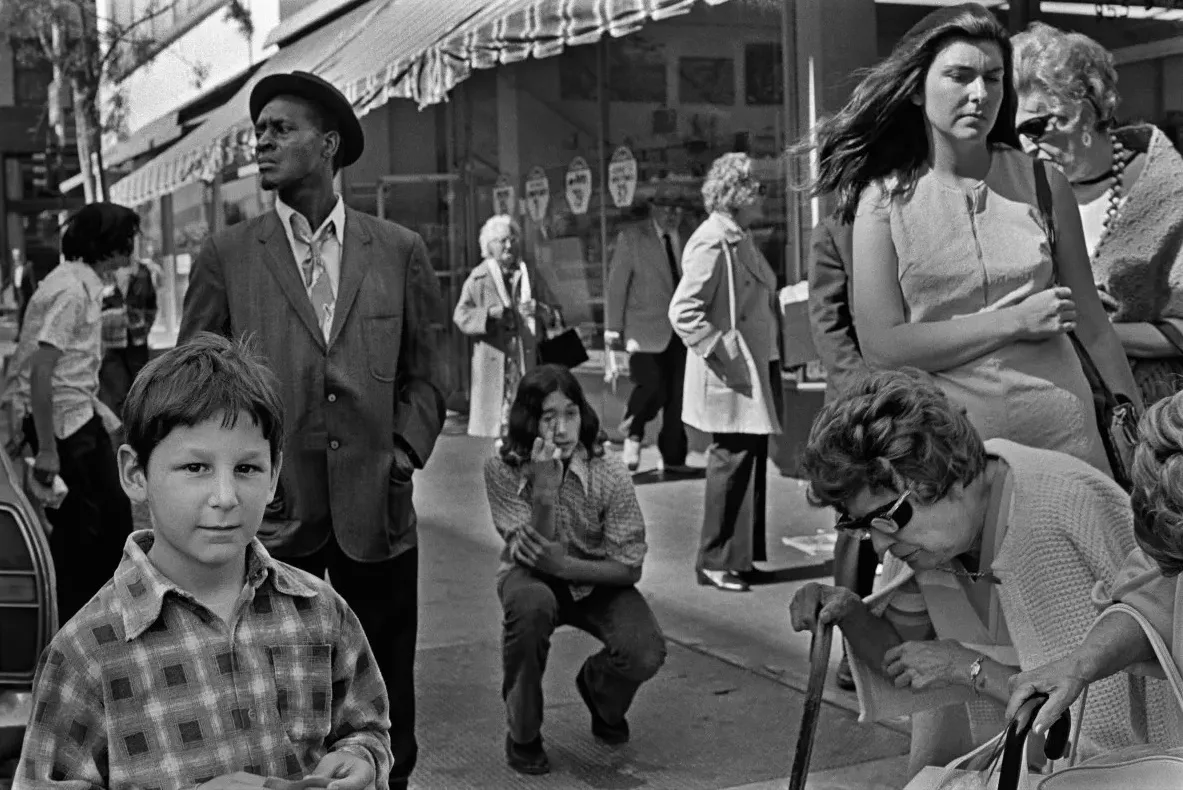
What is to be done? We need to begin with political education and a concerted effort to demonstrate that as long as there has been nationalism — which is older than nation-states — there has been anti-nationalism. Let us bring out the history of those liberatory movements that were anti-nationalist and have been there from the start. Already at the time of the French Revolution, there were people writing against nationalism from a revolutionary basis. This history is largely forgotten. The left does not have its own history that is anti-nationalist, and we are instead constantly force-fed nationalist versions of history.
We require a political education that will show, in a more glaring way, not just that there is class rule within each and every nation-state, but that each and every nation-state is the basis from which capital enters into people’s lives. You’re right: simply calling for No Borders is insufficient. But what I love about the No Borders movement is that the people who have been turned into “migrants,” whether they are full blown members of a political movement called No Borders or not, have been saying, “Look, I am going to cross this national border whether you want me to or not, because I want to live.”
At its core, that act calls into question how this world is organized. Borders are not only symptomatic of state power and how capitalism is organized today; they are also the ideological basis for normalizing the divisions that the current capitalist world system of nation-states relies upon for its continued existence.
So, I do think it is a critically important movement; but as you say, contradictions exist. I have recently written about a particular “no borders” formation that, at the same time, argues for indigenous national, territorial sovereignty.5 I ask how these two can possibly coexist with one another? What we need is to really challenge racist imaginations. That we are “a people,” and that this “people” has the right to control a particular place in the world. And that a people can, if it chooses to, stop other people from living there, or tell them how to live there according to “national” norms. This imagination is widespread. We need political education that helps us clarify what it means to say “no borders,” and it is not simply about border abolition; it is fundamentally about anti-national citizenship.
During the ongoing Pro-Palestine Movement, even people on the left who would normally criticize the capitalist state, and ethnonationalism in general, switch to using terms they might not otherwise have used, such as a positive notion of a Palestinian “nation” or “Palestinian people's own state.” Why do people on the left take that turn, rather than referring to examples of movements in the region of people with Israeli or Jewish backgrounds who collaborate and are in solidarity with people of Palestinian background, and the other way around? In a more general sense, that could be part of reclaiming histories and practices beyond nationalisms, practices that are not tethered to nationality or the identity of “a people,” under the assumption that all the different components of the group work and live together.
That is where the practice of the No Borders movement enters in. Here you have people coming together against the divides organized between “citizen” and “migrant.” You have “citizens” who are very engaged in supporting the activities of “migrants.” Better yet, you have “citizens” and “migrants” who refuse these state categories and work together as some other social formation.
I felt very uncomfortable about marching down the street carrying a Palestinian flag, and I refuse to do so. I am very supportive of fighting the actions of the Israeli state, which continues to devastate the lives of the people they are colonizing and carrying out a genocide against. But the idea that a Palestinian nation-state is going to solve the problems of people who identify as Palestinian, that we can even entertain that idea, just demonstrates the lack of analysis and imagination of what freedom is and what is necessary for freedom to exist. We only have to look at what the Palestinian Authority has done to harm people who identify as Palestinian to understand what a Palestinian nation-state would do to those same people.
It is also part of that larger racist imagination to ask: “Who are you, as a person who is not Palestinian, to even say anything about what should happen there?” You are only allowed to support that national version of liberation. I often get told to be silent about opposition to a Palestinian nation-state because “who am I to say what the Palestinian people want or do not want?” And, of course, people will also say: “The majority want a national liberation state, so who are you to deny them that?” Yet, to say you have to be “the same,” you cannot be “different” from the people who are fighting for liberation in order to express a thought or a demand, especially if it is counter-hegemonic, that needs to be taken seriously as a reactionary form of thinking.


When a woman tells you: “I am very happy to be a housewife who is financially dependent on my husband” — are you supposed to say, “Well then, if you say you are happy, so be it!” No, instead, we must always unpack the ways in which our self-understanding mirrors the epistemology our rulers have fed to us. We must ask what it actually looks like, in reality, to be financially dependent upon your husband, and how that diminishes one’s freedom. We must pay attention to the difference between ideology and reality. We need a political education to help us recognize this difference. This is one of the big problems of the left currently. We are not organizing people into a movement for freedom, because, too often, we are buying the ideologies of rulers and pretending that they are the principles of liberation.
It struck me that, during demonstrations in the US some years ago, migrant activists actually marched with American flags in their hands. I am from political circles in which you would never carry any national flag; and here they even turned up with the flag of a country with an imperialist history that helped devastate their regions of origin. Comrades from the US explained that this is about belonging, about claiming “rights.”
Now we have this important movement to support migrants against ICE raids. In some demonstrations, people turned up with flags of Mexico. This is a similar contradiction. On one hand, there is a claim that people should be free to cross borders no matter whether they have papers or not. And we need to support those people in their efforts to stay in the US and in their fight for a better life. On the other hand, there is a clear reference to a “national” community or a form of “national” belonging, and to the US as still being a “melting pot” where people from different backgrounds come together to form a “nation.” What is your take on this and your experience in this movement?
Certainly, the many different ways that people assert their rights and their sense of belonging, or demand to be seen as belonging to a particular “nation,” are manifested through the carrying of national flags. To me, that is a sign of the hegemony of the nation-state. It is hegemonic not only in that people see themselves as national subjects, but also in the sense that it remains the political order of the day. It actually makes a big difference whether one is a citizen or not, whether socially we are seen as belonging or not belonging.
This is why we ought to regard this flag waving — and the many other ways people assert their membership in a nation — as a kind of extortion that nation-states exact upon people. If we do not wave the flag of whichever “nation,” then we are not considered a member of the nation, legally or socially, and therefore, all manner of violence can befall us. It is the responsibility of the left not only to reject such a view, but to provide a different way of being in the world.
I am not condoning it, nor do I agree; but I do understand the pressure put on people to use the rhetoric of either national membership or the “melting pot,” in an effort to “belong” or assert some sort of claim to have a “right.” It’s the structure we live under today: we have “rights” only insofar as nation-states are willing to recognize them, and they are more willing to recognize them for “citizens” than for “non-citizens.” Still, understanding is not enough. We need a real way out. And it is the political work of the left to provide a way out. Do we really need to force each new generation of people to prove to the rest of us that they belong somewhere through this hollow criteria of nationalism, while threatening enormous violence if they fall short? How is that tenable?
Back in the 1970s, it was clear that in countries such as Italy or Germany, the most advanced or progressive struggles were those of migrant workers. These struggles had to resist attacks by capital, the state, local unions, and white supremacists. They prevailed in the sense that migrants pushed their way into these societies despite continuing conflicts and contradictions. This is an ongoing process, because the anti-migration rhetoric and the new restrictions do not change the fact that all capitalist core societies depend on migrant labor. That also means that migrant workers’ struggles will, in all likelihood,continue to be at the core of attempts to change society.
I think the left can play a role in this, but what sets the rhythm and the tone are social struggles, and migrant workers’ struggles in particular. In this context, the left could potentially play the role of a catalyst, and facilitate new struggles. However, leftist nationalism, or references to national self-determination, will only prevent rather than facilitate the ability of working class movements to abolish national borders and capitalism.
Yes, I definitely see people classified as “migrants,” and particularly “migrants” without official papers, as part of left-wing movements. Nevertheless, some parts of the left refuse to acknowledge them as fellow travelers. A friend of mine, Bridget Anderson, always says that one of the myths that nationalism promotes is that “what is bad for migrants is good for citizens.” What becomes clear when you look at the struggles of “migrants,” is that, if they were able to win the struggles they are waging, all of us would be so much better.
Historically, parts of the working class adopted racist strategies, arguing for a ban on migrant entry or deportations; in the end, however, it has actually worked against them. That sort of agitation only made the labor of “migrants” even cheaper, while it politically weakened the whole of the working class and its ability to win struggles.
There is a better way, and some groups, such as the Wobblies — the Industrial Workers of the World or IWW — did wage battles against the racist and nationalist divisions erected between working people, insisting that, even from a coldly pragmatic perspective, it still makes sense to reject the distinctions between workers imposed by capital and the state. If they could not use gender or racism or citizenship status to create differences in jobs, wages, and working conditions, our collective ability to fight capital and states would be far stronger. Wobblies and some others used the classic argument saying, if we refuse to accept our division, we will all win. Nationalism functions by continuously diverting us from that realization. That is what it is all about, as is racism and sexism.
Thanks very much for this very interesting conversation.
Images: Peter Turnley
Notes
1. Cihan Aksan, “What Is the Left Case for Open Borders?,” Krytyka Polityczna, February 13, 2019. Online here.↰
2. Benedict Anderson, Imagined Communities: Reflections on the Origin and Spread of Nationalism. Revised Edition, Verso, 2006.↰
3. Radhika Mongia, Indian Migration and Empire. A Colonial Genealogy of the Modern State, Duke University Press, 2018.↰
4. Folker Fröbel, Jürgen Heinrichs, and Otto Kreye, The New International Division of Labour: Structural Unemployment in Industrialised Countries and Industrialisation in Developing Countries, Cambridge University Press, 1980.↰
5. Nandita Sharma, “No Borders: Demands for Freedom of Movement in an Age of Nation-State,” in Border Abolitionism: Migrant Struggles and the Law, edited by Nicholas De Genova and Daniel Morales, Duke University Press, 2026.↰