The Forbidden Deleuze: For Palestine, Against Genocide
Pasquale Liguori
Other languages: Español, Italiano, Ελληνικά, Français
It’s a genocide, but one in which physical extermination remains subordinated to geographical evacuation. —Gilles Deleuze
It is worth returning to some fundamental writings1 that Gilles Deleuze devoted to the Palestinian question between the late 1970s and the early 1980s. These writings have remained comparatively under-discussed within the much larger reception of Deleuze, but they are not marginal to his thought; they are moments in which his philosophy confronts real politics in a particularly direct way, where the philosophy of immanence — or, more precisely, a conception of real life refractory to any transcendence of state, law, or morality — confronts the concrete history of colonization, and where the ontology of becoming is tested against the criminal machinery of the state. In these texts one finds, perhaps more than elsewhere, an anticipatory diagnosis of our present condition: a genocidal continuity that runs through Palestine from 1948 to today, and that so-called humanitarian pauses or ceasefires serve only to mask.
Deleuze stated without any ambiguity: the Palestinian tragedy is not a conflict but a modular genocide, a permanent technology of evacuation. Elimination is not measured by the number of dead but by a factorylike production of absence — the emptying of villages, topographical erasure, symbolic expulsion. The genocide perpetrated by Israel is not episodic but functional to the reproduction of state power. It is a war disguised as administration, adjusting its rhythm and intensity in order never to end. When Deleuze speaks of “many Oradours,” he invokes Deir Yassin as an archetype, the first large-scale massacre in a village wiped off the map, the paradigm for all those that followed. The current suspension of mass bombardments does not represent an ending, but a phase of reterritorialization within the genocidal apparatus, a recalibration of the Israeli state machine before the next wave.
In an interview with Elias Sanbar, collected in “The Indians of Palestine,” Deleuze defines the underlying logic of Zionism as a colonialism of evacuation. The point is not to exploit indigenous labour but to empty the land of its inhabitants, so as to turn it into a pure support for capital and the theology of property. It is the same operation that founded America — the erasure of the native as the condition of possibility of modernity. Hence the formula describing the Palestinians as “the American Indians of the Jewish settlers in Palestine,” which so irritated the moral custodians of the French academy. In a recent essay, Barbara Glowczewski has shown how that analogy is now incarnated in a global indigenous solidarity: from the Sioux to the Māori, from the Warlpiri to the inhabitants of Gaza, resistance is becoming a shared language against the capitalism of annihilation.2
Already in 1978, in “The Troublemakers,” Deleuze argued that Israel was elaborating a universally exportable machinery of control. Its war on “terrorists” anticipated America’s preemptive war and the planetary control of bodies and flows. Israel, he wrote, “is establishing a model of repression that will be converted for other countries, adapted by other countries.” It was the prefiguration of the societies of control: a fusion of State, intelligence, and military industry, along with the transformation of every “security zone” into a surveilled desert. Israeli colonialism as the technical and moral vanguard of securitarian Western modernity, a politics of administered genocide.
For Deleuze, Zionism emerges as a theological apparatus of reparation. Europe never paid its debt to the Jews; instead, it made an innocent people pay it in its place. As he writes, “The United States and Europe owed reparation to the Jews. And they made a people, about whom the least that could be said is that they had no hand in and were singularly innocent of any holocaust and hadn’t even heard of it, pay this reparation.”
Christian Frigerio has taken up this passage in a recent article and brought it into the present: the Shoah has been elevated to the status of Absolute Evil, transformed from a historical event into a mystical principle.3 In this way, evil is not overcome but transferred onto a different people. This is the founding act of Europe’s bad conscience, cleansing itself of its own crime through violence delegated to Israel. As Paolo Virno has observed, very often danger is not something from which one seeks protection, but the very form that shelter itself assumes, a “horrifying strategy of salvation.”4 The search for safety generates its own monsters — little ethnic homelands, sovereigns, xenophobia as responses to vulnerability. Modern evil, he insists, expresses itself precisely and solely as a horrible replica to the world’s riskiness, a dangerous search for protection.


Applied to European history, this insight explains with surgical precision what Deleuze was denouncing: the creation of the state of Israel as an identitarian refuge, an imaginary rescue that morphs into a new crime. Guilt is not worked through, but displaced, delegated, externalized. And in the name of that refuge — sovereign, ethnic, identitarian — the machine that produces new victims is set in motion. International law, starting from the 1947-48 UN resolutions, has done nothing but codify this moral delegation: two States, two peoples, as if the Nakba were not the point of origin but a marginal footnote.
As Deleuze put it, “Zionism, then the state of Israel, will demand that the Palestinians recognize its right [droit]. But the state of Israel will never stop denying the very fact of a Palestinian people.” This statement enunciates a general principle: law does not merely guarantee existence, it produces and cancels it. It is upon this founding asymmetry that international law has erected its normative role.
The UN resolutions, and today’s Western calls for a “return to the 1967 borders,” do not put the original crime of 1948 into question. Law does not give life back; it administers it. Humanitarian legalism, so loudly invoked today, still operates within the logic of restoration: reconcile, manage, normalize. But if justice does not interrupt the order that made the crime possible, it becomes part of the very machine that reproduces it.
In 1985, Deleuze stated:
A people isn't something already there. A people, in a way, is what's missing...Was there ever a Palestinian people? Israel says no. Of course there was, but that's not the point. The thing is, that once the Palestinians have been thrown out of their territory, then to the extent that they resist they enter the process of constituting a people.5
The Palestinian paradox lies precisely here, but it must be formulated carefully. A Palestinian people must, in one sense, already exist in order to be dispossessed and to resist dispossession; yet, in Deleuze’s formulation, it is precisely “to the extent that they resist” that Palestinians enter “the process of constituting a people.” What appears as a contradiction is therefore the structure of a political individuation. Collective existence is neither simply given in advance, nor created ex nihilo; it is recomposed through the struggle against an apparatus whose aim is to make that collective existence impossible.
The term “people,” here, cannot be understood as a closed unity, nor as an identity that gathers itself into One. It names a process of collective individuation. Resistance does not produce an identitarian One, but a metastable coherence, a moving frontier, a principle of co-becoming capable of holding together what colonialism strives to separate. Palestinian subjectivity is therefore not reducible either to an ancestral essence or to a purely modern invention. It is a constituent process in which historical continuity and political creation become inseparable.
This is the constitutive act of Palestinian collective individuation; resistance at once presupposes a people and produces the forms in which that people can continue to exist and act in common. The paradox is not uniquely Palestinian. It discloses a more general problem of political subjectivation: domination addresses a collectivity as an object to be administered, displaced, or erased, while resistance can transform that imposed objectification into the capacity to speak and act as a subject. A people, in this sense, is less a substance than a process through which heterogeneous lives acquire sufficient consistency to act together without being reduced to sameness.


Every stone thrown, every house rebuilt, every return can then be read as an act of political fabulation: not the representation of an identity already complete, but the production of a common existence under conditions designed to prevent it. This is why Palestine is not merely an object to which Deleuze applies preexisting concepts. It is one of the places where his philosophy is forced to confront, concretely, the question of how a people comes into existence. Here the philosophy of becoming meets history: collective existence as creation, without identity generating a form of closure; Palestine as a constituent event rather than a sociological given.
In “Wherever They Can See It,” Deleuze writes: “The Palestinians throw their stones, the living stones of their land. Men are born out of these stones.” It is an ontological metaphor: from the desert of control, the life of becoming arises. That desert which, as he proposed in his conversations with Claire Parnet, is our only identity, the experimentation upon ourselves.6 The Palestinians, like Deleuzian nomads, inhabit smooth space, a space that refuses to be confined, numbered, administered. Where the state produces the void, life begins again. And in this reappearance resides the only political truth still possible today: no truce without justice, no law without memory, no peace within the lie of a suspended genocide.
Today, in this time of yet another hypocritical moral restoration, Deleuze returns as a scandal. But the scandal should not be described as though his explicitly political provocations had simply been excluded from Deleuze scholarship. They have not. Important currents of contemporary Deleuze studies, particularly within Anglophone continental philosophy, have welcomed and developed his political interventions. The narrower question is different: what place has the specifically Palestinian sequence occupied within that reception?
Here the evidence supports a claim of asymmetry, rather than one of systematic suppression. Deleuze’s writings on Palestine remain comparatively underdiscussed by comparison with the enormous literature on becoming, deterritorialization, nomadism, desire, cinema, or the “people to come.” This unevenness is not, by itself, evidence of censorship, and not every absence should be read as deliberate. The clearest explicit editorial instance is the fate of Deleuze’s article, “The Grandeur de Yasser Arafat,” which was included in the original French collection Deux régimes de fous, yet omitted from the first English edition of Two Regimes of Madness when it appeared with Semiotext(e) in 2006. The omission was corrected in a revised 2007 edition, which restored the full text of the original French edition. Daniel W. Smith, reviewing the first edition in Teaching Philosophy in 2007, noted that the omission was editorially deliberate in the narrow sense that the subsequent essays had been renumbered, while also stressing that three other Palestinian texts remained in the collection.7
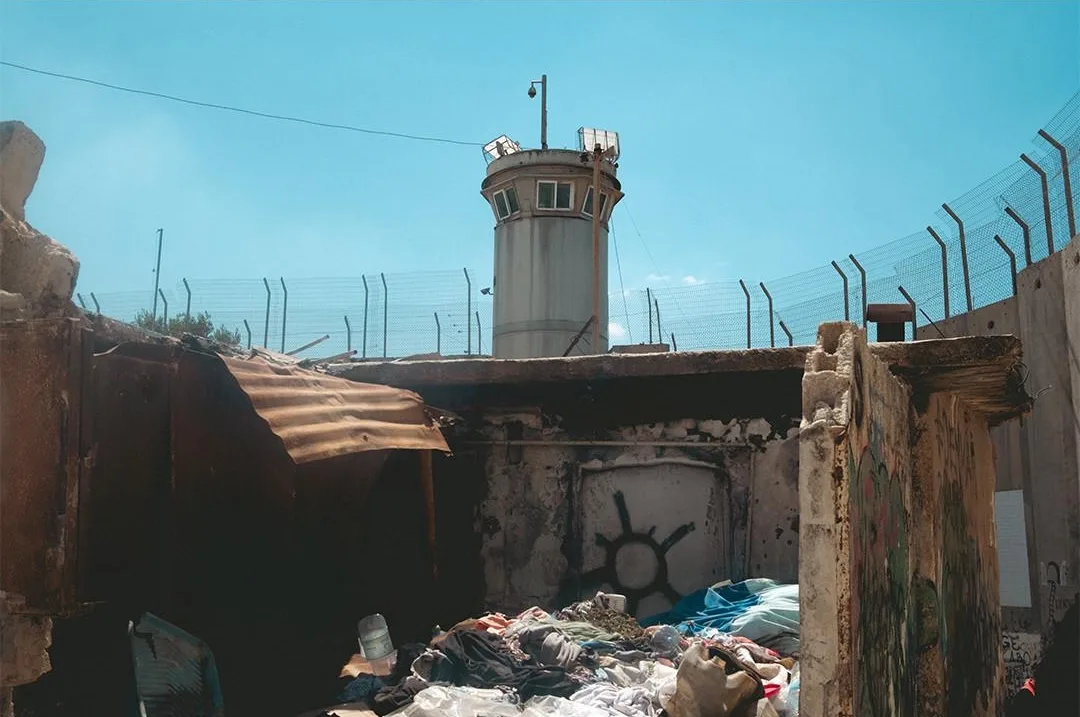
Our argument, then, is not that a “Deleuze industry” has expunged the political philosopher, nor that politically engaged Deleuze scholarship is somehow exceptional. Rather, it is that this reception has been selective in a more ordinary, and perhaps more revealing, sense. Deleuze’s conceptual vocabulary circulates with extraordinary ease in discussions of multiplicity, creativity, difference, and becoming, while the Palestinian texts in which that vocabulary confronts a concrete colonial situation have occupied a markedly more peripheral position. The issue is not a conspiracy of silence but an asymmetry of canonization: which Deleuze travels, and which Deleuze remains difficult to assimilate?
Kathryn Medien has described this problem through the phrase “epistemic evacuation,” a mode of reading in which Palestine can disappear from the conceptual field even when Deleuzian concepts remain fully operative.8 The force of the phrase lies precisely in avoiding the need to attribute a single intention to an entire scholarly field. A reception can be uneven without being centrally organized: a canon can depoliticize through habits of selection, emphasis and abstraction rather than through explicit prohibition.
And so the question becomes more precise: not “why have Deleuze’s ‘disciples’ uniformly silenced Palestine?”, but “what happens to Deleuze’s political thought when these interventions are treated as occasional, secondary, or detachable from the concepts for which he is canonized?” What kind of Deleuze emerges when becoming and deterritorialization travel more easily than the colonial histories against which those concepts can acquire their sharpest political stakes?
And yet, the Deleuze who takes the side of Palestine exceeds every striation, a thinker who does not merely register the real as it is, but passes through it, dismantles it, forces it to say what the dominant order would prefer to keep unsaid. To take him up again means to break the peace of the guilty, the peace that modulates genocide and calls it law.
Against the order of the victors, Deleuze reminds us that every true philosophy is an act of insubordination, and that no civilization will be able to survive if it continues to found itself upon the art of emptying the land and erasing those who inhabit it.
Images: Melissa Waucquier
Notes
1. Gilles Deleuze, “The Troublemakers,” translated by Timothy S. Murphy, Discourse 20.3 (1998), 23-24 (first published in Le Monde, April 7, 1978); “The Grandeur of Yasser Arafat,” translated by Timothy S. Murphy, Discourse 20.3 (1998), 30-33 (first published in Revue d’Études Palestiniennes 10, Winter 1984; written in 1983); “Wherever They Can See It,” translated by Mustapha Kamal, Discourse 20.3 (1998), 34-35 (first published in Al-Karmel, 1988); Gilles Deleuze and Elias Sanbar, “The Indians of Palestine,” translated by Timothy S. Murphy, Discourse 20.3 (1998), 25-29 (first published in Libération, May 8-9, 1982). ↰
2. Barbara Glowczewski, “On Indigenous Solidarity: Deleuze and the Palestinians,” Deleuze and Guattari Studies 19.2 (2025), 205-213. ↰
3. Christian Frigerio, “La parte del deserto: Deleuze e la questione palestinese,” L’Indiscreto (2024); online here.↰
4. Paolo Virno, A Grammar of the Multitude, translated by Isabella Bertoletti, James Cascaito and Andrea Casson, Semiotext(e), 2004.↰
5. Gilles Deleuze, Negotiations: 1972-1990, translated by Martin Joughin, Columbia University Press, 1995.↰
6. Gilles Deleuze and Claire Parnet, Dialogues, translated by Hugh Tomlinson and Barbara Habberjam, Columbia University Press, 1987.↰
7. Gilles Deleuze, Two Regimes of Madness, translated by Ames Hodges and Mike Taormina, Semiotext(e), 2006. A revised edition published in 2007 restored the full text of the original French edition. See Daniel W. Smith, “Review of Gilles Deleuze, Two Regimes of Madness: Texts and Interviews 1975–1995,” Teaching Philosophy 30.2, (2007), 237-241.↰
8. Kathryn Medien, “Palestine in Deleuze,” Theory, Culture & Society 36.5, (2019), 49-70.↰