Mourning and Migrancy
Olga Rodríguez-Ulloa
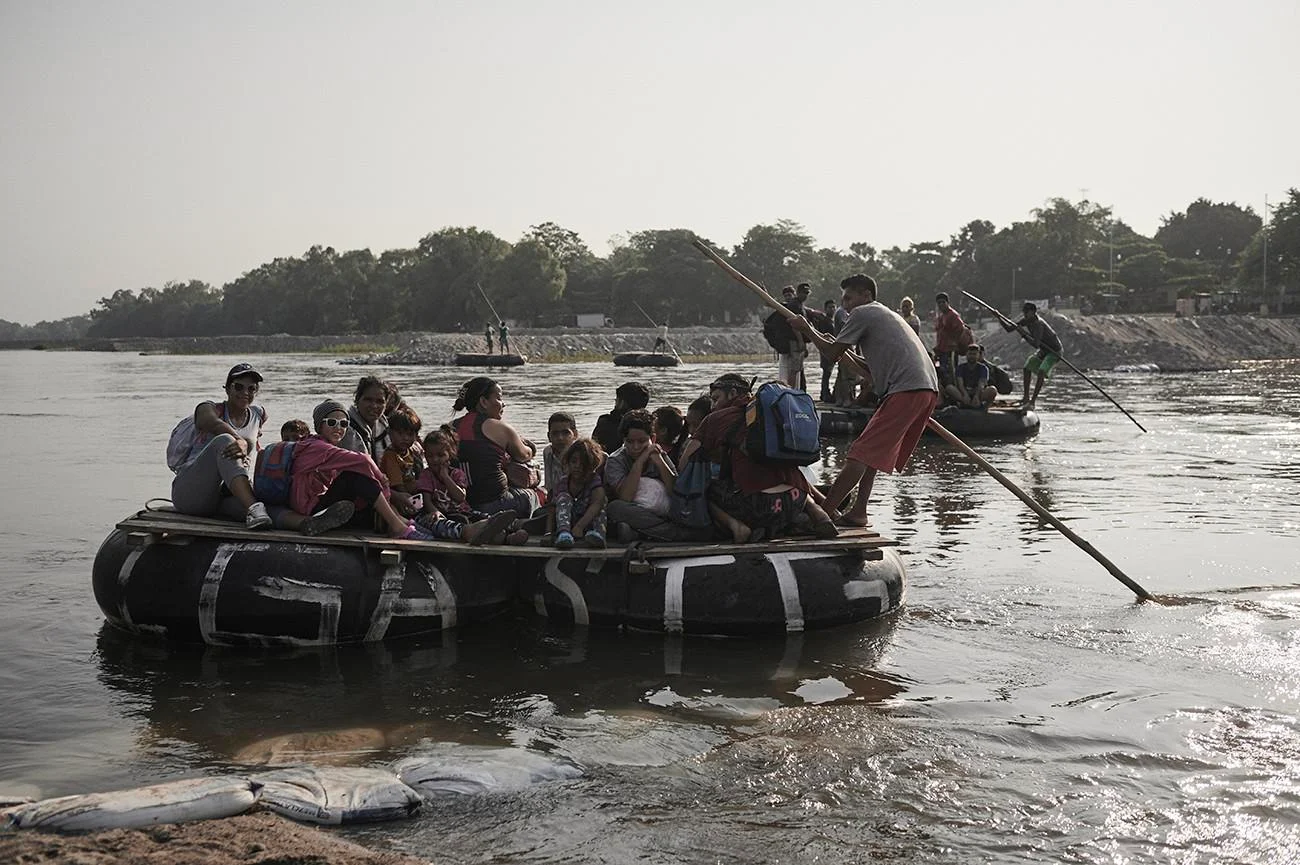
The violent targeting of Latine migrants has become a key feature of the Monroe Doctrine 2.0. In this updated imperialist paradigm, mass kidnappings, deportations, and imprisonments fuel a billion dollar militarized industry to export U.S. borders around the globe, mimicking the strategies of apartheid Israel. The practice of restraining the movement of poor and racialized masses while simultaneously extracting resources from their countries is a timeworn feature of empire, today intensified through the incorporation of advanced technology.
Olga Rodríguez-Ulloa’s “Mourning and Migrancy” takes up the genre of the memoir to reflect on the shifting geopolitics of immigration and diasporas in the American hemisphere. Here, family memories of immigration serve as a fulcrum to grapple with the precarities specific to a South American and indigenous diaspora from south to north. Given that the political and economic pressure applied by a handful of warlords and techno-feudalists is likely to generate a massive quantity of unexpected immigrants over the coming months and years, the time is right to reflect on the personal and political cost of freedom of movement and the refusal of settler-borders — a price paid across generations.
Part of our ongoing series Weavings, which seeks to deepen global complicities between resistance movements in Latin America and those further North.
What is it for a mother to die? —Gayatri Spivak
Ten years have passed since my mother died. For ten years I’ve been thinking about writing down my memories of her passing. I haven’t been capable, because of the pain, regret, guilt, all mixed in with this deep, piercing feeling of loss. It is no secret that mourning imposes its own time on the body, the mind, in all spaces. I’ve carried the weight of my mother’s death around with me these last ten years. Often in complete silence. The circumstances of her death are particularly unbearable for me to remember, to think, speak out loud, and of course, to write about. She had a brain aneurysm while working as a housekeeper. She was alone in one of the houses she routinely cleaned, and didn’t have time to ask for help. Doctors estimated that an hour and a half passed before she was found. When she was finally admitted to the hospital, her neurological responses were almost gone. She was a six according to the Glasgow comma scale, signaling “severe brain injury.” She never regained consciousness.
It happened on September 10th, two days before my brother’s birthday. It was a Thursday. I was teaching an afternoon class. The Sunday prior, just five days earlier, we had spent the day together. The usual hangout consisted of arriving at Long Island at 11ish, helping my mom and my aunt with lunch preparations, being teased by my uncle, and having a beer while cooking. The rest of the afternoon we talked and listened to music. I would take the train back to Brooklyn around five or six. However, on that Sunday there was no alcohol for me. I was ten weeks pregnant, and since I had a miscarriage a few years before I didn’t want to announce it. But, of course, I told my mom. She was the only one aside from my then-husband who knew of my pregnancy. She passed away on October 31st: Halloween here in the U.S., and the day of the canción criolla in Peru, where we all come from. This essay works out the mourning of my mother, which, as Freud anticipates in his 1917 essay, is also the mourning of an abstraction: in this case, the idea, the practice, and the feasibility of migration in a moment where our mobility faces systems of enclosure, a time of secluded geographies marked by captivity and death.
I am constantly baffled by the fact that life continues without my mom, a life that comes from the realm of the unknown. My mom organized not only daily life, but also speech and analysis. She was my first analyst and intellectual interlocutor. I grew up convinced of her superpowers. I know that they were partly the result of the many isolating ways in which women lived their motherhood. Recognizing her superpowers is not a matter of pure praise; they are intertwined with experiencing her flaws. In that sense, this is a deeply intimate essay, with all the messiness and contradictions of intimacy. It is a response to a ten year and ongoing mourning, through which I have been sustained by memories, pictures, stories, books, theory, people, lands, oceans, and pets. It is by no means a cohesive tale, but one that weaves together racialized and working-class immigrant experiences from south to north, the violences of our country of origin and our families, with an impulse to undo the sedimented and hurtful narratives about all of it, in search of tenderness and freedom.
Peruvian coloniality and US empire
My mother was buried in Long Island, New York, the land of the Rockaway tribe, part of the Lenape Nation. The names of towns she navigated daily are vestiges of this Native history. We too were occupying their geographies; far from those of our ancestors that she and I knew most of our lives. My mother’s death was a consequence of the material and social violences of immigration. My mourning was, therefore, deeply affected by what we suffered as individuals and as a family on behalf of immigration authorities — the countless forms, interviews, the wait in offices, the incessant checking of the USCIS website, consults with pro-bono immigration lawyers, and so on. We were used to it, sort of. Within our extended family, our migration was neither the first nor the last. My family’s struggle in Peru, their fleeing and their scattered existence in many cities and countries, has given me a particular vantage point to theorize on immigration from this so-called small diaspora. It has equipped me with what I like calling “theoretical viscera” that connects imperialistic immigration practices with the dispossession of the global south.
Peru is still part of an improbable diaspora in the imaginary of the U.S. It has not yet congealed in popular culture or, for that matter, in Latine Studies, although Peruvians have been migrating systematically, particularly since the middle of the twentieth century, prompted by political and economic crises that haven’t stopped. This is no doubt also because our Peruvian brownness, like that of many other Latin Americans immigrants, reads as “Mexican,” and is therefore devalued by the long history of U.S. anti-indigenous propaganda. My family’s immigration history has been multiple and episodic, even within Peru itself. My maternal great-grandmother was from the northern Andes of Cajamarca, east of the coastal plantation where her daughter, my grandmother, was born in 1918. In the plantation archive, I learned that the movement from east to west was conducted under precarious conditions of debt peonage that entailed manipulation, racism, and bondage. Mountain people, “indios” or “serranos” (as they also called them), were cheaper than coastal workers. Long before the sugar agro-industry, people in pre-Hispanic and even pre-Incan times traveled along that same pathway. Like many other indigenous populations, the people here performed seasonal work, living in the mountains and venturing towards the sea. Their mobility was not sanctioned by colonial jurisdictions or by the jargon of migration, it was simply something they did because it made sense to their sustenance and the caretaking of the land. European colonizers took advantage of such habitual pathways to relocate servants; when they became inconvenient, such practices were dismissed as “nomadic” and “savage.”
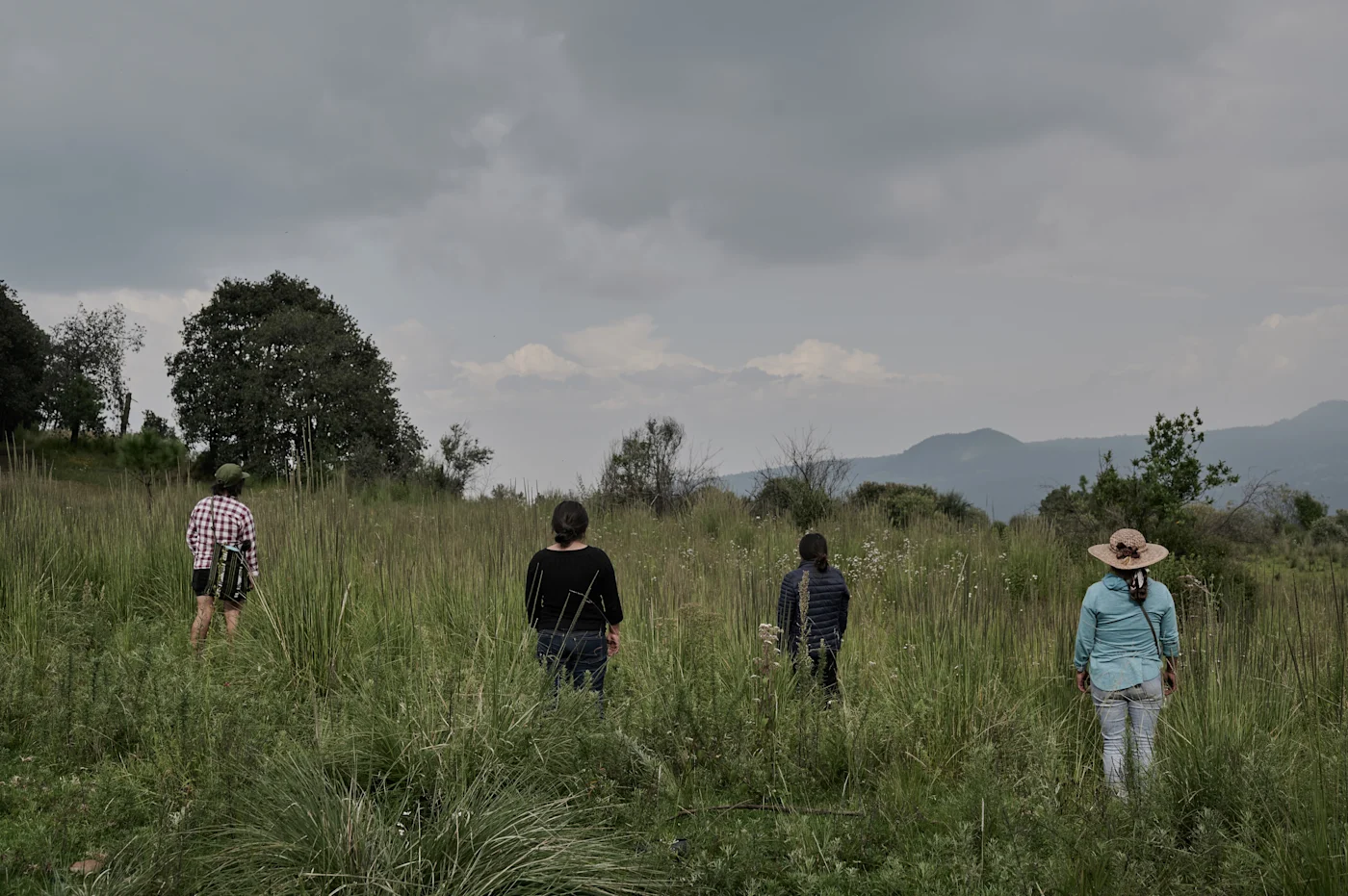
I grew up in the house of my maternal grandmother. She was the center for everyone. I would see the women in my family coming and going from their jobs and their trips. I have an aunt that migrated to Buenos Aires and Paraguay during the eighties, only to soon return to Lima. At that time in Peru, violence and scarcity were exacerbated by an internal war and the global economic crisis. This forced not only her, but many other family members of mine to travel outside the country for mere survival. In 1992, this same aunt later went to Venezuela during the peak of the economic inflation shock afflicting Alberto Fujimori’s autocratic government. She lived in Caracas for decades, and raised three daughters. She returned to Peru because of the crisis provoked by Maduro in 2020. Three years passed, and she had to build her life from scratch yet again, this time in Miami. Venezuela was a country to which many Peruvians migrated in the nineties, when it was a booming oil economy offering excellent public education. Today, it has become the source of a new diaspora, in the contemporary parlance of American Immigration and South American societies. According to the Peruvian Institute of Statistics (INEI), Peru is the second largest diaspora, with 1.5 million Venezuelans. These days, they are considered “undesirable immigrants,” facing xenophobia from the same subjects they once welcomed to their country, like US investors and Peruvians. That is the tragedy of geopolitics in the end times. My aunt is now in her late seventies. She carries with her the heaviness and wounds of all these migrations.
Despite its non-puritan connotation, the word “desire” has been essential to US settler colonialism since the arrival of the Mayflower. Built in Massachusetts, the slave ship Desire trafficked Mashantuquet Pequot war prisoners, returning with African enslaved people. After the frontier was secured, the notion of “desire” imprinted itself in U.S. immigration law and public discourse, geographically determining “good” and “bad” immigrants even before its formalization in the Chinese Exclusion Act of 1882. In the case of Mexican and indigenous populations annexed following the Treaty of Guadalupe Hidalgo (1848), as Dolores Huerta reminds us, “We didn’t cross the border. The border crossed us.” The treaty should have granted them citizenship and the protection of their property, but of course it was letra muerta, and pending litigations still stem from this era. Immigrants’ undesirability was justified by pseudo-scientific discourses of racial determinism. It was also a matter of numbers and visibility. For the racist eye of the immigration apparatus, Latinos are marked, almost solely, by their brownness. Racialized Peruvians and Andean peoples belong to this brown sea, and are targeted as such. In 2025, of the estimated 350,000 removals, over 12,000 are Peruvians — roughly 3.5%.
My mother migrated to the U.S. in 2001, right before 9/11. She was 53 years old. Just thinking about this number makes me sink. Before migrating, my mom sold cars, appliances, and loans. As a single mom with three children, she had to take out loans at several points in the nineties just to get by. People used these small loans, developed under Fujimori’s neoliberal regime (1990-2000), to pay rent, buy food, and so on. The lives of many families, especially those where women were the head of household, became more precarious through this indebtedness. The frustration created by decades of financial instability and debt instilled in my mom an eagerness to go through the immigrant coming of age story in her fifties. Eagerness is one way to put it. At least, I never heard her complain. She would almost never complain. Always positive and smiling. In a picture of her at the airport, she’s waving goodbye to my siblings and me, wearing a navy blazer, jeans, and her usual beautiful smile. Little did we all know that 2001 was a turning point in immigration policies. The so-called War on Terror was not only another instantiation of U.S. imperial terror in the middle east and the rest of the world, but it domestically unfolded homeland security reforms, including the merger of the U.S. Customs Service (Treasury Department) with the Immigration and Naturalization Service (Justice Department) into ICE, the Immigration and Customs Enforcement, its militarization, and its now $75 billion budget.
My mother had a place to stay, since her brother had migrated to New York in the mid-nineties. My tío is a doctor. He was a neurological surgeon in Peru, curing brain congenital illnesses, like hydrocephaly in the Hospital del Niño in a working-class neighborhood, the same neighborhood we lived in. He would also work in the Casimiro Ulloa and Cayetano Heredia hospitals. He taught in the public University Federico Villarreal. At one point in our lives, we all lived together: this uncle, his family of three children and wife, my mom and my two siblings, and our abuelos. I remember that for many of my uncle’s successful operations on poor kids he would get paid in produce, hens, red meat, and sometimes more exotic animals like turtles, snakes, and jungle boars. We would all dine, quite literally, on the fruits of his labor. My uncle was a doctor of the poor, but he was also poor himself. Working at many places simultaneously, he didn’t have the whitened-criollo cultural capital one needs to climb the institutional ladder in Peru. Nor was he capable or desirous of exploiting political party associations. He was unable to make ends meet, and had to migrate. He couldn’t practice as a surgeon in the U.S. It proved impossible to pass the exams in a foreign language while also raising three kids who were themselves adjusting, being a good partner, and working two to three jobs. Despite all the hardships, he hosted my mom, and has been a second dad to me since we lived together in Lima, and even more so during my own journey into the U.S.-Peruvian diaspora.
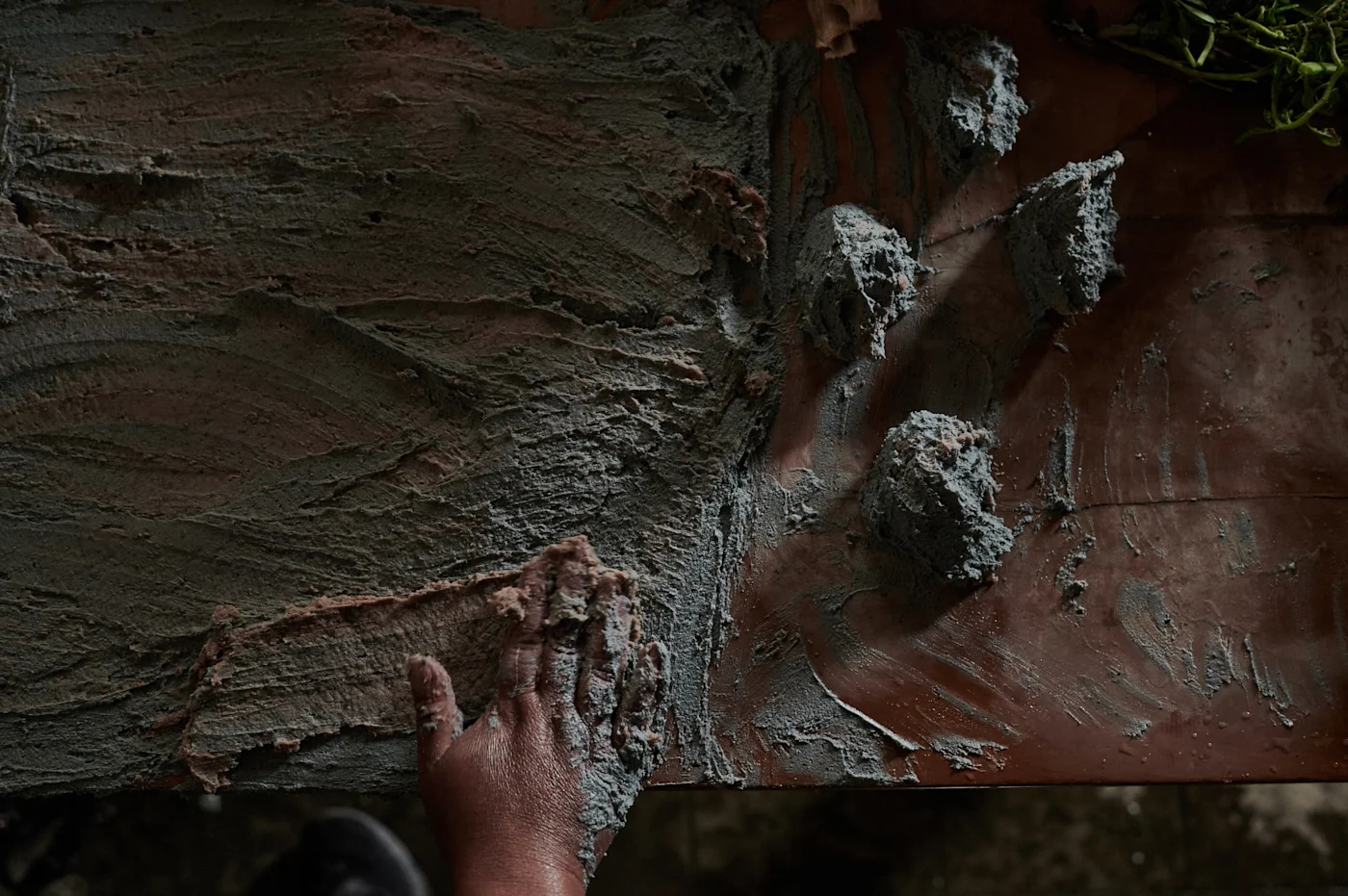
Shortly after arriving, my mom found a job at a Jewish synagogue; she would refer to it as “el templo.” Her job consisted of cleaning the space, overseeing the children during parties or ceremonies, setting up for gatherings, and so on. As is the reality of paid and unpaid domestic work, she was performing many jobs at once — something all too familiar for immigrants in general. It started on Friday afternoons in preparation for the Shabbat, and lasted until Saturday evening. She worked there for almost fifteen consecutive years. She never had vacations nor any benefits, which wasn’t questioned as unethical for the religious congregation that employed her. Perhaps in their minds they were doing her a favor by giving her the job. The overall message in cases like this is replaceability: another immigrant body is waiting in line. Temple-goers collected money and gave us ten thousand dollars when she passed, a gesture of charity rather than labor justice. We used it all in funeral and cemetery expenses.
The remainder of the work week, my mother cleaned the houses of the families that went to the temple or their acquaintances. She knew them for years and they held her in high regard. She was a good worker, neat and with a good disposition. She knew some of these families intimately and she would share their stories with me: who was getting divorced, who was a compulsive shopper, who was unhappy, or all the above. Even when talking shit, she was generous. Never fixating on anyone and always finding good things to say about most. Clients would often ask her for advice. Those who dared to be abusive, racist, or exploitative, were abandoned by this Peruvian cleaning lady. When telling me about these instances, she would often say: “Que se jodan estos huevones,” or “qué se habrán creído?” She didn’t need anyone to protect her: trained by Peruvian coloniality to detect abuse, she acted quickly. My mom was never embarrassed by her occupation. I still wonder if I was, at the time anyway. What I knew for certain is that, like many immigrant children, I simply wanted to give her a more comfortable life, a life with less work, a life of dealing with fewer assholes. This has been a focus of my conscious mourning. The immigrant narrative of a “better life” is multidirectional. In many of my Latine Studies classes, I’ve had students telling me that their parents’ sacrifices were meant to afford them the opportunities these parents didn’t enjoy, and to spare them the atrocities they experienced. In this immigrant affective economy, daughters and sons are meant to repay this debt by providing for their elders, which often represents a burden. It can trap us in family and consanguineal narratives that have a mental health toll for many Latines. Case in point, I still feel that death took away the privilege of giving to my mother. What does this “giving” mean though? In many ways, it pertains to the fantasy of the privatization of care and love as Sophie Lewis defines it.1 A huge part of my conscious mourning has involved coming to terms with the loss of that social immigrant idea or experience, unpacking how it was articulated in my relationship with my mom, as she never so much as hinted at any demand for monetized retribution. My way of compensating for her exploitation as a domestic worker was through this role of the providing daughter. She never expressed the need to be saved nor alleviated by me or by anyone. I did it for my own salvation.
In many ways, my mourning was impacted by a feeling of the irresolute. As an adjunct instructor at the time, I couldn’t alleviate my mother’s labor conditions. To this day, I can’t stop myself from feeling I wish I gave her a lot more, materially and emotionally. Susana Baca is a singer we both enjoyed, and we got to see her together and dance to her before my mother’s passing. I often can’t listen to Baca’s “María Landó” without thinking about her and crying. The song was made internationally famous by David Byrne’s 1995 album, The Souls of Black Peru. Peruvian poet César Calvo (1940-2000) wrote the lyrics in the sixties. One of the most poignant verses goes like this:
María no tiene tiempo (María Landó) De alzar los ojos María de alzar los ojos (María Landó) Rotos de sueño María rotos de sueño (María Landó) De andar sufriendo María de andar sufriendo (María Landó) Sólo trabaja María sólo trabaja, sólo trabaja, sólo trabaja María sólo trabaja Y su trabajo es ajeno
María has no time (María Landó) To raise her weary eyes María, to raise her eyes (María Landó) Shattered by sleep María, shattered by sleep (María Landó) To keep on suffering María, to keep on suffering (María Landó) She only works María only works, only works, only works María only works And her labor’s not her own
In many ways we all suffer from the alienation of our labor. But there is labor, the song reminds us, that is completely ajeno to us: foreign, other, owned by someone else, captured and haunted by centuries of colonialism, the type of work that depletes us and turns us into something else, a body we can no longer claim as our own. I know that my mom sometimes felt incredible levels of exhaustion. She was in her late sixties, doing tons of physical labor under conditions that were far less than optimal. I wanted to take her to nice places, to travel together. To see through her eyes the places that she never got to visit, including Machu Picchu, ironically the most globally famous tourist site in her own country.
Domestic labor is a highly warped occupation, globally stigmatized and racialized. My grandmother experienced it in Peru while still a kid, at the hands of her own family. As an immigrant in the U.S., it became a survival strategy for my mother. I have never performed it myself, but I have witnessed it closely while growing up in the houses of neighbors, friends, and relatives. It is very common for Peruvian families to hire a racialized woman for cheap even in our working-class circle, such is the nature of a very racist, colonial, and precarious society. This occupation has its origins in the slavery and serfdom of Black and indigenous peoples installed by the colonial rule. Domestic workers have fought for legislation to protect themselves from the customary exploitation, sexual and physical abuse, and racial violence. Housework disproportionately falls on the shoulders of one woman, the mother-wife (unpaid) or the maid (poorly paid). Here, the maid’s small wage doesn’t compensate for the manual labor that goes into cleaning and organizing a house, especially a middle- or upper-class American house compulsively cluttered with consumption. It doesn’t compensate either for the emotional labor that goes into spending hours in the presence of the madams and their children, tending to their needs and desires. The alienated nature of housework is twofold for the domestic worker. With the global economic crisis of the 1980s, the migrant labor of women was exported to the third world, allowing for the professional growth of first-world women. The collectivization of housework is far from being a reality.2
Despite spending hours in someone’s home, maids are not family as some paternalistic narratives assert. They are outsiders, with their own family, language, and culture. My mom saw most of her employers fundamentally as clients. She would feel closer to those who spoke or tried to speak Spanish with her, and she would often curate the personal information she wanted to share with them. They sensed my mom was extremely proud of all her children. When my mom told them I was admitted to several doctorate programs in the U.S., and I eventually started as a PhD candidate at Columbia University thanks to her labor and my desire to leave my country, they were in awe. My mom shared with me the reactions of her clients, mocking them, with a certain degree of class revenge: “Elsa, Columbia is so important. Neither me nor my kids could get in. You should be really proud of your daughter and yourself.” She was. She also enjoyed that we could access a space of exclusivity that was unattainable for her clients, even with all their money and the hierarchy and power they hold over her. Years later, my mom was graceful in respecting my decision not to attend the graduation ceremony. She knew that despite not knowing anything about American academia when I arrived, I had reasons to be militant against the elitism, classism, and racism these places represent. When Columbia handed over the names of the students participating in the pro-Palestine and anti-genocide encampment, my hunch about the institution was more than confirmed.
Hospitals
The last time I saw my mom before the aneurysm, she was her usual self: full of life, talkative, giggling. She was fit and energetic. I was looking forward to spending my pregnancy receiving her advice (solicited and not), and seeing her more often. The simultaneity between the growing life of my daughter and her death felt tragic. It seemed like the worst possible punishment. Gratuitous even for my heathen chola identity, and more than unfair for her. It is still an open wound, something I’ve been unable to find words for. The type of event that makes you feel isolated and exceptional in a messed-up way, and yet it is just one more occurrence in a world of unspeakable mistreatments.
On September 9 – it was a Thursday — I remember arriving at the emergency room of a Long Island hospital. Later that night she got transferred to a Hempstead hospital that, according to the staff, had a better team to treat brain conditions. There we learned the gravity of her condition, the grimiest of details. She was working at a white woman’s house around 10am. The aneurysm ruptured shortly after, when she was alone in the house. She was found around noon, laying on the floor next to her vomit. There is something sinister and liberating about recalling and writing down these nightmarish details. It is not to produce misery porn. I feel that if I skip them, I won’t fully mourn. I will betray my pain. It was all so surreal to me. I had never in my then-35 years seen my mom so defenseless. Over the decades, I was used to seeing her struggling, on some occasions with more energy than others, but I had never seen her in a total state of vulnerability. It was so difficult and heartbreaking to imagine her laying helpless in that rich Long Island dining room; they also said she was cleaning the family silver at the time.
In the ER they had started to dig holes in her head to free the pressure caused by the rupture of the vein. Later on, medical personnel introduced a catheter in her groin that traveled all the way up to her brain. Even though that device traversed almost her whole body, it was considered the “least invasive” way to alleviate her: one of those paradoxes of the medical-industrial complex. The catheter was supposed to thread the vein and produce a clot in the affected area, an intervention known as coiling. On the morning of Saturday the 11th, a fancy brain surgeon finally approached my sister and I and explained my mom’s condition, referencing specialized medical articles. He said the coiling was her best chance. Since she didn’t receive immediate treatment, more than a quarter of her brain was already compromised and there was only a slim chance she would ever be able to speak again.
Despite loving each other and having dealt with the trauma of immigration, and all the previous ones back in Peru in our own skin or intergenerationally, my mother, my two siblings, and I didn’t talk much about all the shit we endured in the past and present. Silence was an attempt at not feeling or dwelling, a hope to move forward, that my mom herself taught us. She was a doer. We were all so baffled at what was happening to her. She was, after all, the toughest person we knew. Tough and diligent. She took her medical checkups seriously, including brain scans. Specialists didn’t find the aneurysm. Doctors told us at some point in the process that, if there is not a specific search, they tend to go undetected, like a surreptitious “alien.”
The coiling procedure went badly. She didn’t recover and, in addition, they needed to get more invasive just to keep her alive. For me, this is when the most devastation occurred. They removed part of her skull, approximately seven inches in diameter from the right side of the frontal lobe. The mutilation of her skull was shattering. Doctors said they could put a metal implant back. They always present a so-called solution like that after seeing one’s face of horror. That was the moment I felt my mother’s subjectivity was entirely gone. Call me vain, but beauty was one of her main features: high cheek bones, big amber eyes, beautiful smile. That hole in her head was a total disfiguration, a form of treason. Maybe I’m projecting, but I am also certain I knew her well. I am sure she would have been horrified if she saw it in someone else. During her stay in the hospital there were days of infection because hospitals are infectious. There were days when she needed a tracheal tube to be able to breathe and days when her oxygen levels were low. Between myself, my siblings, my uncle’s family, and a couple of friends we took turns in the hospital. We tried to take care of each other the way she taught us: making conversation, feeding each other, trying to find laughter even then. Everybody showed hope and happiness about my pregnancy. A few people told me that my mother would fight and stay put because she knew I was expecting.
The next week, the family was called to a meeting with the whole medical staff: the brain surgeons and interns, the floor doctor, the ER one, the nurses. It was a full room with a big screen where they showed pictures of my mother’s brain deterioration. At that point in time, 70% of half of her tissue was dead. This meant not being able to speak, to walk, or to move. The prediction was that scars would develop on her skin from being immobile. They wanted to start feeding her with a tube directly into her stomach. I remember looking into my uncle’s direction when they showed one of the pictures and his facial expression said it all. This was not a life worth living. Recovery was more than just unlikely. And yet, the human brain is such a fucking mystery. All we know about it is indirect. So, who knows? There have been cases — mostly of younger people, though — who recovered from aneurysm ruptures. The lingering question in the room, the one they voiced at the end of the meeting, was whether we wanted to resuscitate her in case of an emergency. Did we want to keep her in a bed plugged into machines or disconnect her and ameliorate her pain? It was for us to decide.
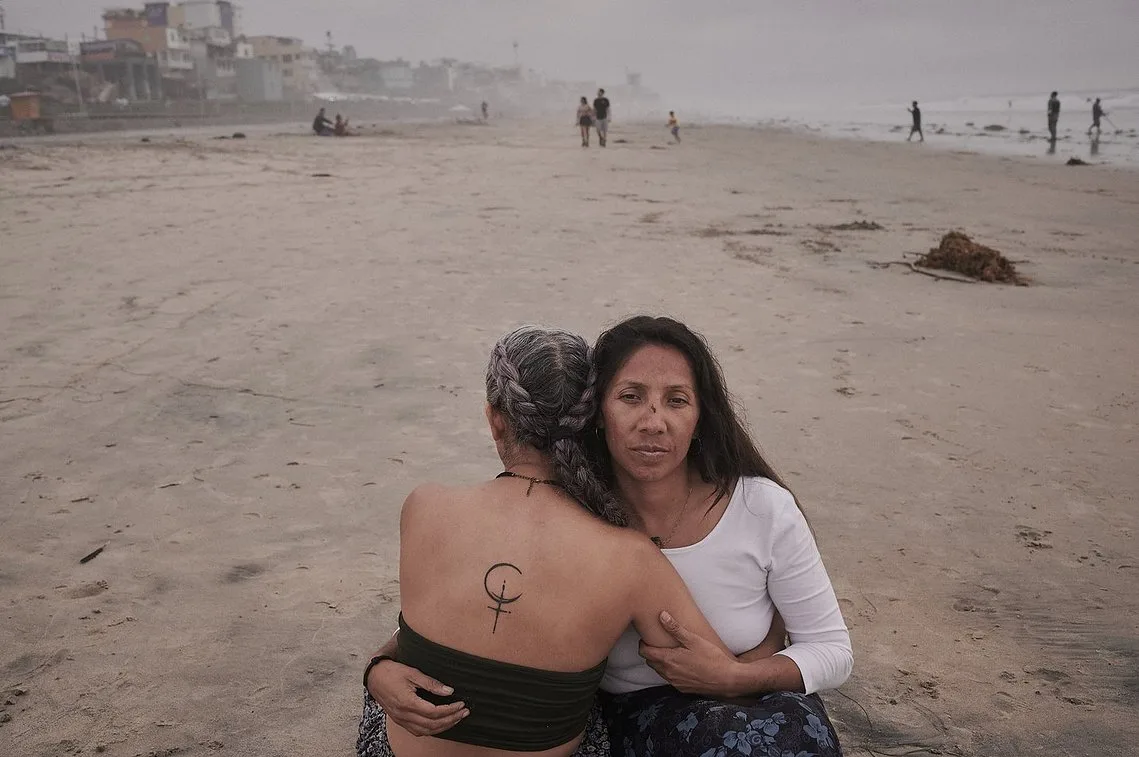
How does one make such a decision? The only idea we had was to ask for the input of the doctors and the advice of my uncle. But he was afraid of imposing his view and gave us the room to feel and say everything we needed. The other way to make the decision was to think about my mom herself: her personality, her fierce independence. We needed to reflect on her aliveness because she/we never even considered or discussed her death. If anything, it always felt as if she was more alive than us. Then, there were the involuntary movements and reflexes of her body, mainly in her arms and legs. We were told those often do not mean a great deal. They are just spasms of the muscles, physical signals without signs of volition. My sister paid close attention and talked about them trying to make us feel better or more hopeful. I wanted to cling to that hope. So much so that a couple of times I even tried to pray almost thirty years after I had vehemently renounced Catholicism. Despite being in such a desperate position, I still couldn’t quite believe in that Catholic god. With the years of mourning, I have learned to believe something else that does make me feel at ease, semi-whole. Before, when my mom was passing, my daughter became some sort of new religion. She was a force that allowed me to keep on going.
In Edwidge Danticat’s memoir, Brother, I’m Dying, she delves into the complexities of family relationships impacted by Haiti’s convulsive history at the hands of multiple empires and corrupt national regimes.3 She works around the death of her two paternal figures: her dad and her uncle. Their presences and absences are the result of immigration and survival. Her parents had to leave Edwidge and her siblings in the care of her uncle and aunt to start working in the U.S. That formative relationship with these other parents continued to be important throughout her life. Her narrative takes us through the most painful, exciting, and hopeful moments of these men’s lives: their upbringing in Haiti marked by political instability and the violence derived from colonialism, including the international chastising of the first globally successful slave rebellion, the U.S. occupation of 1915-1934, and the power-hungry national politicians. The lives of the brothers seem complementary: one remains in the island, doing political and later religious work, fighting to build a community at the service of Haitians. The other brother, Danticat’s father, emigrates to New York and works until exhaustion as a taxi driver, raising his children on the values of respect, education, love, and cultural pride. Something that is not easily graspable from the title is the fact that the memoir is also about life. While her father and uncle were dying, Edwidge was pregnant. Reading the pages, I couldn’t contain a sense of wonder. I felt accompanied by this narrative that so beautifully and painfully comprised the experience of having a life inside you while living the death of, in my case, the person that impacted my life the most. Danticat’s memoir transformed my mourning. It created a passage out from the tunnel of mourning silently.
My silence was the result of multiple and differential issues. I couldn’t find the words of what my mom meant to me, the pain that the circumstances of her death caused, and life after her body was gone. I would never be able to. It is impossible. Language is limited. I also wanted to delay my grief to protect the growth of my daughter inside me. Maybe even for more selfish reasons, to shield myself from the insurmountable loss of my mother’s eyes, body, warmth, voice, smile, and even her ways of showing harshness, of being critical and overbearing. It hurts to think I would never be able to hear her again. Here in the U.S. and in Peru so many people, relatives, friends, acquaintances, remember her laughter. They often say: Se reía de todo, Elsita. Qué buen carácter tenía. She could lighten up the room with her laugh, bringing joy and dissolving the heaviness of our situation. I’m certain that her good disposition was one of her ways of fighting back. Surrounded by scarcity, complicated family relationships, Peru’s war, and later the hardships of immigration, succumbing to a bad mood, sadness, or anger, was for her a form of defeat. Of course, there were times when she was all that, but her conscious effort was to be in a good mood. I used to criticize this as I saw it as a form of repression. Now I get it. For me, anger is a way to stay in tune with my pain and desire; for her good mood was strength, her way to keep being herself in a world that wanted her to give up.
To say that my relationship with my mother was close is an understatement. We slept together until I was around nine, partly for lack of space but also to keep each other company. Despite working late hours almost every day, she made herself available to me, especially emotionally. She would always ask me questions, help me understand relationships and emotions. She was in many ways my first analyst. My mom taught me the importance of education as a practical tool that helps us get a grasp on ourselves and to navigate society. She didn’t finish high school. Maybe because of that she would apply herself even more in the knowledge needed for her previous jobs in sales.
Anthropologist Kimberly Theidon was the first to study the phenomenon of “la teta asustada” a condition suffered by Andean women who were exposed while pregnant to the violence of Peru’s internal war or those whose pregnancies were the result of rape.4 A literal translation would be “the frightened tit.” The more palatable one — that also became the title of a film nominated for an Academy Award — about this syndrome is “the milk of sorrow.” The Quechua word ñuñu means both “milk” and “breast.” Pregnant women pass the susto [soul loss due to fright] caused by the violence they suffered to their babies, producing permanent damage, propensity to illness, or general unwellness in the children. I’m not comparing the causes of my susto to that of the Andean survivors of the war. Unlike these women, I didn’t experience direct violence at the hands of someone. In our barrio, we survived the war differently. I, for one, was born with it in 1980. It was the ground of my childhood and teenage years. My mother’s death away from our country made me feel like the women in Theidon’s book, afraid of transmitting my pain to my baby. My susto was connected to sorrow. I did feel like the timing of my mother’s fatality was related to the perils of immigration, to the explicit and hidden forms labor forces upon immigrants. I also felt linked to these war survivors since, as Theidon explains, their pain cannot be subsumed in the language of trauma. I felt soulless after my mother’s death and sensed that this huge void was going to attack my daughter’s health.
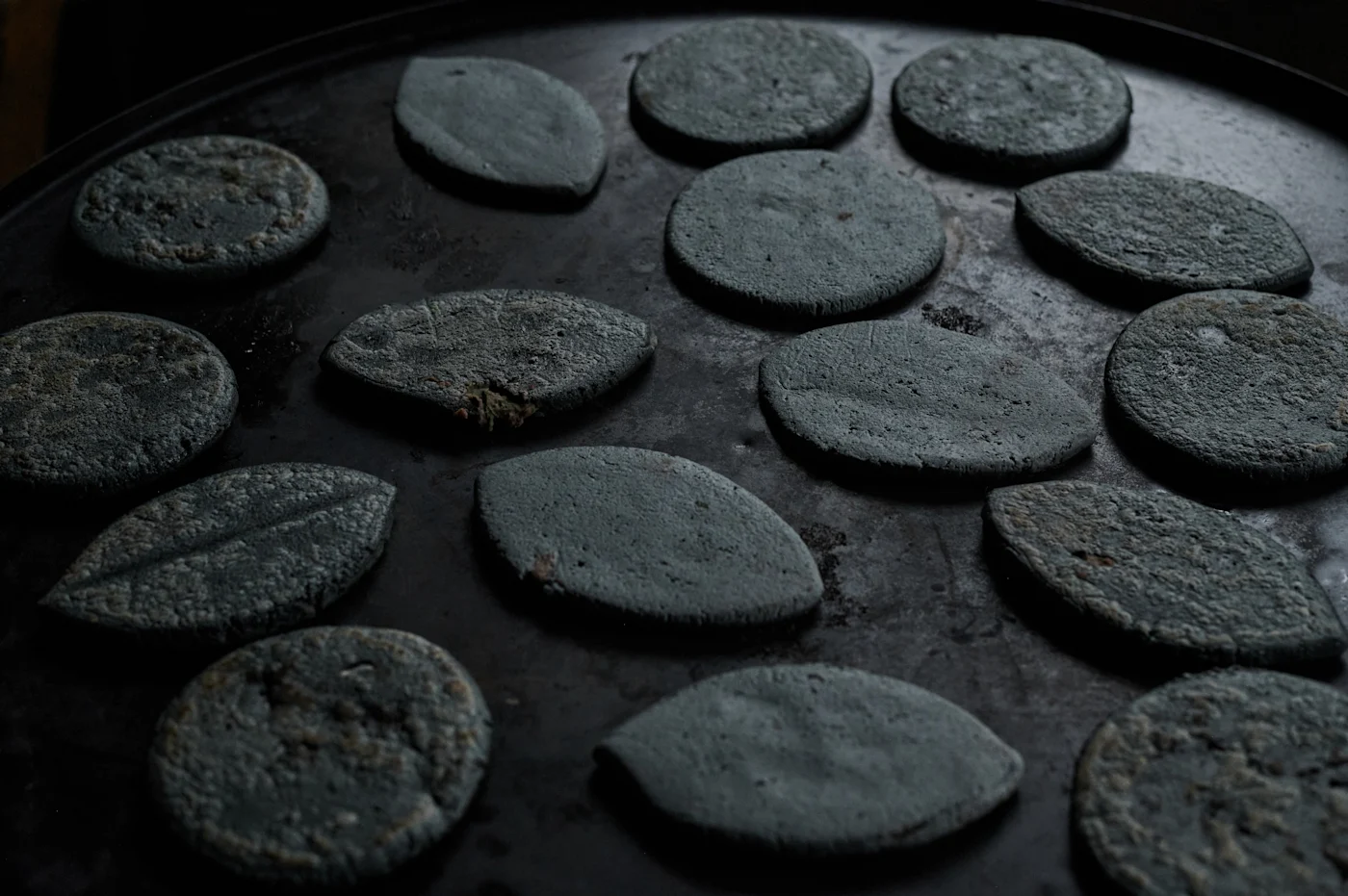
When I saw my daughter for the first time, her eyes still closed, her tiny body stretching into the outside world, I saw my mother’s face in her face. Her dad told me the same. It was otherworldly. Powerful. The deepest wound I still have is that my mom never met my daughter in the flesh. I had no words to wrap my head around the fact that I needed to confront motherhood without her. Over the years, I became convinced that they actually do know each other. My mother’s presence is palpable via an altar to her in my house, in the stories I share with my daughter, in some of my own facial gestures, my own ways of talking and even the way I do house chores. In the emotional odyssey of mourning, I have encountered people along the way who have helped me envision other ways of being with this huge loss. One of my dearest friends and colleagues, Solimar Otero, a Santera and courageous scholar, guided me in putting together an altar. It’s been more than three years already since we ate and gathered next to my mom’s portrait. For me, it has been incredibly healing to have her there accompanied by flowers, pisco, water, incense, my sister’s rosaries, and the ornaments my daughters made for her.
One of the first mourning gestures I was capable of doing was a tattoo. I thought about something symbolic, small, and visible to me. My hand seemed like the perfect place because of the constant writing and typing. A Russian woman tattoo artist placed three dots between my thumb and my index finger. They symbolize the three most important people in my life, not coincidentally all women: my grandma, Yuma, my mother, Elsa, and my daughter, Emma. During my US naturalization interview a few years ago, after the history exam immigrants need to pass, the Homeland Security officer asked me about the meaning of the hand tattoo. I told him, to which his only reply was: “Oh, I used to be a prison guard, and the MS-13 would have similar tattoos.” By then his files showed I had a PhD and was a taxpaying immigrant with no police record. I’m not sure exactly if his remark was a form of intimidation, a way to show his toughness around criminals, or just a frivolous comment. This interaction is typical in the non-dialogues between immigrants and immigration personnel: harmless yet harmful; susceptible to other meanings; trying to catch you in the trail of yet another process, to render the person into a mist of senselessness. In this second Trump administration, tattoos are taken as proof of criminality if they are attached to a racialized body, a foreign passport, or an accent. Tattoos are hipster and innocuous in a white body, and a mark of crime in a brown one.
The mourning of our immigrant loved ones gets caught up in a huge web of immigration procedures. Pain accompanies each one of them. Dealing with the superior forces of the state is like dealing with an omniscient god. There. Always. No matter what. People die; people are born. It is all intertwined with appointments, filling out endless forms, renewing documents again and again, living in constant fear of deportation by arbitrary or targeted means. Interactions that remind me of The Trial by Franz Kafka. I read the Spanish translation in my teens, and it became one of my favorite books of all time. The original German title, Der Prozess, is closer to the Spanish translation El Proceso, and better conveys the idea of a never-ending irrational demand from the law. In the novel, the protagonist Josef K is accused of something that remains undisclosed to him. The mere attempt to look for a clear answer is taken by the authorities as an affront. Even though Josef is not an immigrant — in fact, part of his defense is his birth certificate — the novel communicates the ways in which democracies, the law, and law enforcement as such contain fascist traits: “What sort of people were these? What were they talking about? What office did they belong to? K was living in a free country, after all, everywhere was at peace, all laws were decent and were upheld, who was it who dared accost him in his own home?”5
The K can easily be assigned in our present to Mahmud Khalil and countless others.
Immigrants are always already assumed to be guilty, with or without papers. Our existence is a crime. The immigrant — and most particularly the non-white immigrant — is a criminal. Joseph K must surrender to the nonsensical script of the conversations. Language is no longer a tool to discern and solve but instead becomes a trap. Kafka brought to 20th century Western literature a truth colonized people already knew in practice, and, as previously-colonized subjects, we immigrants also know that anything that comes out of our mouths can sound wrong to the ears of immigration authorities. We must learn to self-censor and exert control over our speech. It’s even better if it is accompanied by a humble demeanor. Don’t lift your eyes like María Landó; yet don’t be too humble either, they might think you are not worthy of the North. And yes, if we reflect on the extent to which different states, both those of the countries from which we hail and those in the North, have tried to eliminate us, and yet, despite it all, we are still here, then our criminality is in some sense true. We are escapees.
In Andean traditions, almas visit us and we need to be prepared to welcome them. There have been moments when I fully felt the presence of my mom with me. I was post-partum while going through the process of getting my first academic job. For the non-academics, one of the many nonsensical procedures universities still have in place is to utterly exhaust job candidates, especially at entry-level, with an interview process that includes all of the following: a research presentation, teaching demonstrations, meetings with colleagues, meetings with students (undergrad and graduate), meetings with deans, “informal” lunches, coffees, and dinners, and so on. I was doing a couple of these two to three day-long “campus visits” while also feeling energized by wanting to get out of an unhappy and abusive relationship. In between interviews, I would pump breast milk and store it in the minifridge of the hotel rooms or carry the milk bags around in my purse if I was already in university buildings. All while pretending I was totally fresh and not dealing with engorged breasts in between appointments. While riding the train back to New York, I felt my mom sitting in front of me. It was an alma’s visit of great reassurance, truly a sense of companion, riding along, protecting. It was her way of telling me that despite it all I was going to have a better, independent, future as a single mom: just like her.
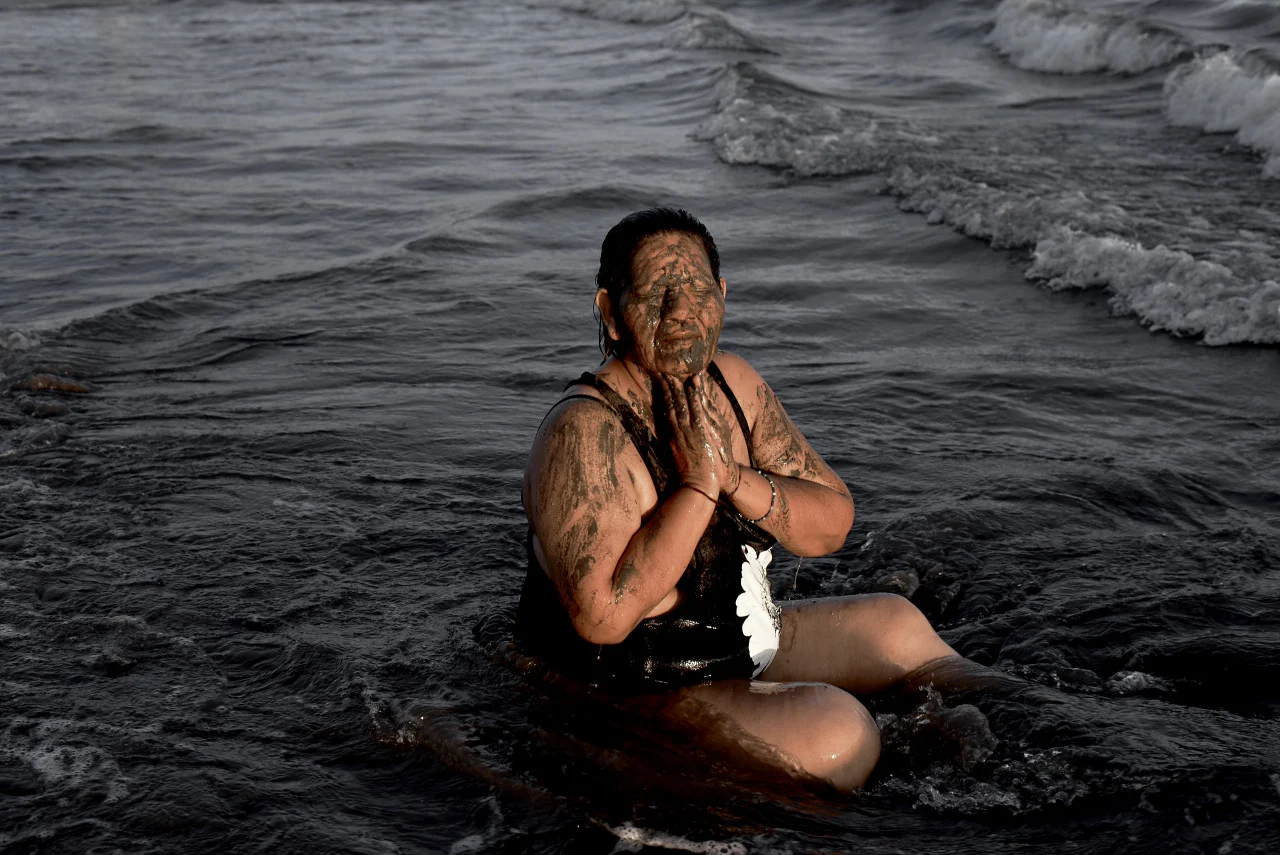
In the epigraph I selected above, Gayatri Spivak is posing a question latent in Friedrich Nietzsche’s final writings, while thinking about autobiographical moments in Jacques Derrida’s oeuvre. The latter’s mourning of his mother centers the contradictions between writing as a modality of what is closed or dead, and the life carried on by the mother as a figure: “not an autobiography at all but an impossible counter/thanatology, for the mother is not writing.”6 Derrida’s mourning is troubled by his circumstances as an immigrant, the fact that his mom died “far from home.” The common senses between mother and origin, life and land, hit home in mourning, but of course they do not determine the mourning of a mother. On the other hand, immigration is mournful. When immigration and mourning intersect, they generate new depths.
My mom’s death in a hostile land was similar, although never totally analogous to, her mother’s death in another hostile land: our own country. Thousands of miles apart, another language, vegetation, people, and culture, my mother’s death is a reminder of our nomad chola ancestry. Distances have intensified and so have our strategies for survival, reasserting the paths of our rebellious ancestry. We impose our contaminated, unruly bodies, our precarious cosmopolitanism from below. Forget about the American Dream. Forget about the idea of dreamers all together. Especially if the dream is shaped up by imperial imaginaries of education and progress. We knew this place hated us. We knew this country does not want us here, even though it clearly does need us for cooking, cleaning, and building, as well as raising and teaching its children. We knew U.S. and European businesses are welcomed and praised by our government elites. We lived as denizens in our own countries. Perhaps our own way of reimagining a stateless borderless future is to constantly practice nonbelonging to all nations. Maybe in the face of uncertainty and prosecution, we need to practice immigration as maroonage. There is nowhere to return to.
Images: Mahé Elipe
Notes
1. Sophie Lewis, Abolish the Family, Verso Books, 2022.↰
2. Silvia Federici, Revolution at Point Zero. Housework, Reproduction, and Feminist Struggle, PM Press, 2012. ↰
3. Edwidge Danticat, Brother, I’m Dying, Vintage Books, 2007. ↰
4. Kimberly Theidon, Intimate Enemies. Violence and Reconciliation in Peru, University of Pennsylvania Press, 2012. ↰
5. Franz Kafka, The Trial, The Lost Book Project, 2024, 4. ↰