Ten Steps Toward a Revolution
Lucas Amilcar
The following ten points are loosely inspired by the book Revolutions of our Times, a handbook by and for supporters of revolution in the twenty-first century. It draws on the authors’ experiences of the uprisings of the past decade (the Yellow Vests, the Arab revolutions, the uprisings in Chile and Hong Kong, the feminist movement in Latin America, etc.). A speaking tour in the US and Canada is set to start this Sunday.
This short text was written in recent days in the context of the mobilizations in France, driven by the high school student movement unfolding since late September, and since joined by the university student movement and the inter-union coordination. The Yellow Vests have called for a major nationwide mobilisation on October 17th. All of the above sectors are preparing to come together for it.
0. Take revolution seriously
In recent days, the word “revolution” has been circulating more than ever. Rather than simply brandishing it once again as a fetish, we believe we must take the word seriously and ask ourselves what a revolution in this country would actually mean. To do so, let us draw on the experience of those who have lived through real insurrectionary and revolutionary moments in France and elsewhere over the past decade.
1. Multiply the fronts
Young people from working-class neighborhoods lit the fuse. They have been joined by young people from city centers. The margins spark the revolt, but unless they are joined in large numbers by other sections of the margins and by dissidents from the centres, they cannot achieve a real victory. If this does not happen, this revolt, however beautiful and powerful it may have been, risks breaking itself against the walls of power through exhaustion, repression and isolation, like others before it.
2. Become a revolutionary people
Those in power will try at all costs to fracture our nascent unity, which terrifies them, by exploiting the actions, interests, and identities of different groups. The unity of an emerging revolutionary people is fragile but indispensable. Even if we manage to weave it together, it will be threatened as soon as the moments of intensity subside. At such times, we must be able to initiate discussions that do not flatten the differences between situations, work through the many contradictions among those in revolt, and remember where the revolt came from. And finally, we must not forget our principal enemies: this country’s centers of power, its billionaires, the major media outlets, and the racist bourgeoisie.
3. Put organizations at the service of the movement
Parties, trade unions, revolutionary organisations, networks, etc.: all must place their financial and material resources, their premises, their social media networks, their human capacities and their media visibility at the disposal of the revolt. They must not elbow their way to the front to lead or represent the movement when nobody has asked them to. An organization, just like a social media page or an influencer, is truly revolutionary only when it puts the movement’s interests before its own.
4. The movement’s strength and legitimacy come from the insurgents
This means, it comes from the high school blockades, university occupations, and neighborhood assemblies. Beyond the spaces that already exist, or the generation already mobilized, we must begin organizing now to build more and more spaces of self-organization of this kind. It is from these spaces that we must embrace our strength, coordinate, prepare for the revolt’s victory and think about what comes afterwards. These spaces are popular power in the making.
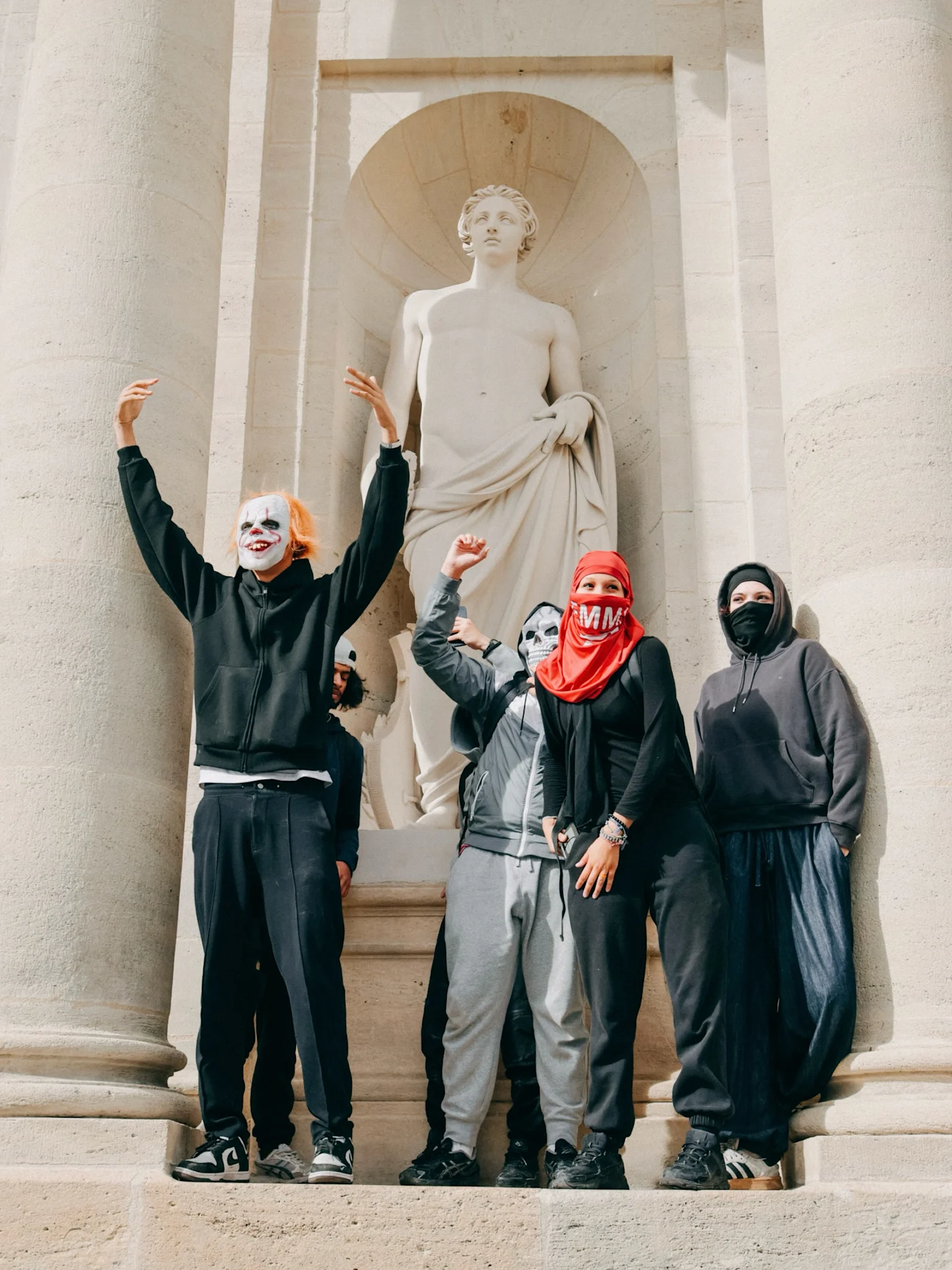
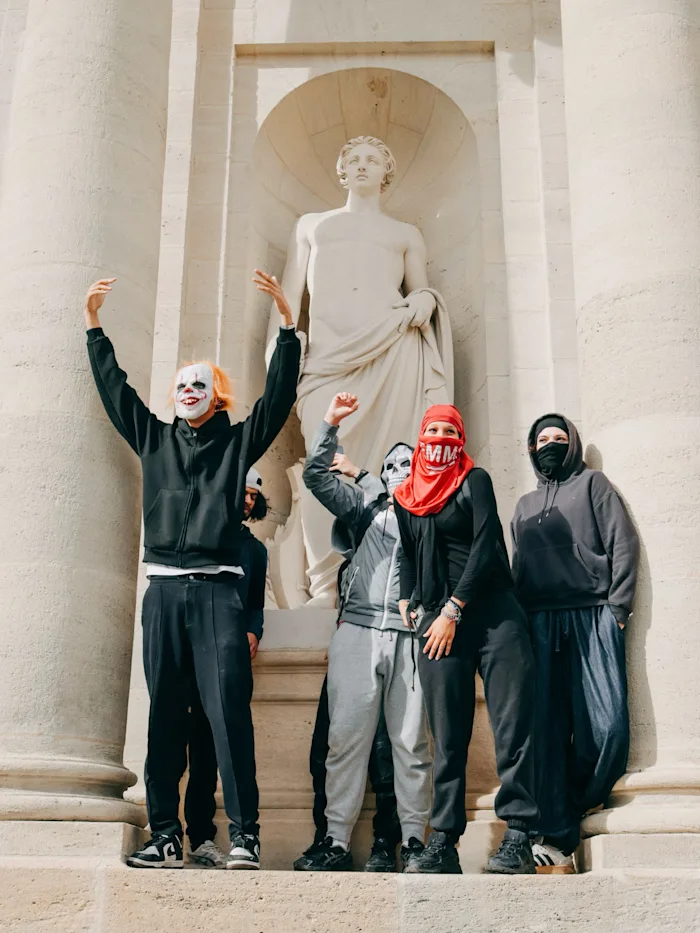
5. Prepare for the shock of our own victory
We are not taking part in this movement as though it were a radical interlude: we are trying to initiate a revolutionary break. To live through a revolution, we must aim for revolution. And contrary to what cynics and fatalists say, we can succeed. Before the Yellow Vests and December 1, 2018, nobody thought we could reach the point of a real popular insurrection. We must therefore aim for, and prepare for, Macron’s removal, and then for the fall of the regime. We must make plans to prepare for such an exceptional situation and avoid being stunned into paralysis if it happens, as so many others have been before us, leaving a host of opportunists to exploit our victory for their own interests.
6. The fall of the regime is not the end of the revolution
If the regime falls and/or a power vacuum opens up, the main risk comes from the movement’s moderate forces (political parties, self-appointed leaders, trade unions, etc.), which are already trying to impose a watered-down solution to give the movement “a political off ramp.” Politicians and the bourgeoisie, on both the right and the left, will always prefer cosmetic change and a few political concessions to ward off a revolution that would truly threaten their power and wealth. New elections, emergency measures, a constituent assembly: there is no shortage of ideas on the table to try to bring this moment to a close as quickly as possible. And a few years later, we will find ourselves with the same faces around the same tables. We must therefore be able, especially while the movement is strong, to reject these traps at all costs and strive for a far-reaching revolution. One that attacks the roots of the system: of inequality, injustice, and humiliation.
7. We are the plan
Rather than seeking to impose a ready-made program or a project already written by ideologues, the future of the revolution is being written in all those spaces that emerge directly from the movement, from its points of self-organization: blockades, occupations, assemblies, occupied roundabouts, etc. But to prevent the aftermath of the revolt from being stolen from us once again, these spaces must constitute themselves as popular power. That means managing to organize the life of the revolt, but also the reproduction of their strength and their territories, and finally articulating, from the heart of the revolt, a revolutionary path for the period after the regime falls. These forms of popular power are both the means and the ends of the revolution.
8. Defend the revolution
If we really manage to make this voice — the voice of popular power — prevail, then the revolution will come under attack from all sides. The greatest danger lies in the repressive forces, even if they temporarily pretend to join it. We will stand no chance in an armed confrontation, so we must seek the disarmament of the army and the police as soon as the regime falls. Occupy barracks and police stations; do not leave them the opportunity to counterattack once relative calm returns. Seek international support as well, to prevent even bloodier repression.
9. Rupture through persistence
Those in power have never been so weak. This moment is a unique opportunity that will probably not come again for a long time. This is the fourth revolt against the Macronist state since the start of his presidency. His regime is cracked on all sides, exhausted by crises; the political class is divided and competing for elections. This is an unexpected opportunity to settle accounts with them and break the regime once and for all. To do this, we must throw all our strength into the struggle. Bring in everything that has been built beforehand and helped prepare this moment: community kitchens, collectives, networks, experiences, tools. Everything must be placed at the movement’s disposal. And finally, we must accept the risk of leaping into the unknown.
The future we are promised is far more perilous than a revolution.
Images: Marion Vacca