At Play in Hell: For a Halloween Uprising
Anonymous
The following text circulated anonymously on message boards in Italy on October 29, 2026. Drawing inspiration from the riotous legacy of "Black Halloween" in the United States, and echoing the emphasis on joyful conspiracy from the Invisible Committee's recent interview and video-tract, the authors enunciate an offensive position within the ongoing youth insurgency spreading across Europe and beyond.
We do not judge our times. Our times judge us. The times are so revolutionary, and yet so far from our liking. We have only ourselves to blame. —Guy Debord, “Second Report on the Construction of Situations”
C’est les ténèbres1
Out of the dark, I cut the cord Tore down the wall, changed my name —Visino Bianco
1.1 Since October 17, we’ve once again been confusing names, masks, and roles. Journalists and government officials — in cahoots, as usual, with the Instagram autonomists — feel duped. They wanted a movement, an organization, students, second-generation activists, and prominent figures. In short, they desperately wanted a subject. Having woven the web of their desires (“pro-Palestine” and “second-generation,” of course, and above all intellectual), they even managed to lure a poor soul into it — whose most radical act, aside from organizing a few rallies, was writing for Il Fatto Quotidiano.
1.2 Not even Halloween managed to spark the imagination of our enemies. Instead, they’re trying to pull the same old trick on us, yet again: to pin us down to ourselves. To force us, yet again, to speak up: “Who are you? What do you want? What are you against?” Only those who are scared to death ask questions like that. To exorcise their fear, they conjure up the specter of the “Maranza,” of young people, of social centers, even the long arm of Russia. Any name will do, just so they don’t have to listen to the cosmic silence; any mask will do, so long as it covers over the only face that truly terrifies: the one that isn’t there.
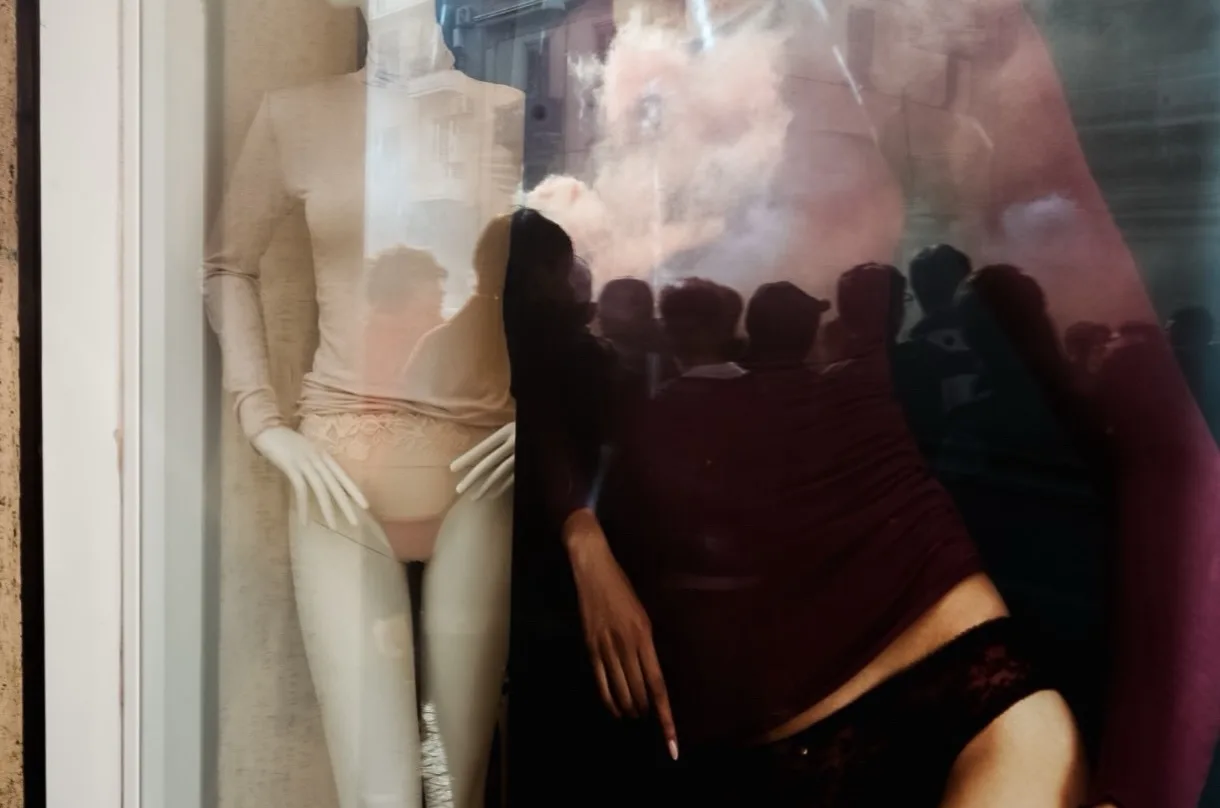
Subjects for sale
2.1 Thrown into disarray, the government, the cops, and the media demand a subject, a purpose, a reason. Imbeciles of every kind leap to their rescue: “Autonomists against data centers!”, “Communists against the government!”, “Students against the war!”, “Citizens against the high cost of living!” When society needs reassurances, activists are there to provide it. They craft slogans for journalists seeking stories, demands for politicians seeking votes, marches for cops seeking blood, anxieties for psychotherapists in search of money, and above all, subjectivities, subjectivities, subjectivities! — to soothe the nightmares of our enemies.
2.2 When 10,000 people are paraded around in a march for four hours, sapping everyone’s strength and cheerfulness and giving the cops time to plant traps at every intersection and square in the city, only to then triumphantly lead the surviving demonstrators straight into the wolf’s jaws, to be massacred between Piazza Baldissera and Piazza Crispi, one should have the good sense to lock oneself away and reflect for a few years, perhaps outside of Turin. But there doesn’t seem to be a defeat harsh enough, nor a humiliation deep enough, to dissuade the militants from thrusting their stupidity upon us. Fortunately, experiences like the one on Saturday, October 24, are revealing. Now we know that the only interesting marches are the wild ones; that real demands aren’t shouted through a megaphone; that an insurrection isn’t launched on Instagram; and that only those who know how to laugh together can build collective power.
2.3 The activist is the piece of chewing gum that any official, breathing a sigh of relief, sticks haphazardly into the cracks of the social dam.
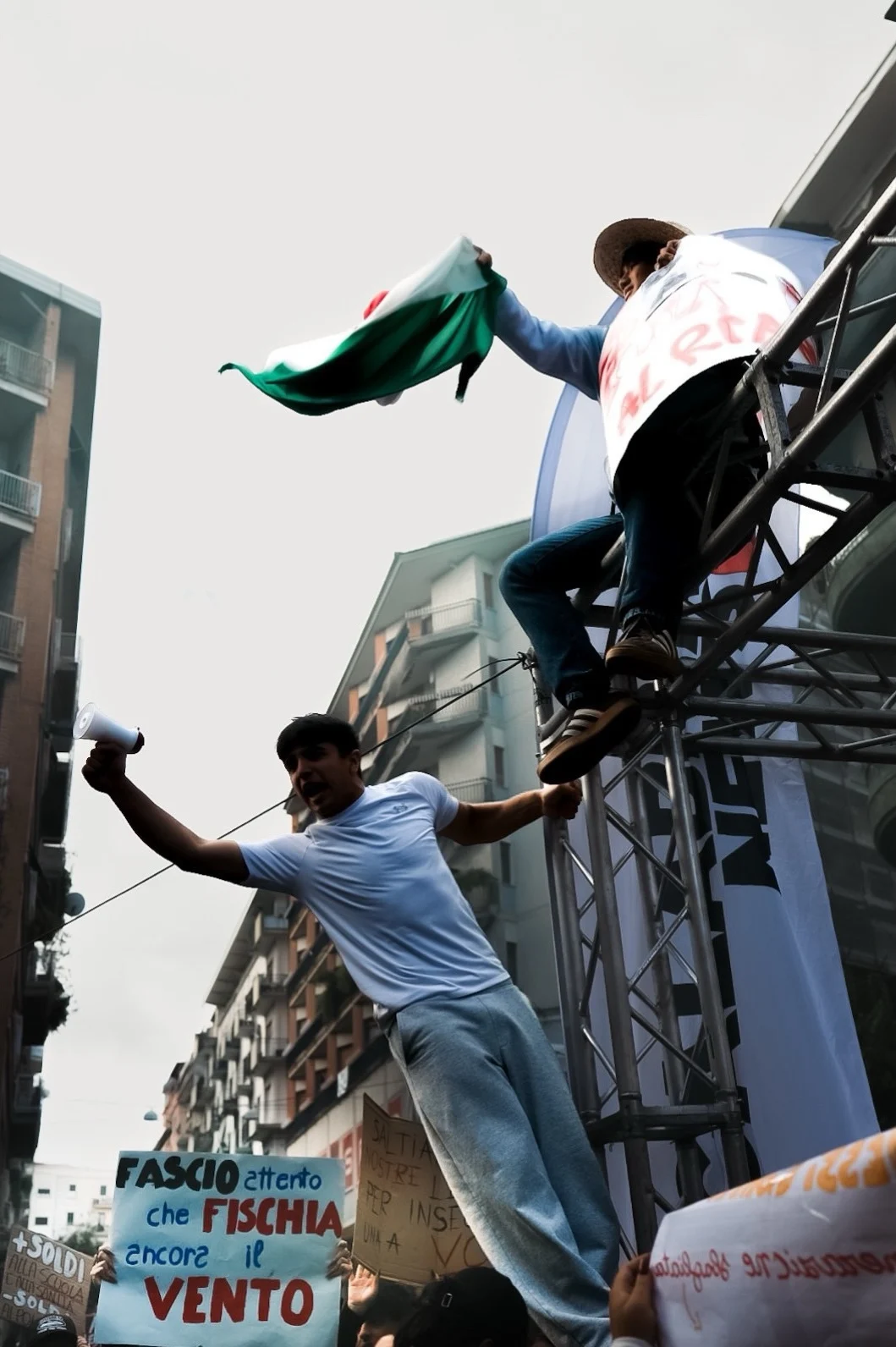
Trusting our yawns
Memorizing politics of ancient history Flung down by corpse evangelists… Ah, but I was so much older then I’m younger than that now —Bob Dylan
3.1 Anyone who has attended a general assembly has experienced firsthand the full range and nuances of boredom. The wretchedness of the speeches — which compete to miss the point — is surpassed only by that of the proposals, which seem designed to discourage anyone from carrying them out. But it would be too easy to blame things upon this or that Marxist-Leninist, feminist, autonomous, or environmentalist group. If assembly statements are so deadly boring, it’s ultimately because what they desperately communicate is always the same thing: “Here I am!” Nothing is sadder than witnessing the compensatory rituals of those who, lacking all vitality, must constantly reassure themselves that they exist.
3.2 Moreover: nothing is more humiliating than playing the role of an audience in the spectacle of assemblies. Sacrificing one’s enthusiasm, one’s need for friendship, one’s hatred for this shitty world on the altar of activism. Accepting the assembly-form means resigning oneself to communicating from a place of absence: absent from the situations in which one finds oneself, absence of joy, absence from others and from oneself. Thanks for not coming!
3.3 Humiliation is the only name for power on this earth. A litany of humiliations that render us stupid, insensitive, bored, cowardly, and pathetic. It makes little difference whether it is the family or school, college or work, the police or the left [l’autonomia], the therapist or we ourselves who inflict them upon us. Institutions, as mechanisms of power, thrive upon the incessant mortification of those who belong to it. They nourish themselves upon the problems that exist only in the subjugated regions within each of us — problems that are ultimately an expression of our servility. Choosing to confront them on their own grounds, through their terminology, amounts to surrendering to eternal defeat.
3.4 The wretchedness of the militant milieu is merely the political reflection of our existential wretchedness, itself a condensed byproduct of the war waged by our enemies against everything within us and between us that cannot be assimilated by capital. Only at this level is it possible to respond strategically to the enemy’s attack. Those who do not relearn how to love will kill those who love them; those who cannot learn to love themselves anew wind up killing themselves. The gestures and words capable of freeing us from anguish can issue from no one but ourselves.
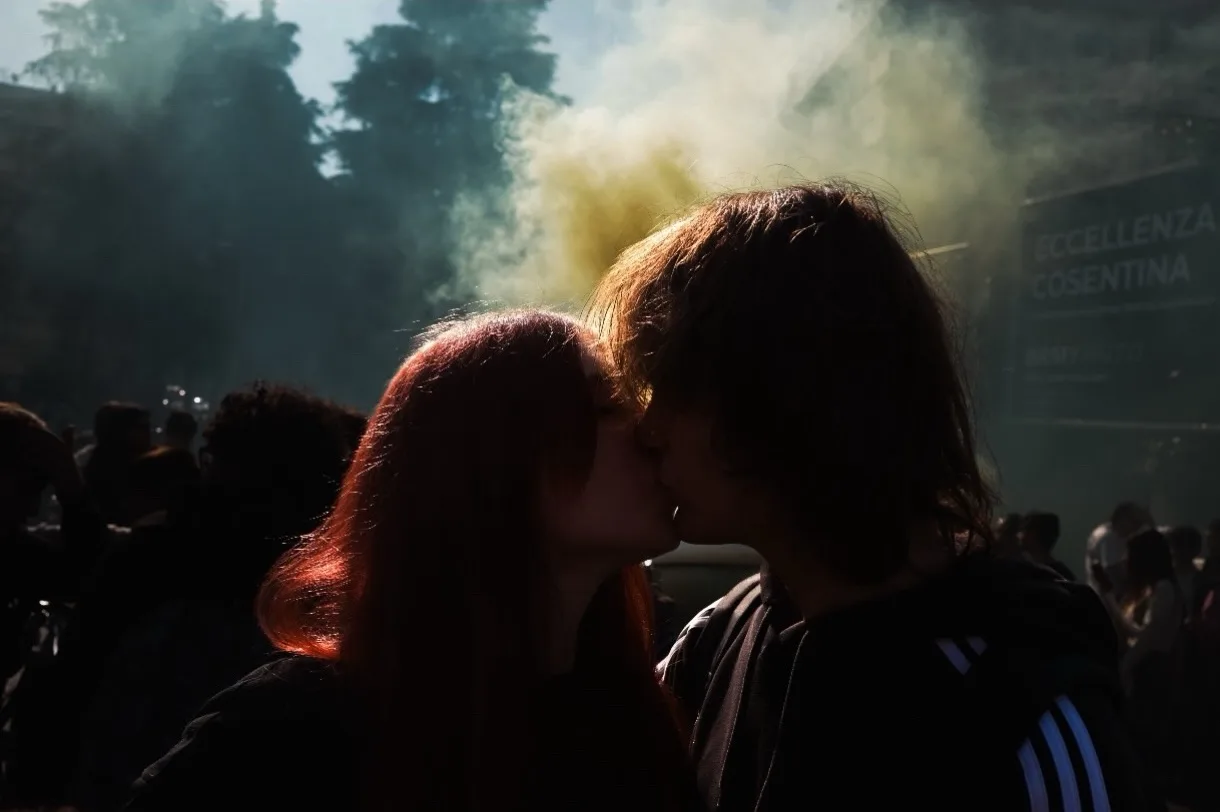
Oops, I did it again!
“The monotony of permitted forms of entertainment explains why a majority is ready to endorse even the most distressing of so-called serious undertakings: continental wars, or the smooth operation of the Printemps department stores.[…] Escape is never possible; what is possible is a change in all the conditions of our lives. […]. This game can only be played with the utmost rigor." —Potlatch #6
4.1 Here’s a game we won’t be playing anymore. “Let’s do it like in France!” would mean mimicking what’s happening elsewhere — but only if the demands of the so-called “movement,” whether here, across the Alps, or in Tirana, weren’t cobbled together haphazardly by opportunists aiming to lead it. Yet demands, concessions, and grievances are the furthest thing imaginable from those who, on October 17, looted stores in downtown Milan, drove the police out of the Bologna train station, and ransacked the Feltrinelli bookstore in Turin.
4.2 "This world’s means of seduction, and the token which guarantees us that this world is only a transition, are one and the same." This brilliant insight by Kafka, which illustrates the deadly secret of the world of commodities, is a truism for anyone who has taken to the streets in recent weeks. Sooner or later, anyone who is hopelessly seduced by commodities will feel the urge to smash a store window. But removed from the limelight, from exchange, from the spectacle of value, a commodity is no longer a commodity: it is a simple thing, within everyone’s reach and ready for any use. On October 17, in Paris, a pair of freshly stolen Nike Jordan 4s were hurled at a line of cops. The homes of the Black residents of Watts who, in 1965, took to looting appliances, were not connected to the power grid. In the days that followed, their children played hide-and-seek inside the refrigerators piled up in the streets. Beneath the paving stones of the world of commodities lies the beach of play.
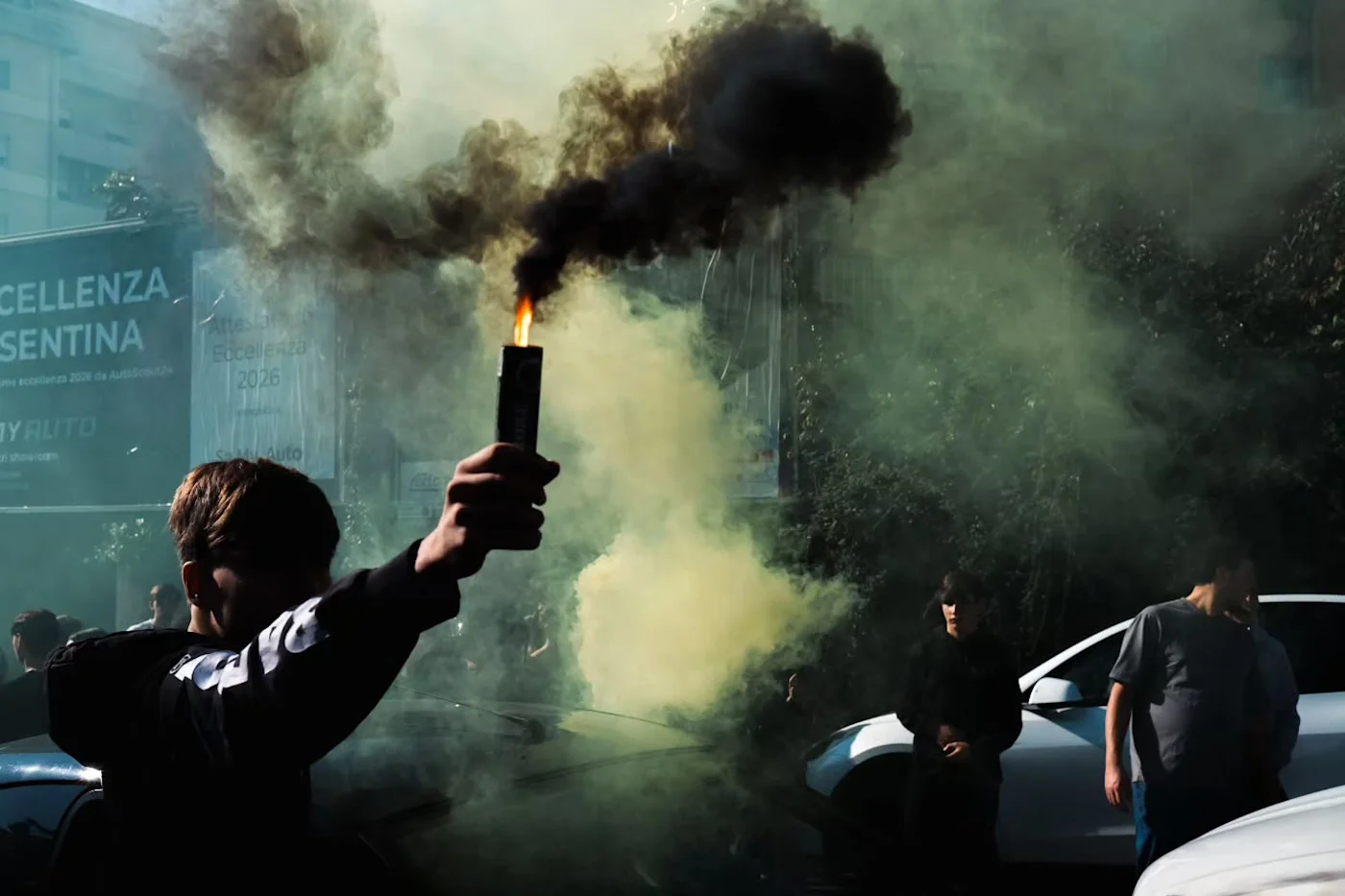
4.3 Oops! The framework of classical politics has collapsed again! By extending the originary gesture of the modern revolutionary movement, we shatter the horizon of representation. By reconnecting with ourselves, we sharpen our senses. We deepen a shared historical presence. We learn to play more exciting games. And we assume, finally, an offensive stance.
4.4 Conspiracy — not resignation — is the opposite of an assembly. Joy — not passivity — is the opposite of a social movement. Friendship — not isolation — is the opposite of militancy. Insurrection — not indifference — is the opposite of a march.
Happy Halloween!
5.1 “In the years following the collapse of the American stock market on October 24th, 1929 (or Black Tuesday, as it came to be known), Halloween mobs specifically targeted symbols of luxury and the infrastructure of the metropolis […]. During this period, known as Black Halloween, youth gangs toppled traffic signs, sawed through telephone poles, turned on fire hydrants, sabotaged streetlights, barricaded streets with stolen gates and trash, dragged tree trunks onto railroad tracks, overturned cars, removed manhole covers, smashed sidewalk slabs, and smashed store windows while holding shopkeepers hostage, placed fireworks in mailboxes, or unhooked the pantographs from streetcars; they then spread grease on the streetcar tracks, placed empty barrels on church steeples, and, of course, attacked the police, setting fire to ‘practically everything they could set on fire.’" (Anonymous, “The Devil's Night: On the Ungovernable Spirit of Halloween”)
5.2 No candy for anyone who doesn’t dress up on Halloween!
Translated by Ill Will
Images: Serena Clausi