The Disorder of Things
Ian Alan Paul
On the final pages of his Republic, Plato presents us with the image of a perfect, total order that no earthly city could ever achieve. Ian Alan Paul’s "The Disorder of Things" begins where Plato’s text leaves off. Yet far from an indictment of earthly life, Paul argues that the imperfection highlighted by Plato does not mark the failure of order but serves as its condition of possibility. This is true existentially as it is politically: just as existence has no essence, no intrinsic form or foundation, political orders operate by ordering a disorder they can never fully extinguish. The state, capital, algorithmic control societies: as these orders attempt to ward off their own inevitable death, they give shape to an increasingly dying world, from ecological collapse to genocide to ever-intensifying security. The task of contemporary political insurgency is to bring about the death of this order.
Order is thus something different than form, which has an anarchic plasticity to it. Anarchy, for Paul, refers to a constitutive non-coincidence of life with itself that serves as the ground of our autonomy, one which order seeks at once to appropriate and to suppress. Whereas order fixes hierarchies among forms, deciding thereby which lives are permissible and which disposable, the form-giving anarchy of existence remains irreducible to it. The choice we now face, he concludes, is between anarchy or death, and Atropos, the Fate who severs the thread, must orient us.
“The sea is not less beautiful in our eyes because we know that sometimes ships are wrecked by it.” —Simone Weil
“Is not philosophy the practice of death?” —Plato
In the very last passages of the last book of Plato’s Republic, the three fates [moirai, μοῖρα] appear, the sisters who together determine the destiny of all living things beyond even the will of the gods. Clotho spins threads so as to begin each life, Lachesis measures threads so as to give each life its length, and the third and final sister Atropos decides where and in what manner each thread and life are destined to end. While most of the Republic concerns the political and economic order of the city state, an order which must strategically counter the various forms of disorder that persistently threaten to undermine and undo it, the fates stand apart as figures of a divine order within which no dissension or desertion is possible, an order that is so comprehensive that no distance remains between its rule and what it rules over. The order of the fates is thus the order that the many autocrats, bureaucrats, and technocrats of our time can only dream of, an order which is imposed upon all things exhaustively and in perpetuity, an order without disorder.
While the divine order of the fates is total, flawless, and eternal, the earthly order of the city-state, in contrast, always remains only partial, deficient, and contingent, relentlessly at risk of eroding, collapsing, or being usurped by another, indefinitely having to fend off the possibility of an insurrection, plague, war, or famine that could decisively wash it away and bring it to its end, as all things on Earth inevitably are. The fates thus appear at the conclusion of the Republic as an image of a harmonious and perfected order that cannot possibly be realized on such a discordant and imperfect Earth. But in the end, this lack of perfection doesn’t make order unattainable in the city-state or any other place, but rather proves to be its very condition of possibility, as all police and politicians already know so well when they survey the disarray of the populations they rule over and see not the limits of their order but its very material. Order does not arise from the elimination of disorder, as if order and disorder were precisely counterbalanced and zero-sum. Order rather arises always as an ordering of the disordered Earth. It is disorder itself that order ultimately takes to be its object, a disorder which can never finally be extinguished or neutralized, but which can be guided and shaped, managed and adjusted, even if it must be so indefinitely, without any hope of conclusion or end.
If our existence has an essence, it is disorder. Which is to say that its only essence is its lack of essence, that there is no order which is intrinsic to life or to the Earth. As a consequence, whatever order happens to historically arise does so only at the expense of great amounts of force, and even then only precariously, and impermanently. This is as true of whole empires as it is of any of the minor constraints or everyday coercions which subtly and steadily direct our lives. The endurance of any particular order thus must ultimately be seen as something exceptional, lasting only so long as it can continue to impose itself upon our unruly existence, remaining always awash in oceans of disorder that never tire of eroding and eating away at its very foundations. The truth of our existence, of our world, and of our lives is that they contain no essential truth, no essential form, no essential order, regardless of whatever truths, forms, or orders may come to tentatively be imposed upon them.
While our society always strives to sustain an appearance of order which is natural and innate, all of its rational apparatuses have nonetheless confirmed the truth of existence’s disorder within its various disciplinary and scientific vocabularies. In the 19th century, the theorization of entropy in physics revealed that the highest state of order in the history of our universe actually occurred in its very earliest moments immediately following the big bang, that event which set all of existence drifting irreversibly into an ever more disordered state. The movement of time, in this sense, was found to be nothing less than the movement of disorder. In the mid-20th century, following the Second World War, Claude Shannon elaborated upon this finding by outlining the way in which all signals and information tended to decay within the ubiquitous noise of existence, just as his contemporary Norbert Wiener developed cybernetics in hopes of technologically disarming this copious entropy and disorder, believing that humanity’s destiny was to struggle against the “great torrent of disorganization” that was found everywhere throughout existence by constructing and defending ever more elaborate “enclaves of order and system.”1
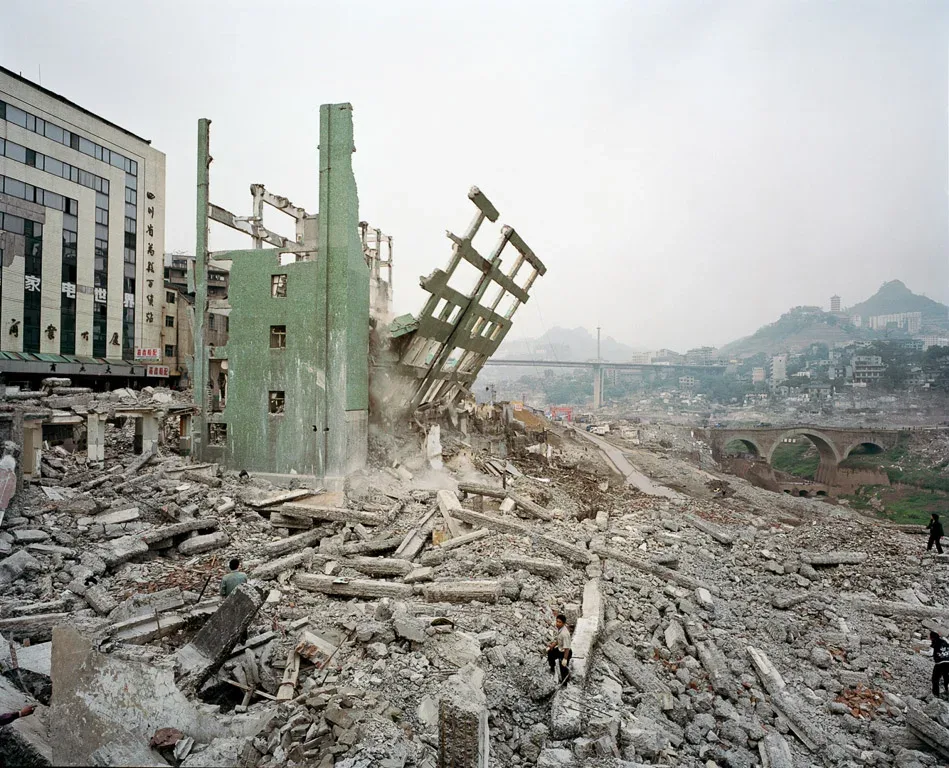
In both information theory and cybernetics, disorder was seen as an ineradicable fact of existence which would always remain hostile to order, and thus as a threat that must be endlessly accounted for, conquered, and subdued.2 Breaking from deterministic worldviews and adopting the science of probability and risk instead, ruling became concerned with “the metaphysical problem of establishing order starting from disorder,” and thus turned towards developing a means of ruling which could allow “order to be restored and, further, that it have the stability to endure.”3 The disorder of our existence in this way was understood not only as a hazard to every social order but also as order’s strategic territory, as that untamed wilderness which order must incessantly oversee, regulate, capture, and impose itself upon.4
Every form of constituted power in the end constructs itself in relation to the disordered truth of our existence, a construction which at once denies this truth by claiming that the foundation of its order is necessary and thus beyond contestation, just as this construction also knows itself to be as contingent and fragile as any other, remaining vulnerable to breakdown and collapse. This is why every social order at once naturalizes itself, just as human nature itself is now declared to be capitalist, even as social orders today are also always orders of prisons and police, of surveillance databases and security architectures, each of which reveal order itself to be exposed to, and endangered by, the disorder it knows it cannot ever finally defeat, and so must incessantly work to apprehend and suppress. The existence of any order is in this sense conditioned upon a continuous war that it must wage against the inevitability of its own nonexistence, against the disorder which breathes freely within existence itself, against the reality that all things which have been created will be at some time be destroyed, that all things that have begun will eventually be brought to their end.
Our experience of this world has come to be the experience of our existence being ordered on ever more numerous terms, an ordering that establishes hierarchies of existence that position man over woman, white over nonwhite, rich over poor, citizen over foreigner, abled over disabled, human over animal, and so on, each of which determines which lives are of value and which are disposable, what practices lives are expected to engage in, or are prohibited from pursuing. Order thus reduces the disorder of existence to any number of binary terms, to zero or one, which then can be arranged and positioned without end. The metropolis is perhaps where order has come to be most compactly expressed and elaborated in our time, a space within which every atom of existence is compelled to play this or that assigned part, to contribute and remain useful, or to be quickly and unthinkingly expelled and erased. And even this expulsion and erasure has a use for order, creating worthless lives so as to give other lives worth, just as we know that the true function of the police is not to prevent crime but to produce criminals. It is in this sense that every order, whether political, economic, or otherwise, aims to determine the formal composition of our existence in the same manner as the three fates, striving to singularly decide what can be created or born, what is allowed to occur and endure, and what is destined to be destroyed or die, and in this way to impose its suffocating shape ever further upon existence itself.
And yet even within an existence that has been so densely ordered, there nonetheless always remains an anarchy of existence which is irreducible to order, an anarchy within which we remain capable of giving shape to the form of our own lives, and of the worlds we live within. Every order founds itself upon an arkhé (ἀρχή), the principle upon which it then can be built. Because order cannot found itself within the disorder of existence, it always has to presuppose its own foundation that remains apart from disorder so it then can subsequently be imposed upon it, asserting itself as the unassailable origin from which everything else can then be measured, positioned, and sorted in perpetuity.5 Existence in this sense remains as anarchy (anarkhia, αναρχία, without principle, foundation, or order), even as order strives to impose itself indefinitely upon the disorder of this anarchy. Even the fates were said to have been born of the anarchy of existence, emerging from the chaos (kháos, χάος) which, in Ancient Greek cosmology, was where all things were said to have begun. Anarchy thus exists as that which order aspires to indefinitely impose its shape upon, just as it also ultimately exists as its terminal horizon, as Reiner Schürmann describes when he writes that “anarchy expresses a destiny of decline, the decay of the principles to which Westerners since Plato have related their acts and deeds in order to anchor them there and to withdraw them from change and doubt.”6 If order claims its foundation and itself to be eternal, anarchy is always there to drag it back down to Earth, confirming that every order’s presence is always ineluctably drawn towards the eventuality of its own absence and destruction.
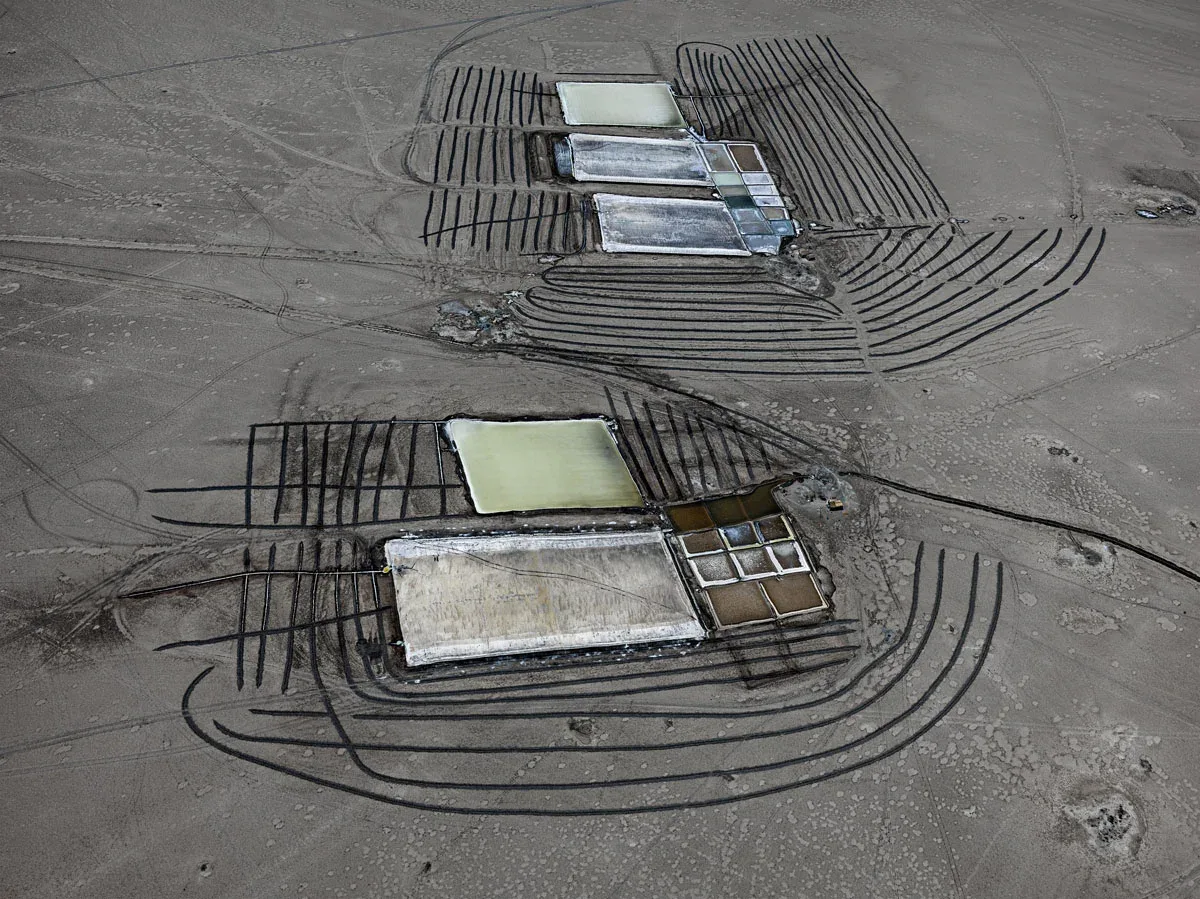
There is in this sense a crucial distinction that must be made between order and form. While form is the concept we use to designate the particular shape that existence can take in any given moment, order is the arranging and positioning of forms which aspires to determine which forms can and cannot exist, as well as how these forms can and cannot relate to one another. An order in this way assigns each form its place among other forms, gives each form a position in a hierarchy of forms, and in so doing defines how these forms can then unfold in the world. While power has been defined as the potential to act upon the actions of others, order should thus be understood instead as a fixed relation that is imposed between forms. And so just as we live within forms of life, order determines which forms of life remain available to us or are made to be untenable by giving its shape to the relation between lives, and to the relation between lives and the world, and so on. Disorder in this sense remains irreducible to order, unfolding as an anarchy of form that evades anything which would determine or constrain the potentiality of our existence. Anyone who has ever occupied a building or a city center, who has engaged in a strike and shut down their workplace, who has run away with a friend or lover in defiance of the state or their family, or who has joined a riot or taken their place on a barricade has had some experience of disorder, in which everything that had appeared permanent suddenly appears to be alive and in play again, in which what had seemed impossible wondrously begins to come into existence and find its shape in the world.
The anarchy of our existence can thus be thought of as the condition of our autonomy, as a disorder which implies that our existence is never simply as it is, that whatever has come to be of our existence today is not fated to be. As a result, we all necessarily remain involved in the continuous recomposition of existence itself, a recomposition that is without any fixed direction, telos, or end. Our gestures, thoughts, and actions in this sense always remain irreducible to any order, and whatever particular form our lives or worlds might take cannot at all diminish our capacity to take part in the further emergence, endurance, and extinguishment of forms. Just as writing can follow the established rules and conventions of a language, but can also break through these restraints, becoming poetry and thus freely elaborating upon its form, so too can life break free of its ordered existence and express itself as disorder in the world, as a form which is irresistible to any form of sorting or rule. Order is thus in the end always concerned with composing a particular existence according to the principles, ideals, and rules of its arkhé, an existence which in our era is shaped by the order of capital and police. But disorder also has its existence, and resides within existence itself, always unfolding in many directions, towards any number of ways of existing otherwise.7 If order arises positively by determining precisely what existence is, disorder resides instead in the anarchy of our existence, an anarchy that always threatens to erode and undo all existing orders and forms, ensuring that other forms can continue to search for their shape within existence and come to be.
If order arises as the ordering of creation, of duration, and of destruction, it survives only by ordering them in such a way as to obstruct and block the possibility of its own destruction and nonexistence, and in this way to give itself an eternal appearance, an appearance that is seen as natural and as an essential foundation of existence itself, an appearance as arkhé that establishes it as a beginning without end. Just as each order imposes itself upon the disorder of existence, it also aspires to remain beyond the reach of any other order, and most importantly beyond the reach of disorder itself, so as to be completely unconstrained in its composition and recomposition of existence. Order in this way ultimately aims to persistently ward off the possibility of its own eventual absence, just as it aims to indefinitely suppress the anarchy that resides in our lives.8
Every form of order, whether we speak of sovereignty and the state or capital and the economy, aspires to determine all of our existence, defending particular peoples and territories while desolating others, cultivating and sustaining some ways of life while abandoning or suppressing others, while striving to avert its own annulment in the process. Order thus claims the power to make and unmake all things, to rule over all of affirmation and negation, all of creation and destruction, all of life and death, all of which aims to ensure that order itself cannot be negated, cannot be destroyed, cannot be killed. This characteristic of order is visible in political and economic systems that make ever more of our existence expendable except for order itself, but also in the minds of all of those who cannot imagine a future beyond the state or capital, who ultimately accept that everything is contingent and unnecessary except for the order which rules over them, who understand the order of their lives itself to be nothing less than fated. Mass extinctions may accelerate, cities may be leveled, and entire peoples may be erased from the Earth, but the order of the state and of capital must remain as the foundation of existence itself.
The urgent problem we must now collectively confront thus expresses itself as two ruinous truths: the order that we live within refuses its own death, and yet this order also now gives shape to an increasingly deadened and dying world. The common sense of our time takes shape within the increasingly turbulent collision of these truths, a common sense that both accepts that the order of our existence cannot be overcome and appears to be eternal, and that the order of our existence is manifest only as ever deeper degrees of desperation and suffering, of devastation and loss. This helps us understand why, when undesired people are now regularly disappeared, or genocide is treated as simply another card to play in the deck of geopolitical tactics, these realities are met not by the fierce revolt they deserve, but with feelings of depression, anxiety, and helplessness. This reality is made even more severe as it is reflected not in any form of sharp clarity, but only in profuse confusion and disorientation. As massive wildfires burn through entire old growth forests, their isolated specks of ash drifting aimlessly through the smoke-filled skies in every possible direction, we all feel the intolerability of this world and its order; yet our grasp of this situation likewise scatters all around and fails to cohere. The world is seen as a billion separate images on a billion individual screens, causing the immensity of the desolation to be reflected only in the multiplication of atomized and solitary perspectives, allowing us each to make sense of our existence only on deeply fragmented and private, and thus pacified and inconsequential, terms. This is the aporia, the blockage, the barricade that we now find ourselves upon, the impasse we must break through and undo. Our historical task is to develop a terminal diagnosis of the world’s order together that could serve as a strategic and insurgent terrain, cultivating nothing less than a shared sense of the need to bring death upon this world’s order that itself spreads death everywhere; in short, to bring death upon this order that refuses to die.
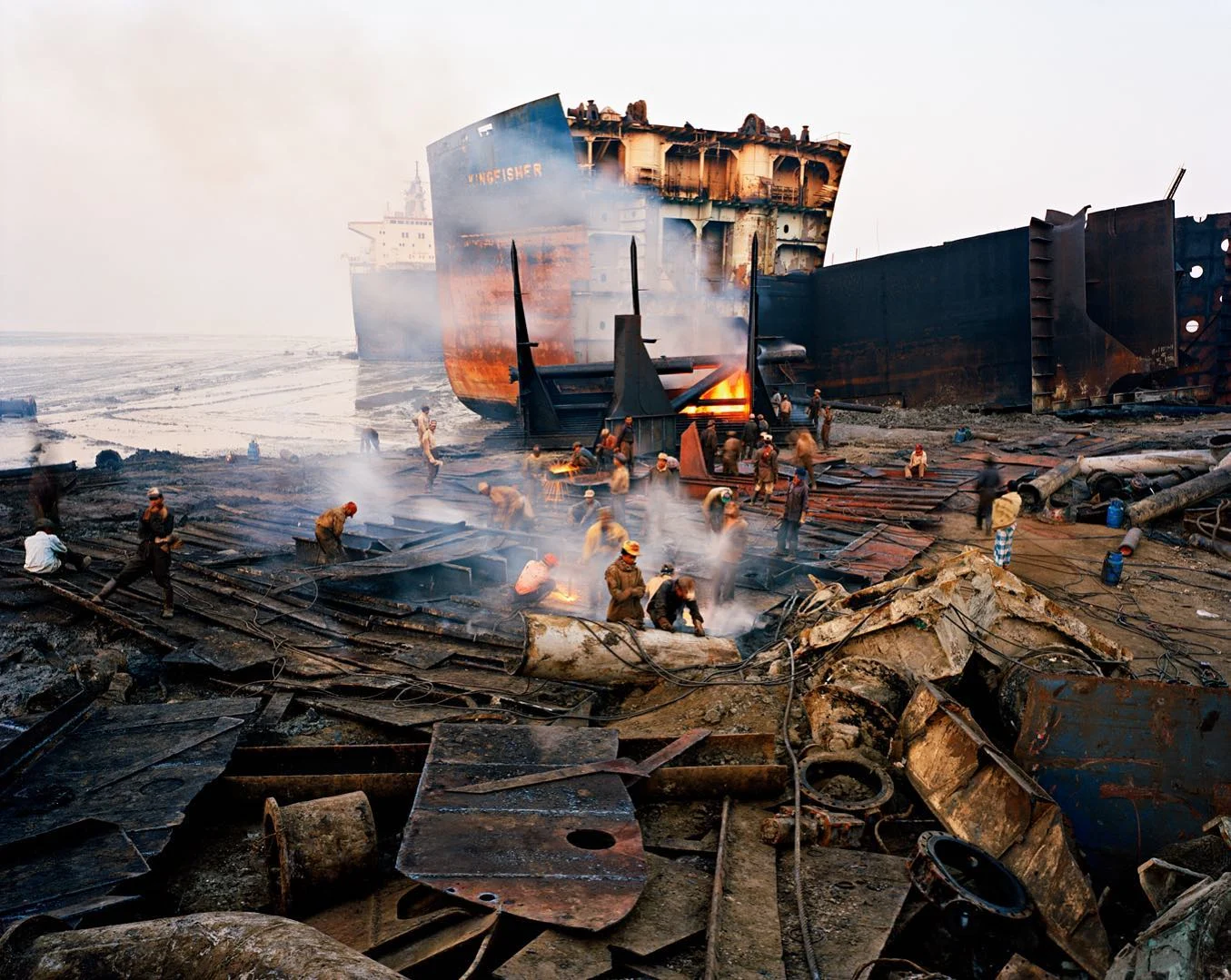
The order of our world is an order of immiseration and desolation. Yet it has become abundantly clear of late that no graph or report, no calculation or measurement, no model or prediction, will ever spark the forms of revolt required to destroy it. One recent study noted that the North American bird population has collapsed by three billion, or roughly thirty percent over the last fifty years, while another predicts that hundreds of millions of the world’s most impoverished people will soon be exposed to extreme heat, flooding, drought, and other environmental hazards in addition to the economic and political violence already being waged against them.9 As the Invisible Committee reminds us, our existence is now ordered by “the shipwreck of politics, the arrogance of the powerful, the reign of falsehood, the vulgarity of the wealthy, the cataclysms of industry, galloping misery, naked exploitation, ecological apocalypse,” a situation that only comes to wound us all the more deeply as we are “not even (spared of) being informed about it all.”10 And yet even as we are confronted with increasingly elaborate spectacles of our own devastation, our predominant condition is a state of collective paralysis, holding our breath while this order further deprives us of our autonomy and dignity, sedimenting its misery and vacuity, and desolating the very conditions of our lives.
Within such an order, the only thing that society can truly offer us is ever more advanced forms of palliative care. And so we find ourselves mesmerized by infinite feeds of cheap amusements and forgettable distractions in a world where data centers and streaming services multiply alongside concentration camps and climate sacrifice zones. Life itself slowly and steadily comes to feel ever less like something we actually live and more like something we spectate, as if each moment were displayed on a screen in front of us and living was synonymous with watching ourselves go to work, pay our bills, and charge our phones in repetition until the light eventually flickers out, reducing our life to the sequence of images algorithmically prepared for each and every one of us. Just as Frantz Fanon observed that decolonization was nothing less than “a program of complete disorder,” there is undeniably no orderly way out of this bleak situation.11 Order, like progress, is itself the catastrophe.12 Simply to ask that people not be meaninglessly buried en masse beneath rubble and then thoughtlessly paved over has today become tantamount to demanding the destruction of everything we know, of all that gives order to our existence in this world.
The truth that we must bring death upon the order of the world is one the revolts of our time are already conscious of. It is truth which gives shape to our destituent intuition, to a world spirit directed towards the end of this world. This consciousness is reflected in the reality that uprisings today take shape not as revolutions which aspire to replace those people at the top of this or that social order with their own, but as insurrections which desire only to tear down order once for all. Even those who may have at one time pleaded with us about the need for reform, who have asked us all so often to remain ever more reasonable and in this way ever more pacified, now see the writing on the wall. Scientists working with the United Nations calmly state that there is no stopping the climate crisis without destroying the whole of the fossil fuel industry, an act which would be nothing less than the destruction of the global economy. Human rights activists patiently explain that the only means of putting an end to the abuses of ICE and Frontex is their complete abolition. And since the world’s political institutions prove time and again to be incapable of accomplishing either of these tasks, one cannot help but conclude that they too will have to be destroyed. That the order of the world must be brought to an end is thus increasingly taken by people not as something to be debated, but as something which is already evident. There is thus a need to give consistency to what is already evident, and to transform it into an environment within which we can find one another and think together, and in this way to allow it to shape our revolts, which are themselves simply the form that disorder unavoidably takes when it arises within such a densely ordered world.
Even as the order of our world continues to dig grave upon grave, layer catastrophe upon catastrophe, there nonetheless remain loud voices within every institution and hall of power, within every think tank and advocacy group, that lament and mourn the precipitous breakdown of order in our time. Some speak of the decline of Western hegemony and civilizational norms, others of the crisis of the nuclear family, of the inner city, or of the immigration system. Various experts decry the ongoing collapse of American democracy overseen by Trump without pausing to consider that it is precisely this democracy that brought Trump to power, just as they warn of the breakdown of the postwar liberal democratic order without being able to see that it is within this order that the genocide in Palestine continues to be armed and committed. What speaks through all of these voices is not only the fear of order’s decline, but also a consensus that, if there must be a militarized defense of order at whatever cost, this is because in the end it is only order that can save us. In truth, this breakdown of order is only a mirage emerging from the boiling intensity of our historical moment, a time in which the order of our world is expressed as insecurity and desperation, as abandonment and domination, and thus a time in which what we feel as instability and vulnerability is nothing less than the presence of order in our lives.
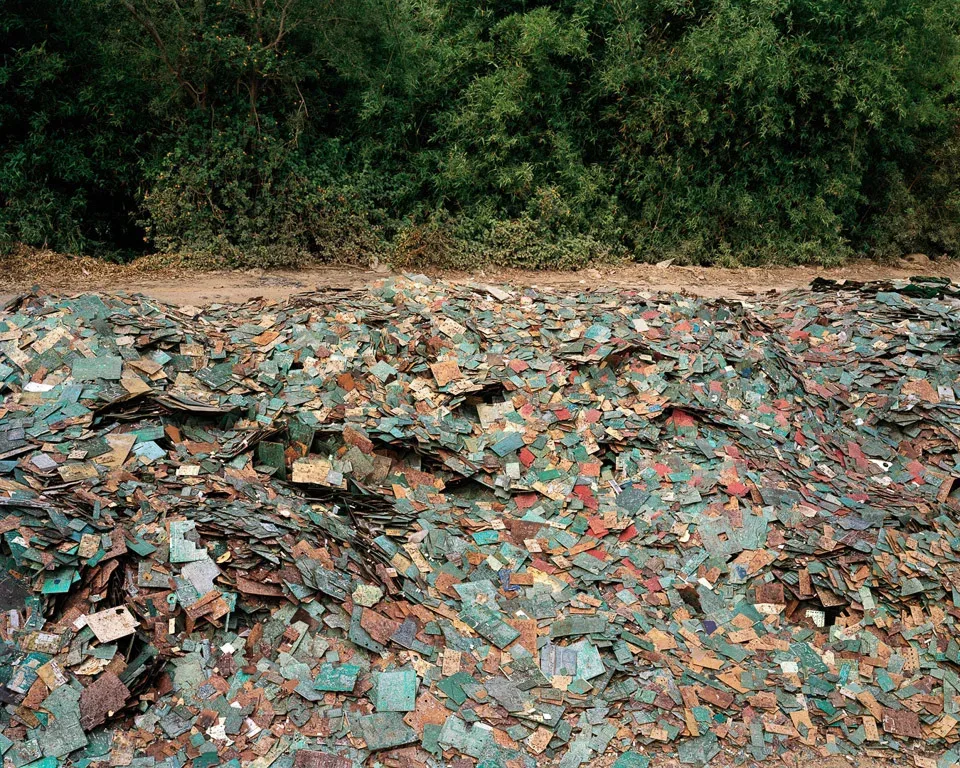
The rise of insecurity in our lives and in this world ultimately moves in lock step with the rise of security as the dominant form that order now assumes, an order which takes shape both as an intensive and violent policing of identities, yet also as the generalized surveillance and oversight of life which itself is increasingly abandoned. Domination at once becomes more diffuse and general, taking shape as the hostile environment within which we live, at the same time that it is hyperpersonalized and obsessive, seeking to eliminate that which differs too much or strays too far. The more precarious our situation, the thinner the thread from which we hang, the more compelled we feel to submit to whatever humiliation or misery simply in order to survive. The result is a population that has adjusted itself to being treated as potential criminals or terrorists to be obsessively monitored, analyzed, and controlled. And so while undocumented lives and trans lives are subjected to unrestrained and targeted acts of violence because they have been identified as threats to order, life in general also grows accustomed to being monitored and surveilled as if it were simply as a fact of our existence, just as people in a previous era accepted that their lives were watched over by god. Within this order, life is made to be increasingly insecure as it is left with ever less to rely upon, such that many often wonder how they will manage to feed themselves, to pay debts, and to afford rent, at the same time that life can totally rely upon security itself appearing in each and every practical arena, as questions, inspections, checkpoints, and cameras.
The tendency of every order premised upon security is ultimately to resort to extreme measures to counter what it takes to be extreme threats, to impose violent order on the disorder it shapes and sustains, heightening the contradictions of the state of exception theorized by Giorgio Agamben and giving form to a society within which “security and terrorism may form a single deadly system, in which they justify and legitimate each others actions.”13 The desire of order to impose itself upon disorder thus comes to be rearticulated historically as the desire of security to impose itself upon terror. Terror, after all, is a social phenomena that justifies every form of surveillance, and so an order founded upon permanent security and terror is provided with all the information it needs to calibrate and coordinate its actions. It is in this sense that security, as an order, relies upon the disorder it names terror, as it is the enduring existence of disordered terror which ultimately justifies and helps to sustain security’s own indefinite existence. Within such a context, refusing the securitized order of the world also entails refusing ourselves, refusing to live as paranoid subjects of the world that submit to whatever emergency measure or authoritarian command, refusing the very biopolitical terms upon which our own survival is now constructed and defined.14 Security is the form of order best suited to manage insecurity, and in this sense it has arisen as order’s most developed expression in a world where order continues to render our existence profoundly insecure.
It is therefore unsurprising that cybernetics has taken its place as the dominant science of management in our era, ensuring that each thing that exists can be tracked and modulated intimately and automatically without end. In establishing ideal target states in relation to the informatic inputs and outputs that have been mapped onto existence, cybernetic systems can then bend and redirect disorder indefinitely towards this or that goal, such that order is recursively sustained between order and disorder. A securitized social order is in this sense the ideal soil for cybernetics, as it is already flush with the information needed to feed its forms of control. But this also helps to explain the rapid invasion of artificial intelligence into every area of our lives, as its statistical order is advantageously equipped to oversee the disorder that security concerns itself with managing and policing, seeing in disorder only sets of probabilities to model. Among the most significant technical developments of artificial intelligence is that it can be trained on any arbitrary set of unordered data, and in so doing can produce a probabilistic order through which it then can subsequently be deployed. Artificial intelligence has built into it a formal tendency to approach all of existence as if it possessed a latent order; its “training” is nothing other than the modeling of order within disorder itself. A disordered existence that has been represented as data can thus be ordered into resources to be captured, opportunities to be exploited, or targets to be eliminated on an automatic basis, a technical capacity whose full historical consequences we have yet to see. The creative destruction of capitalism is ultimately realized in this sense as an ordered disorder, an increasingly volatile existence that financial markets can speculate upon and algorithms can tame, an existence within which money can continue to flow and the diesel generators powering data centers can continue to choke the air, all while life itself is continuously downgraded and made disposable, reduced to being an ever less significant variable in the online order of our world.
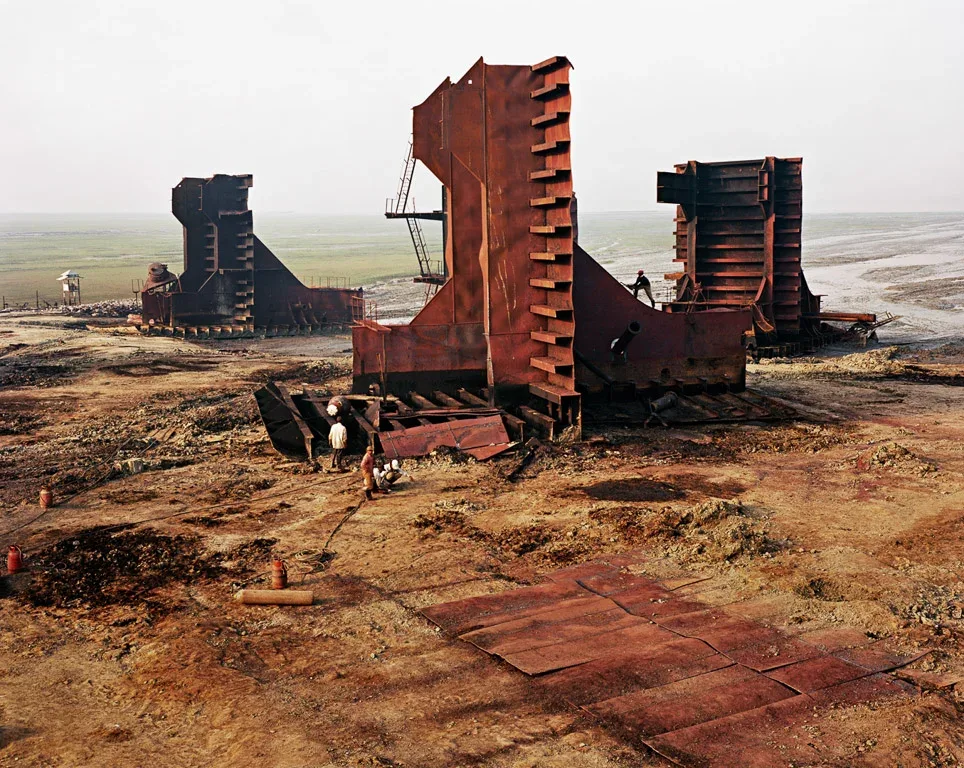
The order of security in our time has taken on a total form, and as such there is nowhere left on Earth, no dimension of our existence, that remains untouched by the securitized logic of capital and the state, nowhere not targeted for surveillance and coercion, for exploitation and extraction. This totalizing tendency of order thus renders the horizon of its destruction itself total, as Michel Foucault made clear when he argued that the very idea of a singular and unified world, order, or situation must itself be undone, that “‘the whole of society’ is precisely that which should not be considered except as something to be destroyed. And then, we can only hope that it will never exist again.”15 An order premised upon the logic of security is ultimately an order that seeks not to eliminate insecurity but only to endlessly intensify it, spread it, prolong it, and manage it without end, to make insecurity inescapable such that security itself remains necessary and total.16 Such an order, itself recognizing no limits, in turn deserves only our limitless destruction.
The question of how to bring an end upon the order of this world is, it must be admitted, a question filled with peril, one which will require immense degrees of courage and passion, but also thought and care. The risk we will have to navigate was outlined by Gilles Deleuze in a conversation with Claire Parnet, when he asked:
Even if we had the power to blow it up, could we succeed in doing so without destroying ourselves, since it is so much a part of the conditions of life, including our organism and our very reason? The prudence with which we must manipulate that line, the precautions we must take to soften it, to suspend it, to divert it, to undermine it, testify to a long labor which is not merely aimed against the state and the powers that be, but directly at ourselves.17
The destruction of the order of this world will thus necessitate the simultaneous creation of disordered worlds and ways of living capable of sustaining our dignity and commonality, our creativity and autonomy — worlds and ways of living which always turn away from suicidal paths in which the destruction of the order of this world culminates also in the simultaneous destruction of ourselves.
The many uprisings of the past decades have provided us with repertoires that could be put to use in the destruction of order, but these repertoires still must find their proper grammar, the spatial and temporal form through which they unfold. While is it not possible to discern the precise sequence or geographic distribution of revolts in advance of their arrival, we do know that the grammar of insurrection must have at least three properties, which follow from the form of the order they confront:
When revolts occur, they must work to persistently increase their intensity and number across ever wider territories. Their destiny is either to spread across the Earth and bring total ruin upon this order that has come to be total, or to be recuperated and repressed, to be defeated by what they failed to defeat.
Revolts must refuse to confront order in any symmetrical form of conflict, as this symmetry is itself a form of order. Revolts must rather aim to fragment and spread confusion within order wherever and whenever possible, heightening dissensus and divisions among the police, the military, and whomever aspires to suppress revolt. Order always aims to meet disorder on its own terms, to shape it and in this way defang it, so disorder must be imposed upon order, eliminating the foundation of order’s existence.
The offensive movements of revolts must be accompanied by movements of secession, a breaking away from order which is also the construction of other ways of living, of other worlds to live within. History itself is composed of a disastrous sequence of different orders, with each collapse mirrored in the construction of another. The making nonexistent of order is thus inseparable from the making existent of that which refuses order. The need to destroy order is also the need to create a disordered existence.
All of these characteristics can already be found in movements of destitution and of abolition. Drawing upon his analysis of the Paris Commune and the George Floyd rebellion, Jasper Bernes writes that the need to destroy state power and the value form is inseparable from the need to “imagine an atlas of communist reproduction, with all the knowledge a communist movement might need to begin reproducing itself, at some given insurrectionary juncture.”18 In this sense, destroying the order of the world is not the destruction of the world, but of this world, and as such the destruction of an ordered world will necessitate the composition of worlds beyond order. The destruction of order will thus also be the recomposition of our shared existence, within which we can cultivate and give shape to a “situated configuration of the world, our way of dwelling there, the form of life and the truths that sustain us,” such that disorder, that anarchy, arises and can endure as a way of life.19
What is clear is that if we don’t bring an end upon the order of this world, it may very well be the end of all we care about and cling to, the end of a life worth living, and even perhaps the end of the very conditions which sustain our lives. What we need is thus not a return to order but a leap into true disorder, the realization of a common and free life which would also be the realization of the death of order as such. Endings have a history as long as the world, and in the Republic we can even see that from the very beginning of Western civilization some spark of its end was already there, searching for its way to flame. The question at the very heart of our historical situation is thus whether we can make this negation of the ordered world itself a way of life, and thus to live life itself as an elaboration of form which never submits to an order of form, to give shape to a world which can unfold endlessly as worlds.
In the past there were those who spoke of two paths forward: we could either build a world of socialism, or descend into barbarism. The accelerating desolation of our world in the present has made it clear which path was taken. In our own historical moment we are faced with a different and more severe decision, compelled to choose between anarchy or death. If we took it upon ourselves to see the three fates not as order or destiny, but as points of light in the night sky that could help guide us through the tumultuous struggles ahead, we would conclude that we must rely upon each of them as parts of a strategic constellation. We would have to remain close to Clotho, to see the beauty in creativity, in our capacity to bring new life and new forms into the world together, to give existence to what has been so often denied it. And certainly Lachesis would also be an indispensable companion, as the need to care for one another, to repair what has been broken, and to sustain ourselves and our worlds will always remain vital. But it is ultimately Atropos, the severer of lives, which must most decisively orient us in our time. It is her dark star alone which points towards the dusk of this world’s order, reminding us of the truth that every form of existence always already contains its own end, even those orders which desire only to endlessly suppress the horizon of their own nonexistence. It is only when we have brought ruin upon the order of this world, when we sit together beneath the stars and find that we are no longer suffocated by what has for so long weighed upon us so, that we will be able to fully embrace the poetry of life again, to dwell in the anarchy of our shared existence, to live life itself as the end of order.
Images: Edward Burtynsky
Notes
1. Norbert Wiener, I Am a Mathematician, MIT Press, 1956, 324.↰
2. This disorder of existence would also eventually arise within logic itself, finding its place within Kurt Gödel’s incompleteness theorem which revealed that even in mathematics, that most ideal and abstract of systems, it is impossible to define a set of axioms that is not either incomplete or self-contradictory, just as Alan Turing proved that there are problems which will remain forever undecidable by algorithms, unravelling even the supposedly boundless rationality of computation. In the case of both Gödel and Turing, it’s helpful to return also to the work of Georg Cantor which theorized the existence of uncountable sets and of infinite infinities. The incapacity of digital computers to deal with infinity itself is a further example of the persistence of a disorder in its ontological and abstract dimensions.↰
3. Tiqqun, The Cybernetic Hypothesis, translated by Robert Hurley, Semiotext(e), 2020, 38.↰
4. I’ve used “disorder” rather than “nonorder” throughout this text, even though the prefix “dis-” connotes a dialectical relation to order which is not accurate. The word disorder however has the advantage in English of acting as a verb which signals an active hostility to order, which I find to be useful. Disorder in this text thus should be understood as existing prior to any division between disorder and order (like nonorder), even as it necessarily also arises as a disordering of order whenever and wherever order does come to exist.↰
5. “Broadly meaning both ‘origin’ and ‘order,’ pre-Socratics like Anaximander used arkhé to posit a primary substance from which everything springs forth. The term serves as a sort of foundational riddle for state-builders who construct ever-more arcane hallways dedicated to onto-theology: what is the original something from which our world arises? Plato poses an arkhé as both metaphysical ground and axiomatic starting point, a principle to which nothing prior exists … Arkhé carries forward mythic traces of the Myceneans, for whom an árkhōn [ἄρχων] was a magistrate who ruled over the city, and whose authority was monumentalized in the civic buildings, arkheîon [ἀρχεῖον], and the official documents housed in them (from which we finally arrive at the ‘archive’). Hence the words ‘monarch’ and ‘patriarchy,’ which refer to modes of ruling over others — as well as ‘architecture’ and ‘hierarchy,’ which furnish authority with the means for the administration of people and things. Arkhé thus binds together (1) the metaphysical principle of a substratum or divine founding event with (2) the commanding authority of rulers and their rules.” Andrew Culp, “An An-arkhé-ology, or: Preliminary Materials for Any Future Account of the State,” Selva: A Journal of the History of Art, 4, (2022), 149-50.↰
6. Reiner Schürmann, “‘What Must I Do?” at the End of Metaphysics: Ethical Norms and the Hypothesis of a Historical Closure,” in Tomorrow the Manifold: Essays on Foucault, Anarchy, and the Singularization to Come, edited by Malte Fabian Rauch and Nicolas Schneider, Diaphanes, 2019, 45.↰
7. What composes our existence at any given time is in this sense always only one finite expression of infinite forms, most of which remain unexpressed. In the same way, whenever some form of existence is extinguished, when its form no longer coheres in the world, a possibility is thus created for other forms to find their shape in its absence. Presence as well as absence, affirmation as well as negation, life as well as death, thus all remain bound to one another, revealing creation itself to also always be destruction, and destruction itself to be a force that creates. Each existing form thus must be thought of as only a positive fragment of the negativity which underlies all of existence, as a thing that has temporarily found its place beneath the immeasurable nothingness (no-thing-ness) of the heavens above. Or in other words, as Ursula K. Le Guin succinctly teaches us, “sunlights differ, but there is only one darkness.” Ursula K. Le Guin, The Dispossessed, Harper, 2024, 360.↰
8. Catherine Malabou distinguishes between two forms of anarchy: the de facto anarchy of capital, according to which “the state has already disintegrated. It is no more than a protective envelope for various oligarchies that have divided up the world between them”; to this is opposed a “dawning anarchy” characterized by “an emergent planetary consciousness signaled by the dramatic rise in collective initiatives and experiments in alternative political visions” (Catherine Malabou, Stop Thief. Anarchism and Philosophy, translated by Carolyn Shread, Polity, 2023, 3). The anarchy of capital is ultimately a mode of theft or expropriation which Malabou finds we must confront. Giorgio Agamben’s work moves in another direction, noting that anarchy can only truly be found when power is rendered inoperative, as “power is constituted through the inclusive exclusion (ex-ceptio) of anarchy, the only possibility of thinking a true anarchy coincides with the lucid exposition of the anarchy internal to power. Anarchy is what becomes thinkable only at the point where we grasp and render destitute the anarchy of power” Giorgio Agamben, The Use of Bodies, translated by Adam Kotsko, Stanford University Press, 2016, 275.↰
9. That the order of this world now produces a dying world may have at one time needed a great deal of explanation, but now it is simply a truth that has already been immensely studied and documented. Already in 1971, Guy Debord noted that capitalist society had reached a stage when it was capable not only of fully destroying life, but also of fully calculating and comprehending its own destruction: “A time that possesses all the technical means necessary for the complete transformation of the conditions of life on earth is also a time … with the ability to ascertain and predict, with mathematical certainty, just where (and by what date) the automatic growth of the alienated productive forces of class society is taking us: to measure, in other words, the rapid degradation of the very conditions of survival, in both the most general and the most trivial senses of that term.” Guy Debord, A Sick Planet, translated by Donald Nicholson Smith, Seagull Books, 2008, 76-77.↰
10. Invisible Committee, Now, translated by Robert Hurley, Semiotext(e), 2017, 1.↰
11. Frantz Fanon, The Wretched of the Earth, translated by Constance Farrington, Grove Press, 1963, 36.↰
12. Walter Benjamin, On the Concept of History, 1940 (online here).↰
13. Giorgio Agamben, “On Security and Terror,” translated by Soenke Zehle, 2001. Online here.↰
14. To live anarchy always involves a refusal of the ordering of life, such that the “constitution of a form-of-life fully coincides, that is to say, with the destitution of the social and biological conditions into which it finds itself thrown. In this sense, form-of-life is the revocation of all factical vocations.” Agamben, The Use of Bodies, 277.↰
15. Michel Foucault, Language, Counter-Memory, Practice, translated by Donald F. Bouchard and Sherry Simon, Cornell University Press, 1977, 233. ↰
16. Within this context of insecurity, it is unsurprising that doomscrolling has emerged as a dominant cultural form as the transformation of this violence into images that can be consumed at once renders it profitable, and also anaestheticizes us in relation to it. This is also why online gambling and prediction markets now make more revenue than all other entertainment industries combined, as they represent the culture that is most suited to digesting the insecurity of a securitized world.↰
17. Gilles Deleuze and Claire Parnet, Dialogues II, trans. Hugh Tomlinson and Barbara Habberjam, Columbia University Press, 2007, 138.↰
18. Jasper Bernes, The Future of Revolution, Verso, 2025, 172.↰
19. Invisible Committee, Now, 184-85. ↰