Lies You Will Be Told
Phil A. Neel
Other languages: Română, Français, Italiano, Português
The frozen city is under siege. In the long cold winters at the heart of the Midwest the air can get so cold it hurts to breathe. Masked mercenaries in unmarked vehicles rove through the snowbanks, snatching people off the street and shuttling them to detention centers for indefinite periods of time. Each of the mercenaries is paid tens of thousands in a “signing bonus” (up to 50k, and 60k in student loan forgiveness) simply to take up arms on behalf of the embattled regime. Faced with a slow-motion economic crisis in which a surreal, state-backed stock market boom is paired with persistent stagflation in the everyday economy, bootlicking is one of the few industries seeing any real growth. As the streets freeze in Minneapolis, the S&P reaches record highs. Meanwhile, the last year’s employment growth was so dismal that, after the numbers were released, the regime moved quickly to fire the head of the Bureau of Labor Statistics and threaten media outlets reporting on the figures.1 In addition to declining employment due to the freeze on immigration, the depth of the crisis is signaled by the ongoing drop in the Labor Force Participation Rate, which served as the largest single drag on employment growth in the first half of 2025 — indicating that more and more people are dropping out of the labor force entirely, but not being picked up by unemployment statistics.2 We can therefore think of the siege as sort of mercenary Keynesianism, making up for the lack of employment in the new AI-powered defense sectors that have been the focus of the larger plunder-and-restructure approach to governance.
Deployed from distant cities, they handcuff detainees then beat them when they can’t fight back. They fire non-lethal rounds with intent to maim. They have repeatedly run people over with vehicles. Individuals simply driving home from work have their windows smashed and are dragged from their vehicles to be beaten and detained for hours, sometimes days. Now they are shooting people with live ammunition. They raided a middle school parking lot. They pulled a mother out of her car and put her in an unmarked van and drove off, leaving her infant in a carseat with the door open in sub-zero temperatures (luckily rescued by those in the crowd). They teargassed and threw flashbangs at a car full of children, hospitalizing them all, including a six-month-old baby unable to breathe.3 In reprisal for community response, they’ve begun raiding the houses of citizens as well, often getting the addresses wrong. The mayor says there is nothing to be done. The governor has summoned the national guard — to be deployed not against the mercenaries, of course, but against those protesting them. The nation’s judicial authorities not only refuse to prosecute but have, instead, been commanded to investigate the victims and their family members. Every night, everyone in the world watches videos of bodies draped in shadow, moving in the icy dark of the city under siege. On the livestreams, people scream and cry, the mercenaries hurl their threats, fire their weapons, and, faced with a big enough crowd, they retreat. The hotels that host them are trashed. The cars they abandon are ransacked. In response, more troops are sent by the president, a mad king in a rotting body yelling incoherent mandates from his palace in the swamp. The sun rises and we wake with the bitter taste of fresh atrocities awaiting.
Five years ago, only a few blocks away from where Renee Good was murdered by the coward Jonathan Ross, a similar murder triggered the largest popular uprising in over a generation. Soon after, we were told a series of lies about this rebellion. We were told that it was a “non-violent social movement,” even as the image of a burning police precinct flickered in the background. We were told that, though there was some violence, it was started by outside agitators, perhaps police, or even white nationalists. Whoever they were, they were not members of “the community” but instead individuals just “looking to cause trouble.” We were told that the plan had always been to prosecute the murder, it was just a coincidence that charges were filed only after almost every major city in this country saw its downtown cores looted and burned. We were told to go home, that it was over. We were told that rioting was just the excuse Trump needed to declare martial law and cancel the upcoming election. We were told that, if elected, Biden would set things right. We were told that the deportations would end and Trump’s policies would be rolled back. The kids would be released from the cages. We were told that we must return to politics as usual — that this was the only way to “get things done.” Altogether, these lies amounted to a single, great untruth: the uprising never occurred and can never occur again.4 But the spirit of history moves in strange ways. What is dead never quite dies. And we will hear, again and again, the same lies:
“If you’re here legally, you have nothing to worry about…”
This is always the first lie, believed only by the most deranged or most mindless. Even for the adamant supporter of the state, this first lie was shattered the moment the shot was fired. It was therefore reconfigured: “if you’re not obstructing federal agents…” And soon they added the usual addendums: “why were you at a riot in the first place?” (said to the people who live in the neighborhood); “why were you bringing your children to a protest?” (to the families picking their kids up from school); “these citizens have ties to radical leftist groups” (true by default of all who oppose the agency). Eventually, the litany of lies uttered by any tyrannical force tends to normalize around the IDF style guide refined in the bombed-out soil of Palestine, which has long served as the laboratory for new horrors. And of course, as even a brief glance at history would demonstrate, horrors never remain confined to the holy land. When the imperial boomerang returns to the hand that cast it, the process always begins with the so-called “criminal element.” And then it becomes the leftists and the trade unionists. And then their sympathizers. And then any given enemy. Eventually, they target the inherent enemies of the nation, rendered in terms of blood and soil.
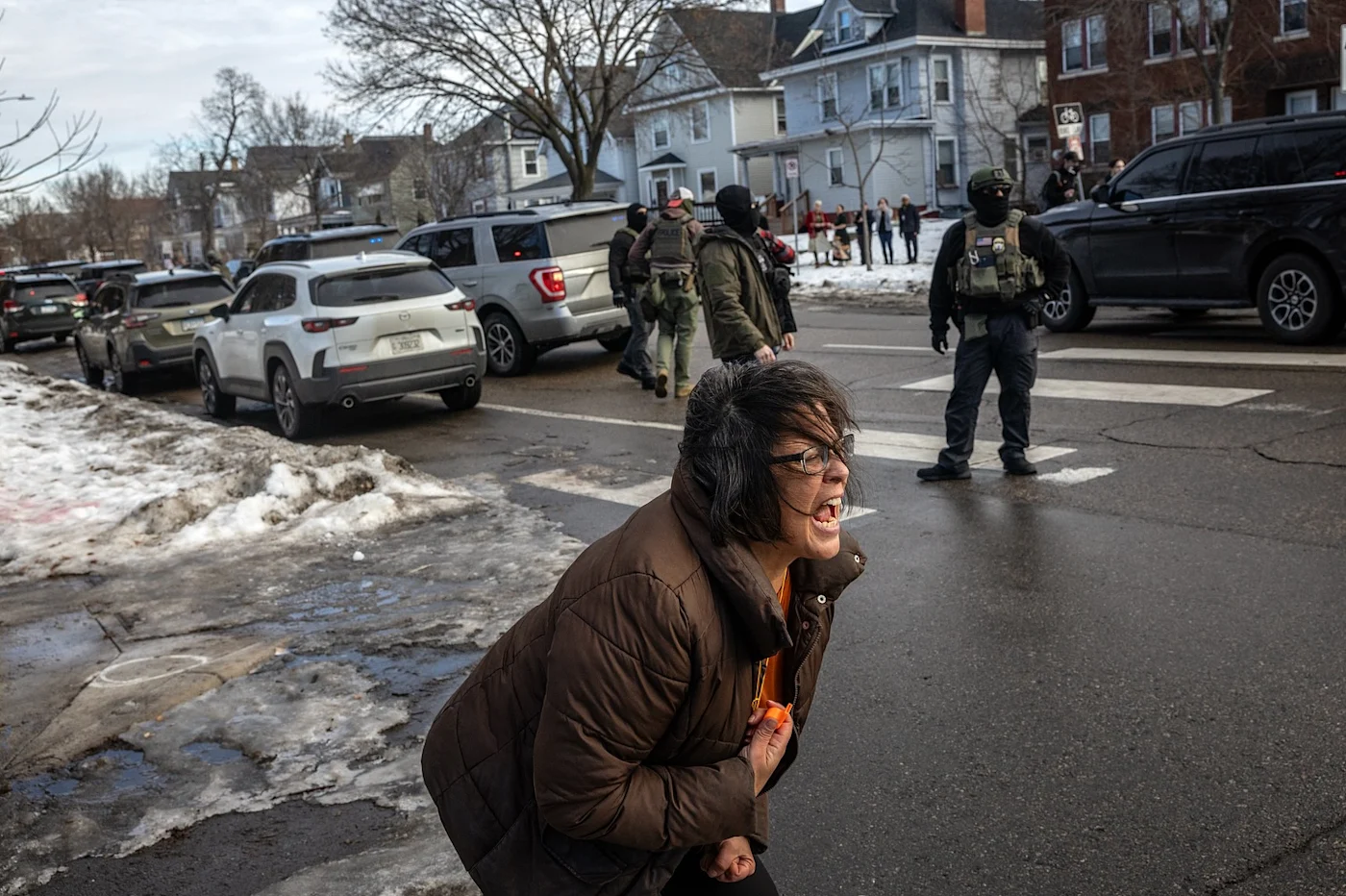
Already, completely unrelated to the protests, US citizens have been detained in raids and had the validity of their proffered birth certificates denied. Native Americans have been held for days — used, in part, as leverage to force tribal governments to open their territories to the agency. This is not an exaggeration: in the besieged city, anyone who does not look white enough (and white in just the right way) must carry their proof of citizenship with them at all times, lest they risk being detained and abducted. This is, nearly word for word, the scenario that was prophesied by “radical leftists” at the advent of agencies like Homeland Security (DHS) and ICE, following the passage of the Patriot Act by a bipartisan coalition during the War on Terror. It was at this same time that the National Security Agency (NSA) gained new, wide-ranging powers. The first interagency operation to target “violent transnational gangs” was initiated in 2005 under Bush, and prefigures much of the language still used today. But the new security state was a joint effort. In fact, although initiated under a Republican administration, it was the Democrats who built these out into working agencies and vastly expanded their powers.
Both ICE and the DHS were rapidly expanded under Obama, who oversaw the largest surge in deportations and a major build-out of deportation camps, constructed in part through a $1 billion no-bid deal with private prison contractor Core Civic (at the time Corrections Corporation of America).5 In fact, Johnathan Ross, the agent who murdered Good, was hired into the agency at the height of this Obama-era deportation wave. The same years saw an expansion of NSA data centers, including the groundbreaking ceremony for the Comprehensive National Cybersecurity Initiative Data Center in Utah, which is perhaps the core of modern mass surveillance infrastructure.6 Similarly, it was the Obama administration that signed the first deals with Palantir to track cross-border crime, establishing the foundation for the firm’s now longstanding collaboration with ICE.7 Today, the company has been contracted to construct an app “that populates a map with potential deportation targets, brings up a dossier on each person, and provides a ‘confidence score’ on the person’s current address…”8 These were the same years when calls to “abolish ICE” first gained traction, alongside calls to roll back NSA surveillance programs and dismantle Homeland Security. Needless to say, these demands were dismissed by Democrats and Republicans alike as nothing more than the shrill complaints of stubbornly unrealistic radicals. Now, we face precisely the “reality” we were promised.
“The killer will be prosecuted…”
This lie is the lifeboat for those many millions who still cling to some shred of faith in a once-buoyant rule of law that, by any reasonable measure, has already sunk deep into the dark, thrashing sea. We’ll be told to wait, to let the system do its work, as if the sunken civic order will rise again. In reality, that order was always a temporary nicety, made possible only by the calm waters of a well-oiled imperial order. Thrown into crisis, the propriety of the state is always sacrificed to the seething of sheer power beneath. Those who base their faith in this propriety simply cannot make sense of the new world they find themselves in. What we are witnessing, then, is the slow and embarrassing twilight of the polite political naivete that defined an entire generation of liberals. Liberals are, fundamentally, a lawyerly species. Take away their legislation and lawsuits and you will be left with confused penitents struck blind by the grim horrors glimpsed briefly behind their shattered faith. In the immediate term, they will continue much as before, only more fervently. Presented with indisputable evidence of their political reality, liberals will cling even more strongly to the ruins of their collapsed civility, filing lawsuit after lawsuit, writing their representatives, going door-to-door to plead for middling Midterm candidates like sore-ridden zealots flagellating themselves as penitence for the plague.
Already, we’ve seen an endless stream of lawsuits filed against nearly every aspect of the Trumpist program. As of January 20th, 2026, there were a total of 253 active cases challenging the actions of the administration. Even when they win favorable rulings, however, these prove unenforceable. On the one hand, with decisive control over the Supreme Court as well as federal appointments across every relevant agency, any legal challenge can ultimately be quashed. Already, the Supreme Court has vacated the orders of lower courts on 17 occasions.9 On the other, executive powers can be mobilized to simply nullify legal decisions by fiat, either outright (through the proliferating series of backroom bidder presidential pardons, for example) or by pursuing the same ends via different channels. For example, when Kilmar Abrego Garcia’s deportation was ruled unlawful by a lower court (and in a rare case, the decision upheld by the Supreme Court), the federal government then sought to indict him on spurious charges in order to justify subsequent deportation attempts. Nonetheless, precisely because these cases do ultimately work their way through the courts and do, in fact, generate a certain amount of administrative friction, liberals are able to retain a magical faith that they might eventually succeed.
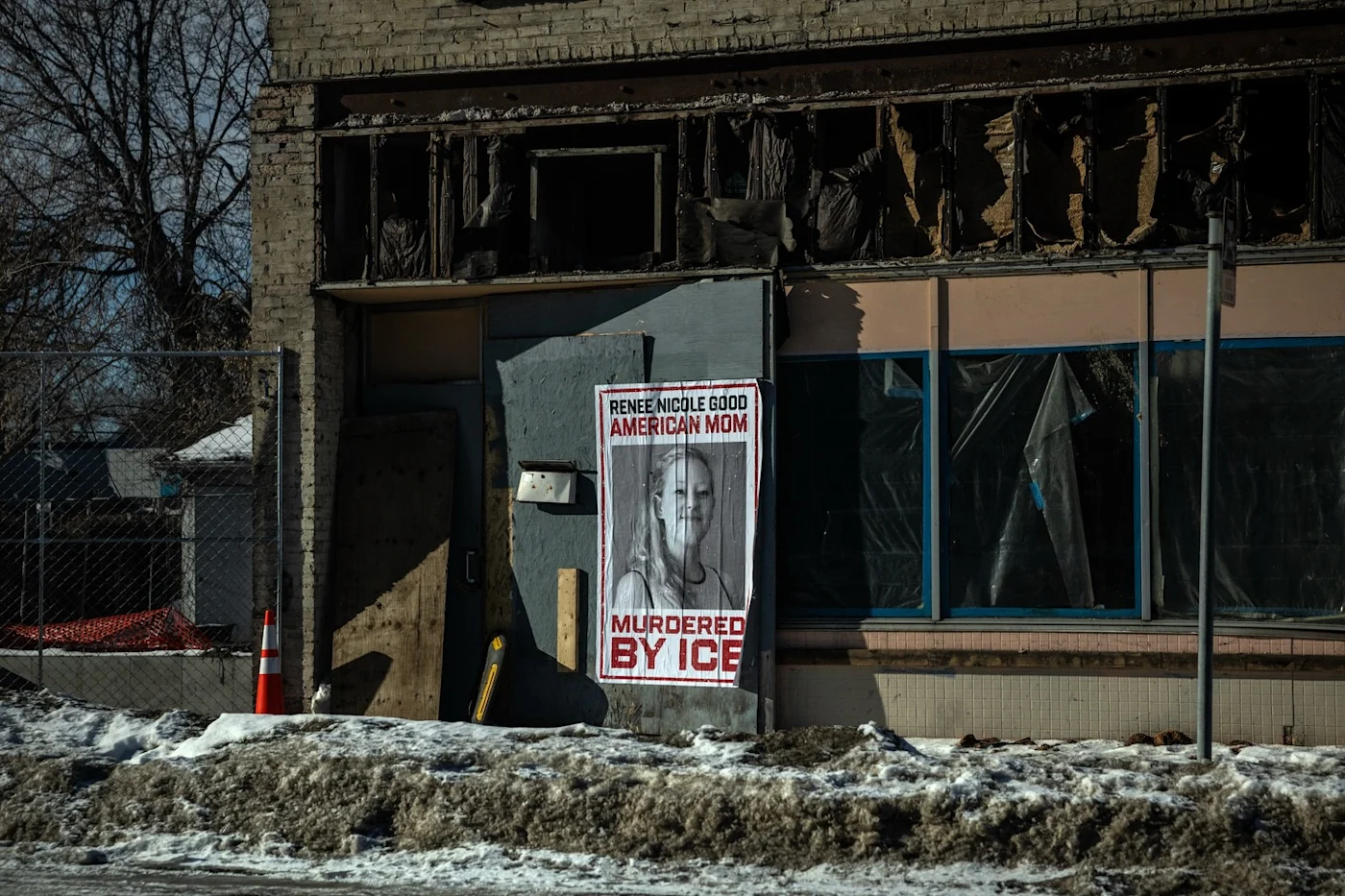
This all leaves little hope for a judicial response to the murders of Renee Good and Alex Pretti. Shortly after the killing of Good, Ross was evacuated from the scene, which was cleared with no logging of evidence or investigation. Similarly, other agencies were prohibited from securing the scene of Pretti’s murder. The Department of Justice has pursued no charges, nor have city or state officials. The regime has maintained that Ross and all its other mercenaries have blanket immunity. They have repeated outright lies about the killing of Pretti, immediately disproven by numerous videos. At this point, as with any police murder, charges will only be filed in any of these killings if there are mass mobilizations of sufficient scale and intensity. Peaceful parades, even if enormous in size or costumed as a “general strike” (yet which shuts down not one major employer in the city), have no path toward achieving this. At this point, there is simply no imaginable mechanism through which parades performing protest for the sake of winning political attention might encourage anyone in power to even bring these matters to trial. Assaults on enemy property, hard blockades, and strike activity might force such an outcome, as the riots did in the case of George Floyd several years prior. In this case, however, even a trial and a conviction could easily be nullified through presidential pardon and, if the January 6th cases are any indication, there is every indication that the executive would pursue it. The state can no longer be trusted to deliver even an imitation of justice. Liberals are left to weep, whipping their blistered backs in futile acts of penitence hoping to regain the attention of their delinquent god. Eventually, their boils burst and the plague takes them like the rest.
“ICE is not welcome here…”
Perhaps this is true in some spiritual sense — in the mind of the progressive politician convinced that, in their heart of hearts, ICE has no purchase. And yet, if you allow atrocities to be committed in front of you and take no substantive action to stop them beyond a strongly-worded speech and maybe a limp lawsuit or two, are you not, in fact, conceding in spirit as well? This lie has become a common refrain among local politicians. The mayor has said it. So has the governor. And, despite quite clearly being “not welcome,” ICE has made itself at home. The mercenaries roam the streets. They kick down people’s doors, told by their superiors that they do not need a warrant signed by a judge. The order is clearly unlawful, but that no longer seems to matter much.10 The only forces even remotely mobilizing against this invasion have been regular people, risking imprisonment, dismemberment, and death to face down the armed men sent to take their neighbors to prison camps. Robust community defense networks weave across the frozen city, rooted in infrastructure laid down by precisely those tireless “leftist extremists” the regime is so troubled by. Because of these networks, the mercenaries can rarely move without being tracked, rarely make a stop without being surrounded, and rarely take any action without being filmed.
Without a doubt, community response networks of this sort are among the most important forms of class organization that the US has seen in decades. As explained by Adrian Wohlleben:
With the construction of defense hubs, or “centros,” combined with other practices of autonomous tracking, stalking, and disruption, the current struggle against ICE has initiated a repoliticization of infrastructural intelligence, along with an inversion of its “cynegetic” orientation (from prey to predator). This fact, combined with the notable tendency to resituate the political back in spaces of everyday life, all point toward an overcoming of the limits of 2020…11
And yet it seems unlikely that even this distributed infrastructural intelligence embedded in the urban fabric of everyday life is sufficient. Though it is a necessary first step, the momentum of history often outpaces our efforts. To keep up requires a leap forward into the unknown.
“Get out and vote…”
We are faced with a grim reality: the invasion is here, the hallowed “resistance” of the political class never arrived, and the raw power that runs the world is visible for all to see. Democrats have already, across the board, refused calls to push for the abolition of ICE and have instead advocated their tired formula of bodycams and better training.12 Faced with all of this, how can such a simple lie persist? How could anyone be legitimately convinced that voting, in the midterms no less, would dampen the power of the regime? Nonetheless, even for the former liberal disabused of their faith in legal channels now chasing after ICE in their Honda Fit blowing their little whistle and brandishing their phone like a shield — and, despite the silliness of the image, legitimately risking death to do so — a residual faith in the electoral system will remain even after any belief in the judicial order has been shattered. Elections are, for the liberal, precisely the way that systemic wrongs are righted. They offer an avenue back into the legislative and executive realms from which power appears to be executed. Thus, seizing the legislature in 2026 and, hopefully, the executive in 2028, appear to be reasonable means through which the regime could be deposed and its wrongs righted. And yet, even for the now-mobilized liberal, fear shadows the back of the mind: what if this is, in fact, a lie?
The “get out and vote” illusion persists, in part, because the US has now devolved fully into what Ernst Fraenkel, a labor lawyer who lived through the rise of the Nazis, referred to as the “dual state,” in which the regime is able “to keep on track a capitalist economy governed by stable laws — and maintain a day-to-day normalcy for many of its citizens — while at the same time establishing a domain of lawlessness and state violence,” in the words of scholar Aziz Huq. In this two-track modality, a “normative state” marked by an “ordinary legal system of rules, procedures, and precedents” continues to operate, while alongside it a parallel “prerogative state” defined by “unlimited arbitrariness and violence unchecked by legal guarantees” becomes the norm in certain geographic areas or in the governance of particular demographic groups. For Fraenkel, this “lawless” zone does not negate the lawful one outright, but rather operates in tandem with it, even if the “two states cohabit uneasily and unstably” because “people or cases could be jerked out of the normative state and into the prerogative one” on a political whim. But the trend is clear: over time, the dictatorial “prerogative state would distort and slowly unravel the legal procedures of the normative state, leaving a smaller and smaller domain for ordinary law.”13
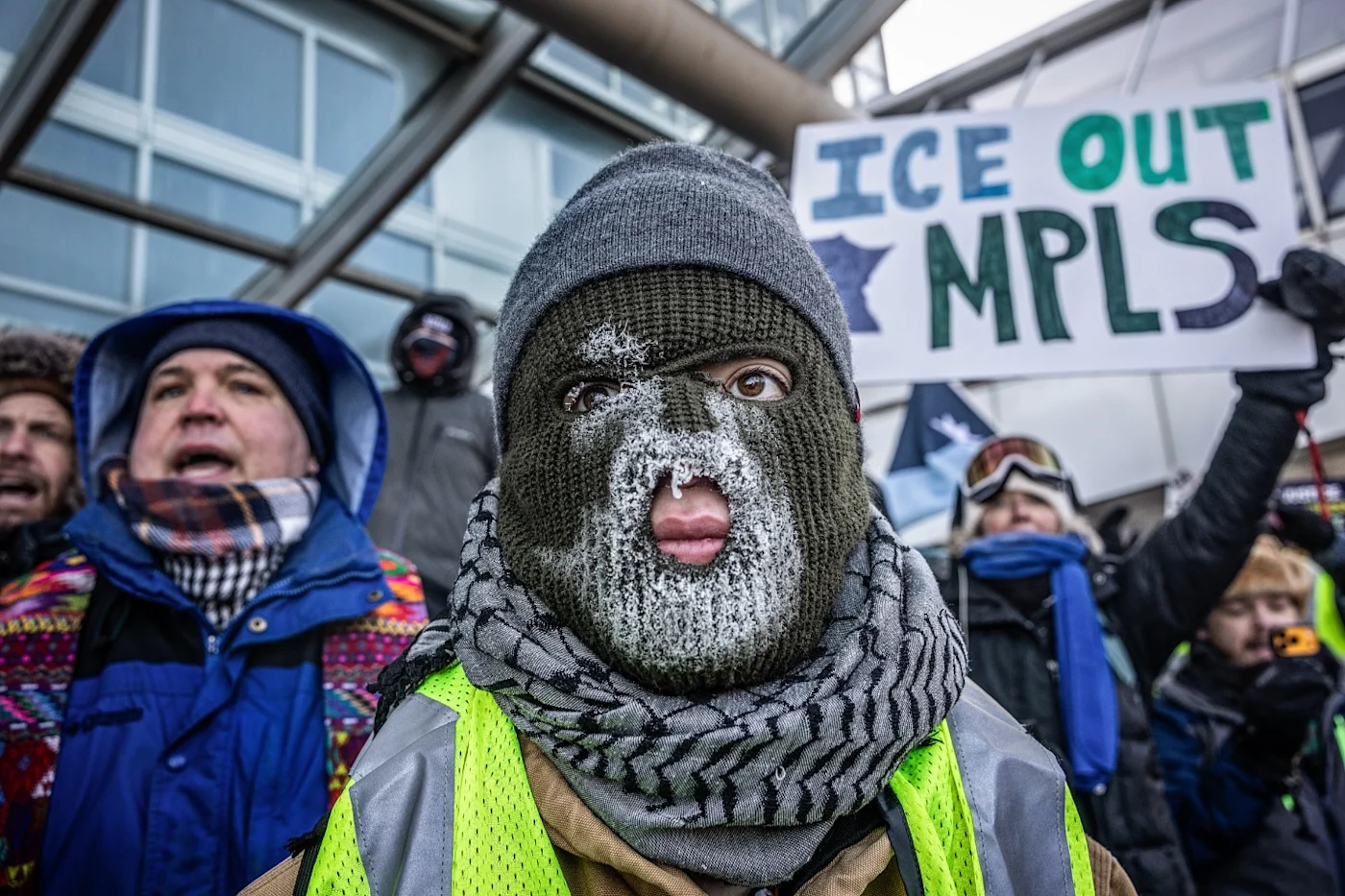
This is possible, in part, because social power does not operate primarily through the state. At its root, the power of the elite over masses of people is economic. The state and the entire political class that helms it is, ultimately, an emanation of this more fundamental form of class power, defined by control over social wealth. This is the key to understanding the apparently suicidal behavior of the regime: the state was never meant to serve as a universal representative institution defending the rights of “the people” in the abstract. It was always designed to be, in the end, a machine to negotiate between, and defend the interests of, the propertied elite. In certain periods of imperial prosperity, the general interests of the population are loosely in line with those of the elite. But these are temporary compacts. While Fraenkel, born and raised within one of these eras, sees the prerogative state as the exception, it is, in fact, closer to the historic norm. The mystery of the regime’s bizarre behavior dissolves when we view it as both a factional struggle between existing cadre of elites — in other words, as a mechanism of power and plunder deployed by certain fractions of capital against the populace at large, and potentially to the detriment of other fractions — and a frantic attempt by these elites, challenged by ascendant blocs of capital elsewhere, to set a strategic course that will see their power survive into an uncertain geopolitical future.
Perhaps the most important trend lying behind the emergence of a dictatorial dual state is this: even while inflation wipes out paychecks, and energy costs skyrocket within the everyday economy, the stock market has boomed to unprecedented heights. As a result, the fifteen wealthiest capitalists in the country gained nearly $1 trillion in wealth over the course of 2025 (from $2.4 trillion to $3.2 trillion), while all 935 billionaires in the US together now control twice as much wealth ($8.1 trillion) as the bottom half of the population (170 million people).14 Nor is this some Trumpist exception. It is instead part of a trend that has been building since the Obama era of the early 2010s — itself reviving a tendency that began in the late 1990s with the first dot-com bubble, before being paused by its collapse — and which accelerated to unprecedented levels not under Trump but under Biden. Altogether, the top .01% of Americans (around 16,000 elite families) now control some 12% of national wealth, three times as much as the same share of people controlled at the height of the Gilded Age.15 Despite continual warnings that Trump is “crashing the economy,” the reality is that the economy is working just fine. Given this grim reality, we must not imagine that electing Democrats across districts already gerrymandered like a butchered chicken would result in a regime different in any substantive way from the present one.
“Don’t give Trump an excuse…”
Here we arrive at the heart of the matter. Once the illusion of civility collapses, revealing the force and fraud of power as such, new lies emerge to serve classic counterinsurgent functions. Their purpose is to dampen the immediate response to the tyrannical state, to assist it in its repression by outing militant actors, and to hinder any preparation for what is to come. “Don’t give them an excuse,” “Don’t take the bait,” “Don’t give them what they want” — all paired with new conspiracy theories about pre-planted bricks and agent provocateurs. As in 2020, these lies center around the claim that fighting back against the invading army of mercenaries will ultimately give the government an excuse to invoke the Insurrection Act and impose martial law. This lie appears to have integrity because the regime has repeatedly threatened to do just this. But any trace of logic just as soon evaporates. What would a sufficient “excuse” look like, and why would a regime that has absolutely no compunction violating the constitution, falsifying evidence, and persecuting its opponents need such an excuse? Why not simply fabricate one? Federal officers have invaded a city and are actively assaulting and murdering civilians — this is already a form of martial law, just without the paperwork. More importantly, the entire goal of martial law is to enforce quiescence. Pre-emptively rewarding the regime with precisely what it wants does not so much avoid martial law as make it unnecessary. If people continue to refuse to be quiescent and the regime does ultimately invoke the proper normative powers to declare martial law, this will not be the fault of anyone other than the regime itself, regardless of what it chooses as a trigger.
But we also have to ask whether martial law is even necessary. As Fraenkel’s dual state model suggests, there is no single moment at which an elected government suddenly becomes authoritarian. Instead, prerogative forms of power coexist with normative ones and progressively expand their realm of influence over time. The siege on the Twin Cities is clear evidence that such a process is well under way. Peaceably lodging protests against prerogative power does nothing to halt its progress. We therefore find ourselves with a tradeoff: either do nothing but protest and record as the repression ratchets up slowly in the shadows, or resist openly and thereby force that repression to bare itself for all to see. The former carries fewer immediate risks. It can be justified as a strategic pause while we build our capacities. But such a claim then requires pointing to where these capacities are being built. Meanwhile, openly resisting carries huge immediate risks: mass arrests, the torture and targeted assassinations of activists, and opening the door to even more expansive deployment of prerogative power against a larger portion of the population. The key difference between the two is that open resistance at least carries with it the possibility of triggering the mass mobilization required to build popular power and overthrow a tyrannical elite, while petitioning through narrowing normative channels carries no such possibility.
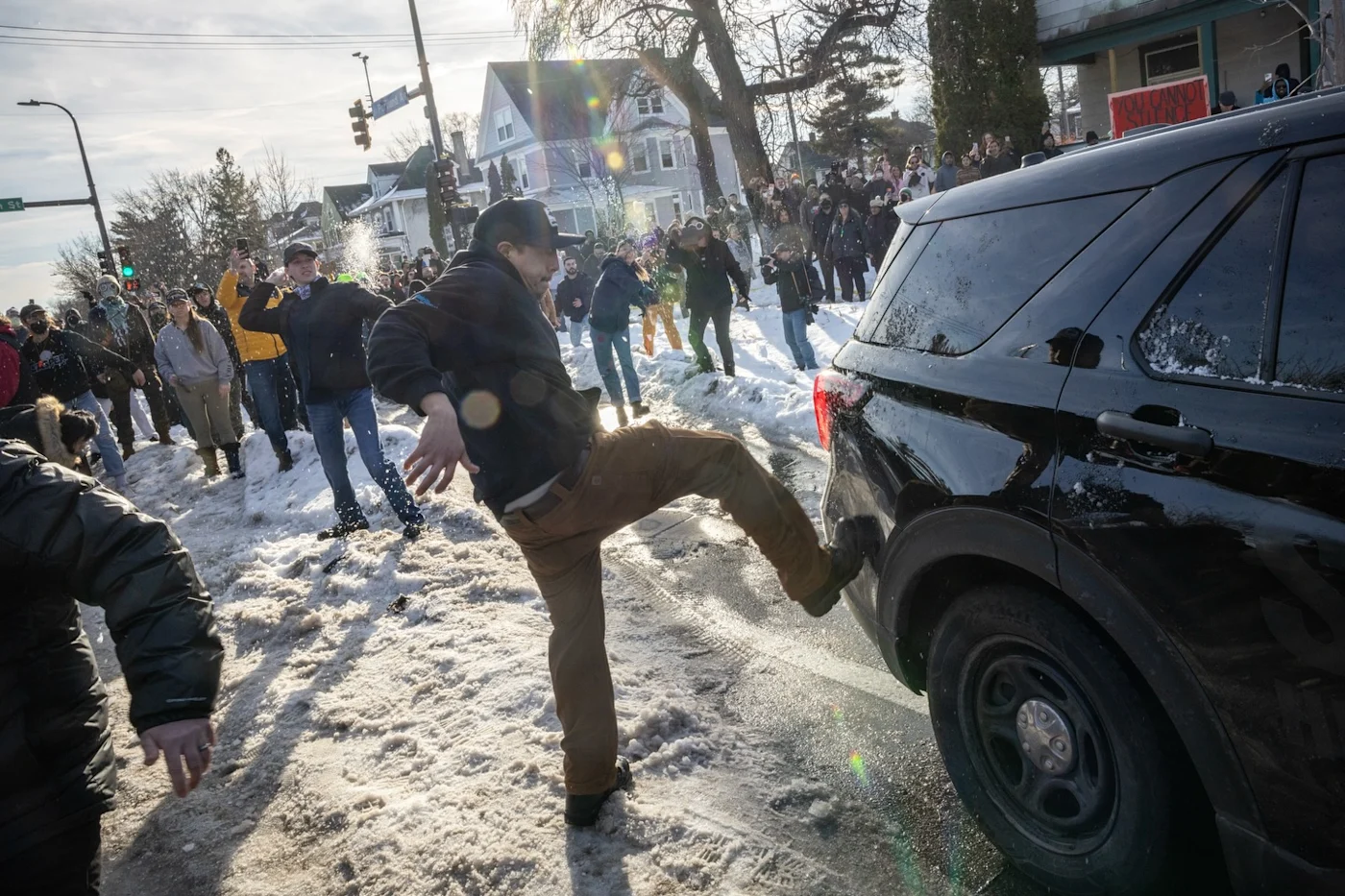
History clearly demonstrates that attempting to wait out the slide into deeper degrees of tyranny in the hope that the normative state will be restored through the intervention of its remaining adherents (in this case, Democratic politicians, certain centrist Republicans, and government technocrats like Jerome Powell) only further emboldens the elites who benefit from the prerogative order. The question is therefore twofold: First, what is to be done? Second, what will be done to us regardless? This is where the question of civil war emerges. American politics can itself be understood as always existing in a latent state of civil war. Under certain conditions, that latency then drops and the specter of a real civil war becomes broadly visible. Already in 2020, this “ever-present specter of a second, more balkanized, civil war” had entered into the public consciousness.16 The vision of civil war tends to track shifts in the deployment of state power, particularly in response to emancipatory upheavals. As explained by Idris Robinson:
The fundamental operation of the state works by warding off the ubiquitous threat of civil war. The State as such can be thought of as that which blocks and inhibits civil war. What is unique about this country is our singular emancipatory tradition, which is itself bound up with our understanding of civil war.17
In fact, the seemingly suicidal restructuring of the state into dual tracks is a standard means through which popular uprisings and other incendiary social conflicts are inhibited and the existing order restored.
In the past, prerogative powers were invoked precisely to ward off the specter of civil war and revolution. Since its passage in 1807, the Insurrection Act has been invoked at least 30 times by fifteen presidents, formally and informally. Similarly, martial law has been declared at least 68 times. Though both have been used to contain rightwing threats (particularly during Reconstruction and the postwar Civil Rights movement) or violent conflicts between groups of workers, by far the most common uses of federal military force have been the suppression of slave revolts, strikes, and other uprisings. One of the first major internal deployments of the US military was by the genocidaire Andrew Jackson to suppress Nat Turner’s slave rebellion in 1831. Similarly, the Insurrection Act was invoked by Rutherford Hayes to shut down the Great Railroad Strike of 1877, by Warren Harding during the Battle of Blair Mountain in 1921 — the largest armed uprising since the Civil War — by Lyndon Johnson in response to the riots that followed the assassination of Martin Luther King Jr. in 1968, and by George H.W. Bush in response to the uprising in Los Angeles in 1992.18 In other words, neither invoking the Insurrection Act nor declaring martial law necessarily signals an impending civil war or even the suspension of normative power.
“An agent provocateur started it…”
As the siege continues, the atrocities accumulate, and the pleas and protests of the progressive politicians prove them to be powerless, something will give. More and more people will take to destroying ICE property whenever they can. More and more people will see the necessity of shutting down and destroying the core economic infrastructure through which elite power operates. For example, UnitedHealth Group, headquartered in the Minneapolis suburbs, was one of the major donors to the Trump campaign ($5 million plus, alongside Musk) and is one of the major beneficiaries of Trump’s Project 2025 policies.19 Similarly, the Target corporation, also headquartered in the Twin Cities suburbs — and known for running one of the largest facial recognition databases in the world, sharing that data with the government — donated $1 million to Trump’s inauguration fund and has actively collaborated with the occupying force.20 As the police and national guard come in to support ICE, people will riot. Strike activity will spread. Eventually, when it becomes clear that ICE can and will kill you without consequence, someone will shoot back. This is when the final lie arises, telling us that the revolt itself was started not by the people but by “outside agitators,” undercover police, or even white supremacists.
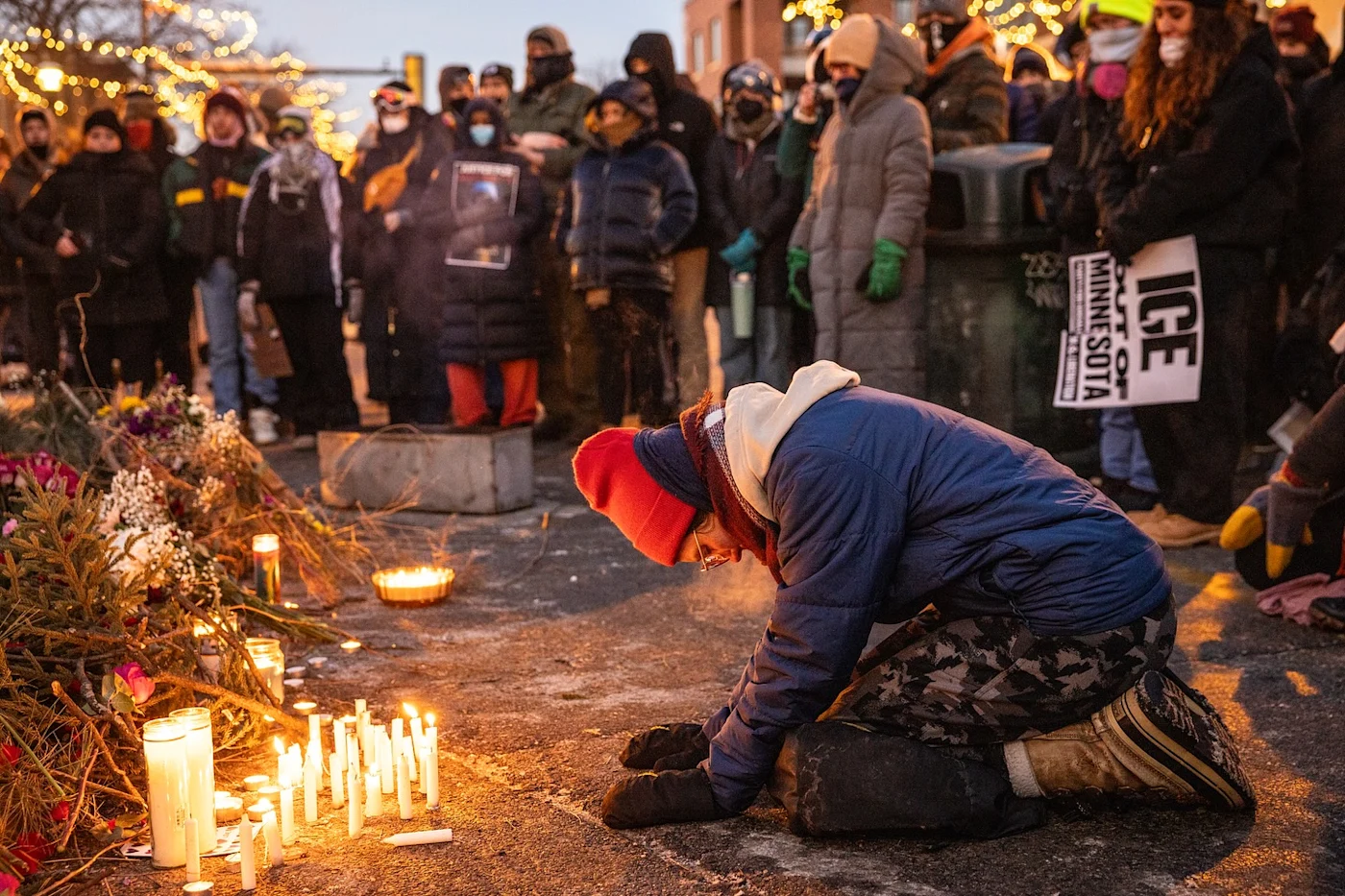
This lie has an old history, already well documented.21 And yet the lie persists, actively perpetuated by activists operating as self-appointed informants within any given movement. By claiming that any aggressive action taken against the enemy is performed by secret police agents, these de facto informants chase down, surveil, and sometimes detain protestors in order to hand them over to the police. Often, the police themselves encourage this myth, as during the George Floyd Rebellion in 2020, where rumors spread that the first window had been smashed by an undercover police officer or a white supremacist and the police then released an affidavit pretending to have identified him as a member of the Hells Angels, only to quietly drop the claim soon after — no charges were ever filed, while evidence from arrest records clearly showed that most arrestees in the riots were from the immediate area.22 Two other cases from 2020 demonstrate the consequences of spreading such rumors.
The first occurred in Seattle: after the police abandoned the city’s East Precinct, the area was occupied by protestors. Debates raged over whether the precinct would be set aflame, as in Minneapolis. Many claimed that any attempt to do so would be the action of an agent provocateur. Then, on June 12th, a man in bright clothing took it upon himself to try, piling debris up against the side of the building, lighting it on fire, and leaving. Activists on site put the fire out while others chased and filmed the man, claiming that he was an agent provocateur. Though he escaped, these activist-informants then posted these images online and promoted them until they were shared with police, who used the images to identify Isaiah Thomas Willoughby as the suspect. Willoughby pled guilty to felony arson the next year and was sentenced to two years in prison and several more years of probation afterwards. Soon, it was revealed that Willoughby was not an agent provocateur but was instead the bereaved roommate of Manuel Ellis, an unarmed man murdered by the police in neighboring Tacoma earlier that year.23
The second case took place in Atlanta: after Rayshard Brooks was killed by the Atlanta police outside a local Wendy’s, people from the surrounding neighborhood occupied the lot and subsequently burned down the building. Informant-activists immediately claimed that the arson was the act of an agent provocateur and scoured the internet to find videos of a white woman allegedly setting the fire, which were then handed over to police. The white woman was not an agent provocateur, however. She was instead Rayshard Brooks’ girlfriend and, because of these informants, she was charged with and found guilty of felony arson.24
This is not to say that undercover police or informants do not make their way into protests. There is well-documented evidence that they do. Similarly, federal agents do infiltrate activist groups, where they then suggest and help to coordinate highly illegal actions as a form of entrapment — this is absolutely something to be wary of within public assemblies and closed spaces for planning and preparation. But this does not take place in the midst of an active protest. As any veteran of political struggles in the US can tell you, undercovers placed into the midst of protests are almost always tasked with secretly recording, communicating with police on the other side, and, in certain cases, detaining participants preparing to throw objects or wielding weapons. In other words, undercover police perform much the same function as the informant-activists themselves. The ultimate purpose of the agent provocateur myth is therefore to get activists to play the role of counterinsurgents.
“We are outmatched…”
The final lie states that, even if we tried, there is no fighting back. This is the excuse already mobilized by the mayor, who has justified not mobilizing the police to hinder or investigate the mercenaries with claims that ICE would outnumber and outgun local law enforcement.25 Similarly the governor knows that calling in the national guard against a federal agency would be a criminal act, resulting in the federalization of state troops which, if this results in split chains of command, is conventionally seen as the most likely path to clashes between state and federal forces and, thereby, the start of a civil war — as is explained in a widely-shared article documenting simulations of potential civil conflicts run by academics at the University of Pennsylvania.26 And yet all of these accounts fail to grasp two key facts. First, they take the supposed opposition between “Democrats” and “Republicans” at face value and thereby overestimate the willingness of local politicians — many funded by the exact same corporate interests as Trump — to commit to anything even resembling a meaningful resistance to a federal invasion. Second, they assume that resistance must come from within the state itself, perhaps supported by affiliated institutions such as labor unions and nonprofits. In so doing, they completely ignore the role of a mobilized populace.
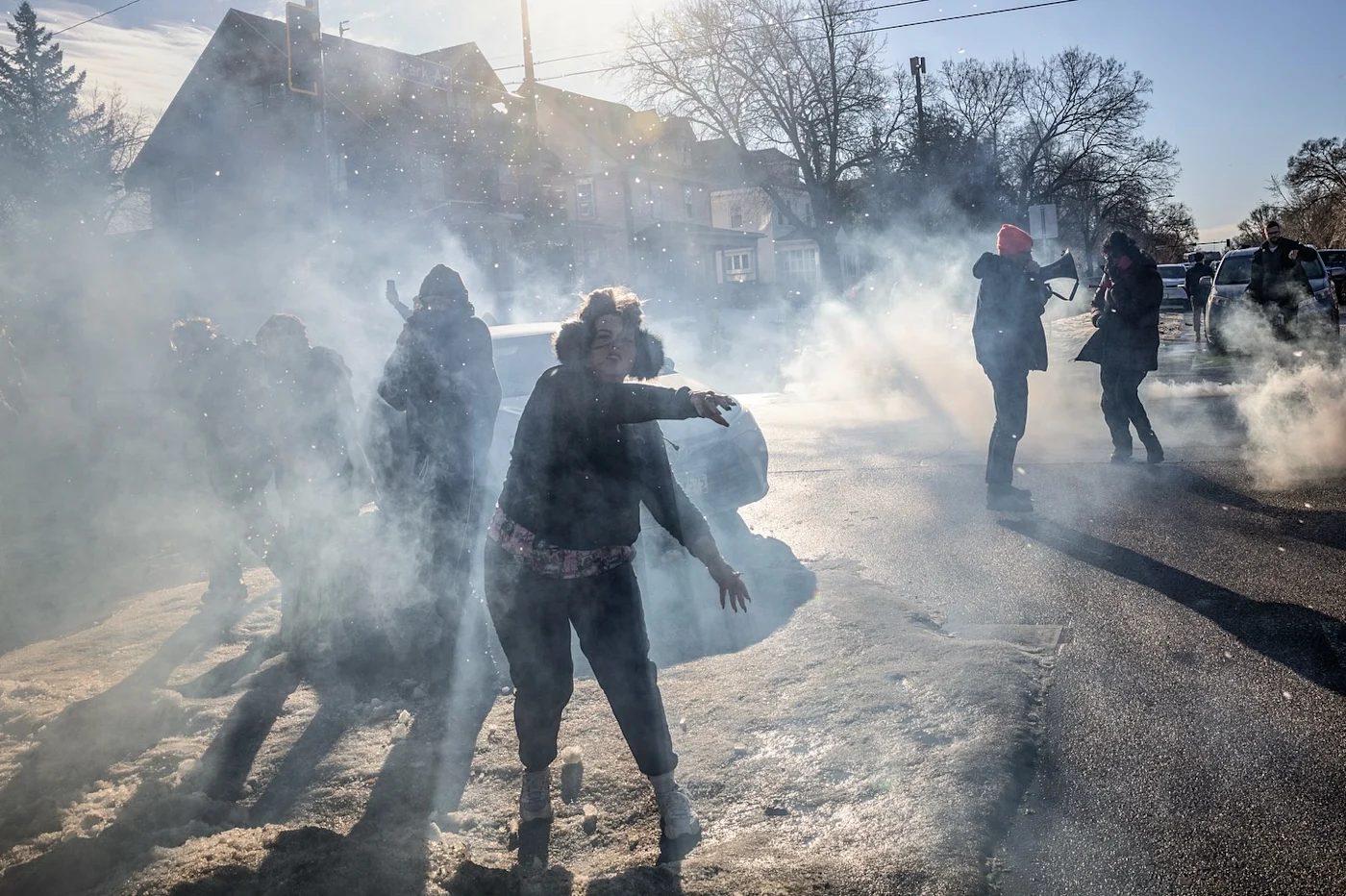
The prospect of an actual civil war arises when established, material conflicts between elites coincide with popular unrest, allowing the latter to serve as the vehicle for the former. Civil wars can escalate into revolutionary conflicts when their popular dimension is organized independently of these elites and takes on a partisan character — i.e., one that seeks not simply a redistribution of goods or rights within the existing system, but the social transformation of that system itself, toward emancipatory ends. Right now, the conflicts between elite groups are not at all sufficient to encourage any rebellion helmed by local politicians. There is very little likelihood that the simulated conflict between state and federal forces would actually take place unless triggered from the outside, which is to say by popular unrest from below. And this is precisely where existing predictions fail, refusing to take into account the prospect of a more general, society-wide conflict with occupying forces. The reality that liberal politicians are desperately trying to disguise is that the people vastly outnumber the invading force, that the power of the economic elites sitting behind Trump depends on working people, and, if even minimally organized, these people therefore have the ability to defeat the invasion on their own.
Images: David Guttenfelder
Notes
1. Peter Hart, “Trump’s Attacks on Jobs Numbers Are Noise – And Still Dangerous,” Center for Economic and Policy Research, September 23, 2025 (online here).↰
2. Leila Bengali, Ingrid Chen, Addie New-Schmidt, and Nicolas Petrosky-Nadeau, “The Recent Slowdown in Labor Supply and Demand,” Federal Reserve Bank of San Francisco, January 12, 2026. Figure 4.↰
3. Kilat Fitzgerald, “North Minneapolis ICE shooting: Children hospitalized after flash bang, tear gas hits van,” Fox9 KMSP, January 15, 2025 (online here). ↰
4. Identifying this response early on, Idris Robinson asserted the truth: “A militant nationwide uprising did in fact occur. The progressive wing of the counter-insurgency seeks the denial and disarticulation of this event.” (“How it Might Should be Done,” Ill Will, January 16, 2020 (online here).↰
5. Eric Levitz, “The Obama Administration’s $1 Billion Giveaway to the Private Prison Industry,” New York Magazine Intelligencer, August 15, 2016 (online here). ↰
6. Ingrid Burrington, “A Visit to the NSA’s Data Center in Utah,” The Atlantic, November 19, 2015. Online here. ↰
7. Palantir, “About Palantir,” Palantir, August 21, 2025 (online here).↰
8. Joseph Cox, “‘ELITE’: The Palantir App ICE Uses to Find Neighborhoods to Raid,” 404 Media, January 15, 2026 (online here).↰
9. Lawfare, “Trump Administration Litigation Tracker,” Lawfare, January 20, 2026 (online here). ↰
10. Luke Barr, “ICE memo allows agents to enter homes without judicial warrant: Whistleblower complaint,” ABC News, January 22, 2026 (online here). ↰
11. Adrian Wohlleben, “Revolts Without Revolution,” Ill Will, November 14, 2025 (online here). ↰
12. Mychal Denzel Smith, “‘Abolish ICE’ Is More Popular Than Ever. How Will Democrats Drop the Ball This Time?,” The Intercept, January 18, 2026 (online here). ↰
13. Aziz Huq, “America Is Watching the Rise of a Dual State,” The Atlantic, March 23, 2025 (online here). ↰
14. Sharon Zhang, “Top 15 US Billionaires Gained Nearly $1 Trillion in Wealth in Trump’s First Year,” Truthout, January 07, 2026 (online here).↰
15. Marcus Nunes, “The Great Reconcentration: Why America’s Ultra-Wealthy Now Control 12% of National Wealth,” Money Fetish, January 20, 2026. Online here. (The figure cited by Nunes 2026 uses the methodology established in: Emmanuel Saez and Gabriel Zucman, “The Rise of Income and Wealth Inequality in America: Evidence from Distributional Macroeconomic Accounts,”, Journal of Economic Perspectives, 34(4), Fall 2020 (online here).↰
16. Robinson, “How it Might Should be Done.” ↰
17. Robinson, “How it Might Should be Done.”↰
18. Joseph Nunn, Elizabeth Goitein, “Guide to Invocations of the Insurrection Act,” Brennan Center for Justice, April 25, 2022 (online here).↰
19. Ian Vandewalker, “Unprecedented Big Money Surge for Super PAC Tied to Trump,” Brennan Center for Justice, August 05, 2025. Online here; People’s Action, “UnitedHealth Will Be a Top Beneficiary of Trump’s Project 2025,” People’s Action, October 15, 2024 (online here). ↰
20. KPFA, “The Hidden Side of Target: Surveillance, Policing, and a Call for Scrutiny,” KPFA, February 20, 2025. Online here; Mike Hughlett, “Target gave $1M to Trump inauguration fund, a first for the company,” The Minnesota Star Tribune, April 29, 2025 (online here); Louis Casiano, “Anti-ICE agitators occupy Minnesota Target store, demand retailer stop helping federal agents”, Fox News, January 19, 2026 (online here).↰
21. Dave Zirin, “The Fiction of the ‘Outside Agitator,’” The Nation, May 03, 2024 (online here); Code Switch, “Unmasking the ‘Outside Agitator’”, NPR, June 10, 2020 (online here); Glenn Houlihan, “The ‘Outside Agitator’ Is a Myth Used to Weaken Protest Movements,” In These Times, June 03, 2020 (online here).↰
22. Logan Anderson, “Who was Umbrella Man, who smashed windows before ‘first fire’ in 2020 Minneapolis protests?” The Minnesota Star Tribune, May 30, 2025 (online here).↰
23. Mike Carter, “CHOP protester who pleaded guilty to arson was Manuel Ellis’ housemate, lawyer says,” The Seattle Times, June 09, 2021 (online here); US Attorney’s Office, “Tacoma man sentenced to two years in prison for early morning fire in ‘CHOP’ zone,” United States Attorney’s Office Western District of Washington, October 05, 2021 (online here).↰
24. For an overview of the protests in Atlanta, see: Anonymous, “At the Wendy’s: Armed Struggle at the End of the World,” Ill Will, November 09, 2020 (online here). For the legal aftermath, see: Kate Brumback, “2 Plea Guilty in Fire at Atlanta Wendy’s During Protest After Rayshard Brooks Killing,” Claims Journal, December 07, 2023 (online here).↰
25. Tim Miller and Anne Applebaum, “Anne Applebaum and Jacob Frey: Using Lies to Justify Violence,” The Bulwark, January 09, 2026 (online here).↰
26. Claire Finkelstein, “We ran high-level US civil war simulations. Minnesota is exactly how they start,” The Guardian, January 21, 2026 (online here).↰