See ICE? Add Heat
Anonymous
Yesterday, Trump’s border czar Tom Homan announced the end of Operation Metro Surge, which brought several thousand ICE and CBP agents to the streets of Minnesota over the past few months. While this drawdown may appear as a victory in the sense that it was made possible by the scale and tenacity of the resistance, it can also be seen as a tactically advantageous retreat of an occupying force that had become mired in a battle that was spiraling out of control.
As with our previous article, the present text emerged from within the heat of that battle. It was first circulated in print format in the weeks immediately following the murder of Alex Pretti in Minneapolis by federal agents. While the compromise it foretold has indeed come to pass, it still holds value in warning against the temptation of returning to normal, and the consolidation of counter-revolutionary forces.
As the dust begins to settle on the situation, it is our hope that the text can contribute to a better understanding of how the “insurgency” unfolded, and what felt possible to certain participants within it.
Writing in times like this can easily feel like nothing more than a vanity. And yet, history has, in its peculiar way, burdened us with the task of clarifying the present. Maybe there truly is “something in the water” up here. Only from within the clouds of tear gas enveloping our cities are we capable of grasping the truths of our time. Those truths that centuries of political, legal, and economic machinations have endeavored to conceal.
1. What is happening in Minnesota is not a social movement. It is not a sequence of demonstrations. Nor can it properly be called an uprising. Twenty thousand march through the frigid avenues of downtown, of uptown, of southside; a few hundred assemble, evoking the nostalgia of yesterday’s black blocs, to perform their spirited vandalism. These events obscure more than they reveal, they punctuate more than they define. The truth is that our inherited political coordinates utterly fail to register the matter at hand. What is taking shape is a slowly-evolving insurgency that seeks to defeat the invasion of an occupying force: ICE.
The terrain of this insurgency is the entire metropolitan fabric, unbeholden to any itinerary of protest. Rather, the conflict remains latent until it erupts, spontaneously and irregularly — eruptions that occasionally spiral into bonafide riots. It’s not that every encounter is so combative, but that every encounter contains the possibility of combat, a fact the occupiers themselves are only too aware of.
True to their name, the federal agency was quick to adopt the same principle typical of contemporary revolts — that is, to be water. Abandoning large-scale raids that are more vulnerable to confrontation, ICE agents travel across the city in small groups, attacking their targets with speed and precision that minimizes their exposure to resistance and reduces their attack surface as much as possible.
And yet the insurgency has responded in kind, developing networks of surveillance to track and disrupt these movements with startling efficiency. Simply stepping out of their vehicles will draw a crowd in minutes, if one wasn’t already following them. ICE agents can’t so much as eat or sleep without the possibility of being confronted by opposition forces. Traces of chemical irritants waft from one neighborhood to the next as scattered conflicts persist unabated. While everyday life may be defined by the possibility of violence posed by the occupiers appearing anywhere at any moment — so too can these skirmishes that continue to break out at a relentless pace.
When the fluid motion of the federal agents is frozen in place, the insurgency has been quick to take advantage. What could have been another nameless abduction sparked an intense night of rioting when someone who refused to be a victim fled to friendly territory, and his pursuers were ambushed. Firing on their attackers, the agents soon found themselves drowning, gasping for air as Mao’s infamous sea threatened to overtake them. Left behind were several vehicles containing personnel information, internal memos, and guns. Everyone knew what to do.
A not dissimilar scene unfolded after ICE agents executed a man that had confronted them in the street. Burning barricades immediately criss-crossed the neighborhood, bottles and rocks exchanged for tear gas under the morning sun. Under siege for hours from all directions, law enforcement once again had no choice but to retreat. Barricades would return to the fore over the following weeks, being used as makeshift checkpoints to monitor for ICE. The neighborly veneer of these checkpoints both concealed and facilitated the insurgent reclamation of space they put into practice.
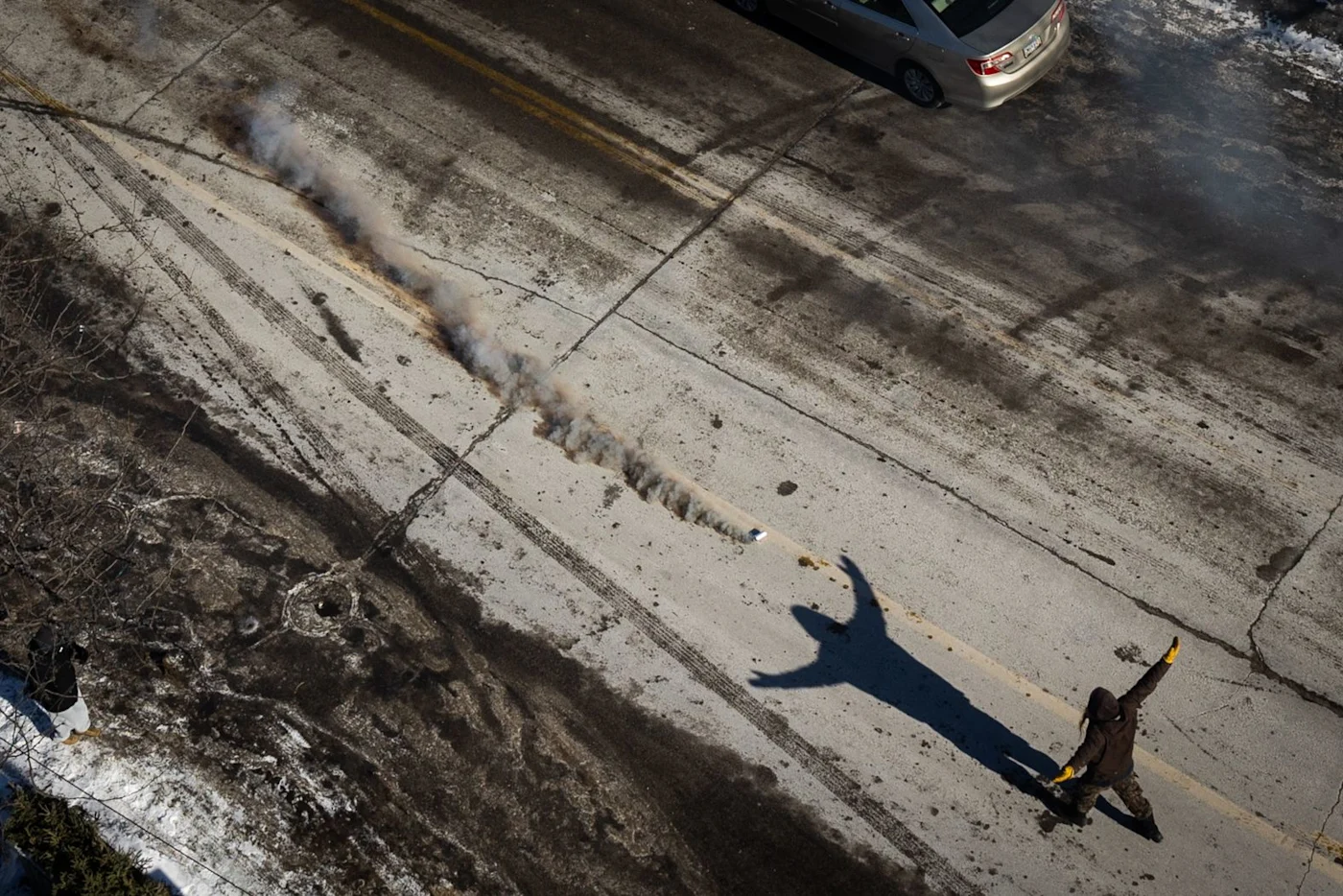
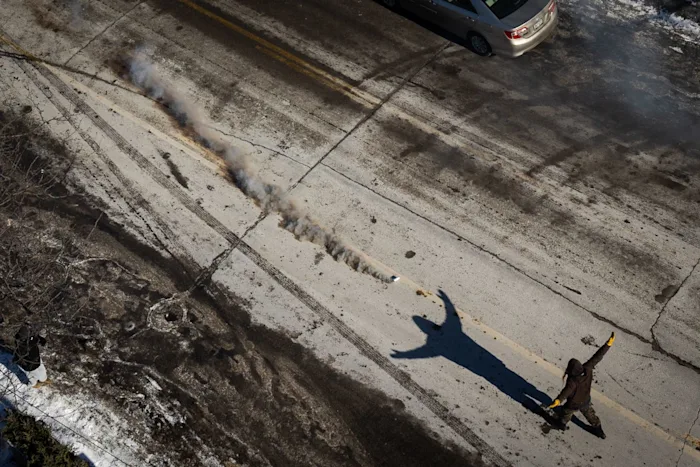
2. This is America, our destiny has always been civil war. It is inseparable from the history of revolution in this country. “Is this a Fort Sumter?” muses the governor. The specter is conjured only to banish it — “we’re not going to outgun the federal government.”1 Yet such words only serve to further confirm the reality: this country has never in our lifetimes been as close to unraveling as it is now.
Donald Trump is not wrong to cast blame upon the state and local governments for enabling this insurgency to unfold. A previously inconceivable complicity, from the governor down to the local officials, by way of just about every NGO, has made resisting ICE in meaningful and practical ways the most popular path for every citizen to take. Every yard sign or bumper sticker signals a willing accomplice and potential combatant.
Despite all appeals to the contrary, there is no loyalty to the fictions of law and order on the ground. Life for a great number of people has come to revolve around directly impeding the ability of the federal government to operate in the territory. While that may take law-abiding forms for many — some of whom even seek to impose their inhibitions on others — the truth is that Minnesotans far and wide have come to the conclusion that the fight for human dignity and freedom takes precedence over any legal code. We are all the “worst of the worst.”
The myth of the United States has been irrevocably shaken, and a lifetime of apparent certainties can be no guarantee of its perpetuation. The task at hand is to identify and apply pressure to the fault lines that run through this country. “What is certain is that this country is already beginning to break and fracture, and it is up to us to break and fracture it further, into so many pieces that it can never be put back together again.”2 Our enemies are vulnerable, and we may never have a better opportunity to shatter their unity than right now. We would hardly be the first to suggest that there may be no other way to make revolutionary transformation possible in America.
The specter of civil war has completely invaded the psyche of the occupying forces as well. The masks they wear hide not only their identity from potential retaliation at the hands of insurgents, but also the fear and paranoia that has saturated their lives since arriving on our winter streets. The regime makes promises it can’t keep to entice ever more dutiful recruits into the meat grinder of Minnesota. “Minneapolis is our Baghdad” is not merely the hyperbole of a burnt out officer.3 Immigration enforcement has long ceased to be the mission; they are now contending with an insurgency.
ICE, your government has abandoned you. They have ordered you to die. It is a very good idea to leave a sinking ship. You know you cannot win this war.
3. The more legible the specter of civil war becomes, the more clearly its contours come into view, the more we hear about the possibility of compromise.
The popularity of the coming compromise should surprise no one. Righteous rhetoric only disguises the desperation felt, deep down, to return to normal. This desire for stability, for comfort, is not the exclusive purview of the liberal. This torpor infects every one of us and must be warded off at every turn.
Civil war is an abyss. To dive in requires giving oneself over to the complete unknown. There are no guarantees besides the fact of being terrifying, exhilarating, and dangerous — yet our lives are already on the line. What we do know is that somewhere in that abyss is the possibility of true freedom. We believe it’s worth it.
We know what will happen if we don’t make the dive: a return of the daily misery of work, rent, boredom. A return to economic precarity, police brutality, drug addiction, and environmental catastrophe. A return to story reacts from friends you haven’t talked to in years, swiping endlessly on dating apps, and doomscrolling. Netflix, Super Bowl, Venmo, Zoloft. This is not merely a habit of the privileged, but a psychological crutch all but the most destitute can cling to. The hellworld we know is easier to accept than charging forth into an undetermined future. At least normality includes getting to watch Anthony Edwards.
Americans, more than anyone else, are the true embodiment of the dispossessed. The mixture of jealousy and fear felt toward the immigrant expresses nothing but resentment for all we have lost. From Mogadishu to Yangon, we find humans brave enough to dive into the abyss in their struggle for dignity. If the Allepos of the world are invoked at such a distance, as a kind of boogeyman standing-in for the terminus of all social conflict, this is only to disguise the possibility that we too could be so brave. As one of the greatest thinkers of our time once said: “the implicit humanity and lived experience of revolt does indeed eclipse whatever the world has to offer.”4
Ultimately, we don’t have a choice. America is not going to last. The fissures exposed in Minnesota are deep wounds in the body of this country. No compromise will make them go away, but only hide them from view, for shorter and shorter periods of time. We will have to make peace with the abyss, because it will overtake us one way or another. The question is: will we descend on our own terms, or cower until there is no longer ground beneath our feet?
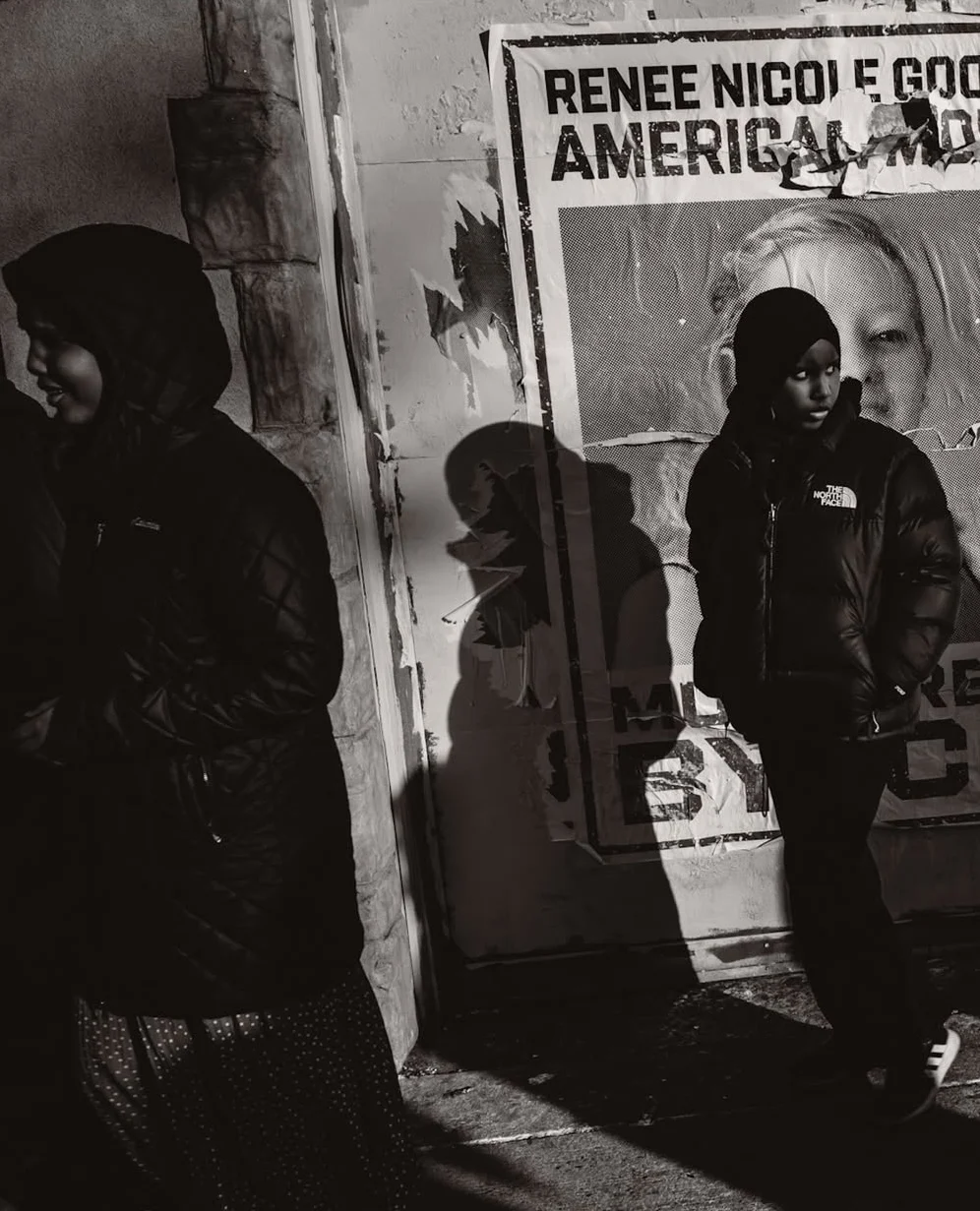
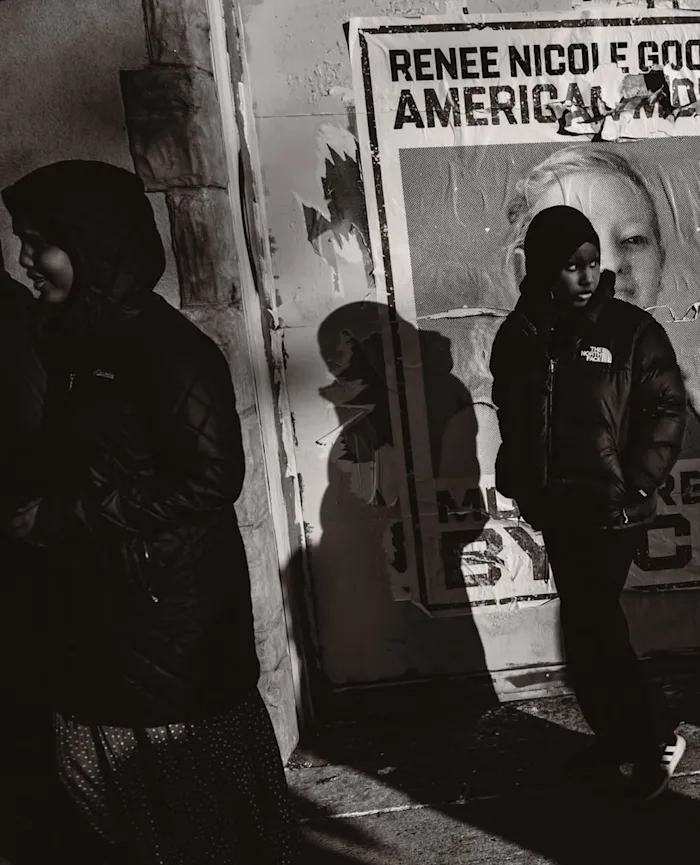
4. Those who make a revolution halfway only dig their own graves. This insight from the French revolution remains as true today as it was in the eighteenth century. Our path is forking: on one side lies the route of civil war; on the other, if civil war is averted, a still bleaker road.
In rebuking the federal occupation, politicians like Walz, Frey, and Ellison have become figureheads in the fight against ICE. Given the breadth of the composition of opposition forces in Minnesota, there is no clearly defined line between institutional and revolutionary parties. What this means is that if the situation stabilizes the institutional forces will not only remain in power, but be able to act with a renewed legitimacy. That this stabilization would involve collaboration with Trump’s repressive policies only paints a crueler picture.
In other words, if the occupation ends, what we will be left with are much stronger state and local governments, with a more robust system of repression and deportation alongside an ever more loyal base of support. Dissent will be buried underneath the statues built of our valorous resistance leaders in office.
A federal agent, bleeding from his face, cries “where is the local police department?” The MPD, once a unanimous enemy of a united city in flames, has had success in rehabilitating their own image as well. The federal occupation has hand-delivered an external enemy against which they reclaim their place as supposed protectors of the people. This “synecdoche” of domination has allowed Chief O’Hara and other officers around Minnesota to distance themselves from ICE at every turn.5 Still, they have arrested protesters, helped agents shake their tails, and fired their fair share of tear gas too.
It doesn’t stop there. The rapid response networks, exploding in popularity and sophistication the past months, could just as easily return to their genesis in policing as cleave to their insurgent fidelity. During the George Floyd uprising, those molecular neighborhood watch groups prefigured much of what has been put into practice today: tracking out-of-state license plates in search of so-called “outside agitators,” patrolling their block for people out after curfew, protecting their favorite businesses from vandals, looters, and so on.
While they currently wield surveillance as a subversive practice, the aimless persistence of such networks into a post-siege Minnesota, in the absence of an occupying force, could signal their practical inversion. In this scenario, the revitalized liberal state would then have at its fingertips a mass, communitarian arsenal of ancillary policing, capable of elaborate operations across the metropole. Long after ICE leaves, should these networks continue to operate, it does not take a great stretch of the imagination to figure out who could become their next targets.
This wretched future can only be averted by going all the way. We will not be satisfied to rout the federal occupation. The entire order of the world must be demolished, top to bottom. America is on its last legs: everything must go.
Image credits: Ben Hovland, Stephen Maturen, John Abernathy
Notes
1. Isaac Stanley-Becker, “Tim Walz Fears a Fort Sumter Moment in Minneapolis,” The Atlantic, January 28, 2026 (online here); Lulu Garcia-Navarro, “‘A Terrifying Line Is Being Crossed’: Mayor Jacob Frey on the Turmoil in Minneapolis,” New York Times, January 31, 2026 (online here).↰
2. Idris Robinson, “How It Might Should Be Done,” Ill Will, August 16, 2020 (online here).↰
3. Ken Klippenstein, “ICE Unloads,” Ken Klippenstein, January 26, 2026 (online here).↰
4. Idris Robinson, “The revolt eclipses whatever the world has to offer,” Tillfällighetsskrivande, May 24, 2021 (online here).↰
5. Liaisons, “Warning,” The New Inquiry, September 9, 2020 (online here).↰