Venezuela and the New Division of the World
Colapso y Desvío
Other languages: Español, Deutsch
Many are saying that we are seeing the dawn of a new era. This claim is not wholly incorrect. However, the present era did not begin this week, as some have dared to suggest.1 What we are witnessing is rather a further bolstering of the necropolitical modus operandi of the world’s major powers. The intervention in Venezuela (given the name “Operation Absolute Resolve”) is one important step in a lengthier process of restructuring the globe that began taking shape during the suppression and subjugation of the previous cycle of uprisings (2019-2022), and which would later include such milestones of civilizational barbarism as the Israeli bombardments in the Middle East and the war in Ukraine.
The abstractions on which Western liberal democracy is based are collapsing beneath the weight of bombings, territorial occupations, and political persecution. National sovereignty, international law, and the separation of powers are proving dispensable in the current stage of capitalist development, a fact further confirmed by Donald Trump's almost absurd yet entirely calculated lack of diplomacy. Today, capitalism cares nothing for appearances; the democratic order is casting aside its ideological trappings and revealing itself for what it always was: the persistence of foundational violence. Today’s episode in Venezuela serves as yet another vivid reminder that democracy was imposed on our continent through lead, looting, and forced disappearances.
To fully understand the events that have had the greatest impact on the world in the last five to six years, we must recognize the present as merely one moment of a global counterrevolutionary process, where war, in its various forms, extends everywhere.2 No nation stands outside of this process. War permeates them all in a generalized way, even if unequally, not in the classical form of war between nation-states, but a war against the population, against “narcotrafficking,” against “uncontrolled immigration” — in short, against whatever the new enemy apparatus of the moment is deemed to be. What is occurring right now in Venezuela encapsulates this process of global civil war, itself the product of a broader phase of capitalist decomposition that mobilizes the various factions of the international bourgeoisie in a desperate race for survival. Global civil war, as an ideal form of the most diverse forms of warfare of the past, emerges as a response to capitalism's historical needs to ensure the minimum prerequisites for its reproduction. As Rodrigo Karmy observes,
This is why our era is none other than the era of global civil war. It was never about Hamas or Hezbollah, it was always about us. It is we, as a population, who are the primary target of warlike aggression; it is we who, for whatever reason and under whatever circumstances, can be deemed undesirable and annihilated, as is the case today with Palestine and Lebanon.3
The geopolitical reorganization of the world
As the current personification of capital's suicidal logic, Trump has been the principal promoter of this process on a world scale. Like his counterparts in the region (Milei, Kast, Bolsonaro, Bukele), he is not merely conscious of the structural crisis of capital, but also instrumentalizes it, transforming it into the driving force of his politics, its very justification. The dispute over natural resources among the world's major powers has less to do with a “new Cold War” than with a new division of the world between China, Russia, Israel and the United States: a new Treaty of Tordesillas for the 21st century.4
Six centuries ago, Spain and Portugal, the world’s major powers, sought to avoid entering into frontal conflict with one another, while legitimizing their colonial projects in the Global South. Today, China, Russia, and the Israel-US duo all recognize the threat that each poses to the other's regional hegemony. The only possibility for negotiation between these powers is based on the acceptance of non-intervention in each other's respective zones of control. This situation makes it unlikely that a war will break out between them. However, this multipolarity is not an “anti-imperialist democratization of international relations,” as some enthusiasts would like to believe.5 Just as the absence of direct conflict between Spain and Portugal resulted in centuries of genocide against the native population, this new division will mark out new arenas of conflict and intensify those already active.
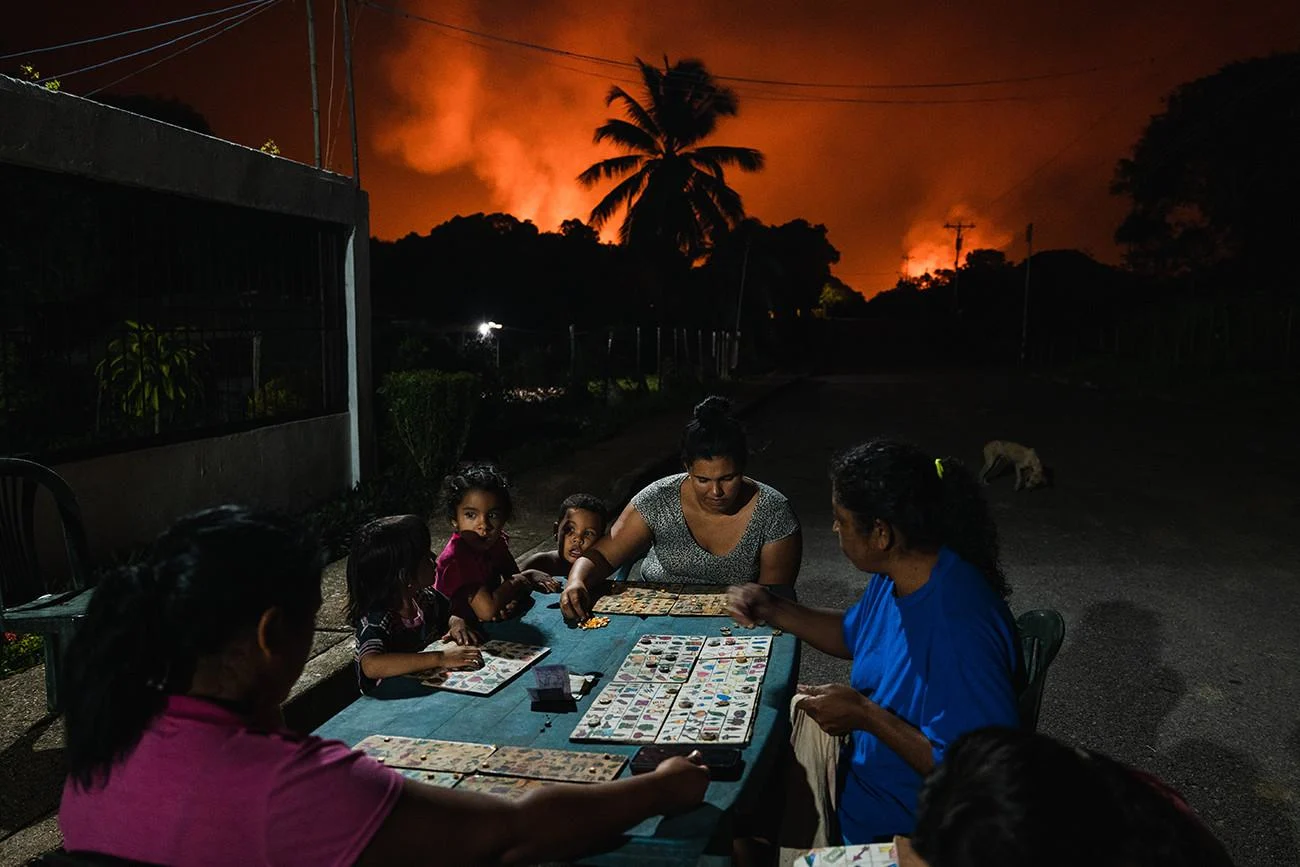
The situation of the major economies of Europe and Asia (excluding China) and the emerging powers, such as India, Iran, and Saudi Arabia, is radically different. The relationship between the United States and the old continent has been more than tense, most recently challenged by the US’ threat to seize Greenland. Europe has also been left behind in the talks on Ukraine and Palestine. The United States doesn’t bother to recognize its authority, just as Trump meets with Xi Jinping and Putin whenever he wishes. While this new division of the world will mean that China, Russia, and the United States can be sure that they will maintain autonomy and continue to deepen their control over their respective territories, the other major economies can no longer secure their respective interests through diplomacy and international law. European rearmament is a response to this mounting uncertainty, in which Russia's threat to the continent continues to grow, yet European countries no longer have the unconditional support of the United States.6 Seen in this light, the failed coup attempt in Burkina Faso, just hours after the intervention in Venezuela, comes as no surprise. Europe wants to claim its share of the spoils, and must now do so by the same means as the United States.
Following the military intervention in Caracas, which resulted in the kidnapping of Nicolás Maduro and apparent submission over the government of Delcy Rodríguez (the newly appointed interim president of Venezuela), US interests in Venezuelan oil appear to be secured, along with the controlling strategic position that its territory commands in the region.6 At the same time, territorial disputes over Greenland and Mexico may develop in a similar way: with US control over their natural resources, territories, and trade routes, through threats of military intervention and tariff wars. The old Monroe Doctrine is being updated to provide the current forms of US fascism with their geopolitical foundation.
Following the intervention in Venezuela, Trump quickly extended the threat to the governments of Cuba, Colombia, and Mexico, adding to those previously made against Lula in Brazil. The United States' show of force effectively demonstrated what could happen to any country in the region. Colombia, Chile, and Brazil, some of the first countries to react, are more than aware that this threat could be realized not only as a direct confrontation with the United States, but also as a deepening of a humanitarian crisis that will generate new waves of migration, which these countries are no longer able to cope with.7
Control of the Western Hemisphere — but especially the American continent — combined with a strict regime of austerity and a generalized deterioration in the living conditions of the proletariat in the United States, appears to be the national security strategy for partially confronting the effects of the structural crisis of capital. Even if it cannot ultimately overcome this crisis, such a strategy may allow the extravagant lifestyle of the bourgeoisie to continue. The surface appearance of the American empire is once again being revitalized through war and neocolonial expansionism. Meanwhile, it seems that neither Russia nor China will do anything for Venezuela, just as Trump will not act against Chinese expansion in Taiwan and Tibet, nor against Russian expansion in Ukraine. The lines of division appear to have been drawn, and each power is beginning to impose order upon its own backyard.
Internationalism and anti-imperialism
The narratives of multipolarity, along with the hopes that local “sovereignists” had placed in emerging economies (BRICS) to rival the US empire, now appear utterly unfounded. Both Russia and China will happily sit down and reach agreements with the United States, as we have recently witnessed, just as countries in the Middle East sit down with Trump to discuss the situation in Palestine.8 Furthermore, the statements made by Trump and Marco Rubio regarding Delcy Rodríguez, the Vice President of Venezuela, suggest a negotiated solution between the bourgeois factions of Chavismo and the government of the United States.9
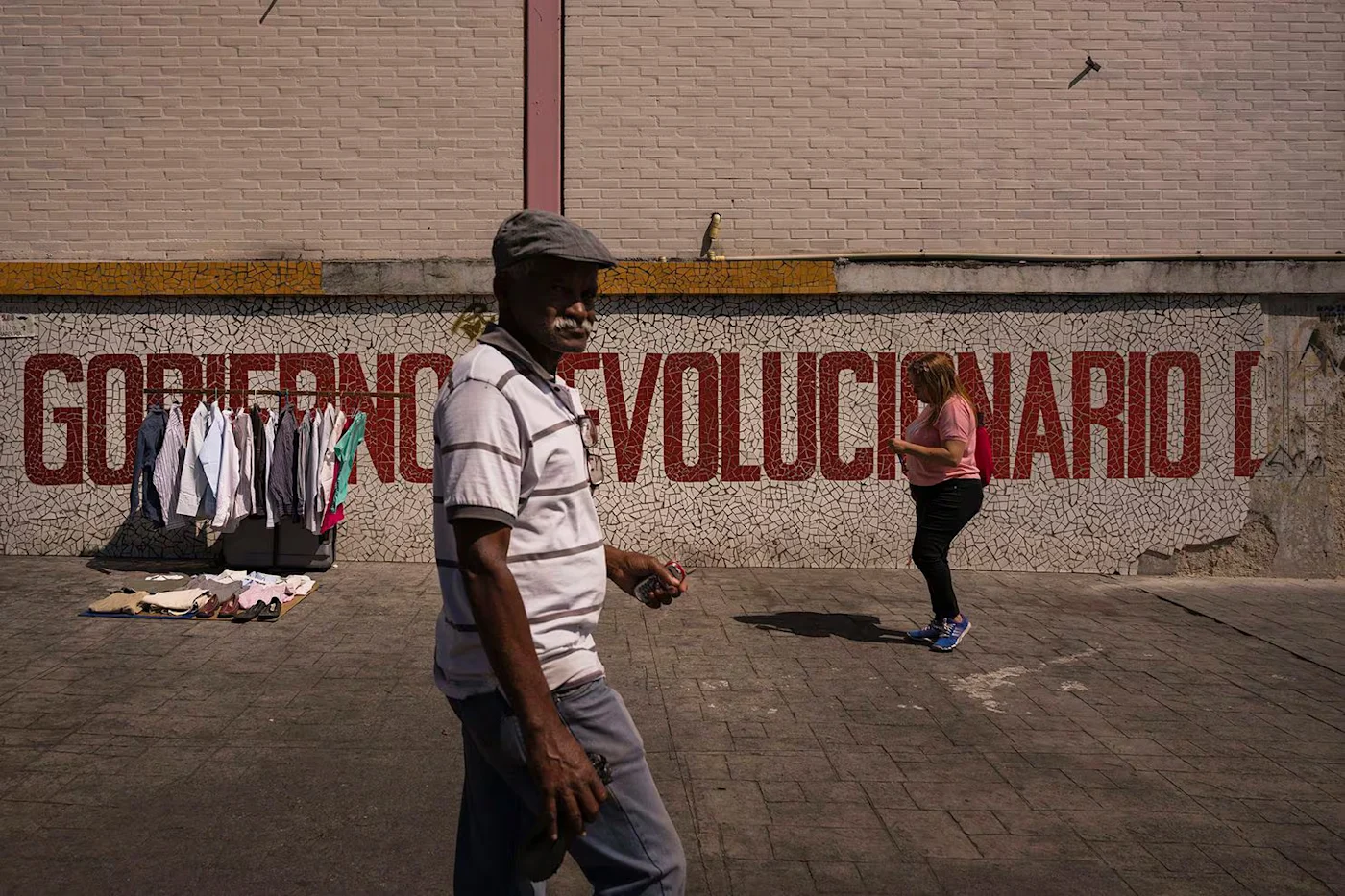
Here as elsewhere, opposition to imperialism, particularly against its present form, cannot be equated with pragmatic support for the opposing imperialist pole. To reduce imperialism to a question of “good” and “bad” nations is to erase the social conflicts that unfold within each of them, constructing a fantasy nation-state in which an homogenous concept of “the people” flourishes apart from the various class, race, and gender relations that determine it. If we allow this mistake to take hold, a rejection of Russia risks becoming an embrace of the Ukrainian government and NATO, just as a rejection of the United States risks becoming an embrace of the national bourgeoisies of the so-called “Bolivarian revolution.”10 The defense of the Venezuelan proletariat must not be equated with the defense of the government responsible for worsening its living conditions, nor can a communist perspective stem from the defense of the basic categories of capital, of the homeland, value, the state, and gender roles. As the Venezuelan group Proletarios Revolucionarios wrote eight years ago,
The current situation in Venezuela demonstrates the failure of “21st-century socialist” governments to successfully manage the crisis of capitalism. The trouble is, capital and its crisis are ungovernable: it is capital that governs society and therefore the state, not the other way around. To believe otherwise is naive, while attempting to do so is reformist.11
However, the answer cannot be as simple as making a symbolic appeal to proletarian internationalism. The regime's inability to ensure the minimum conditions for the reproduction of the labor force has intensified class fragmentation and clashes between different segments of Venezuelan society. The proletariat in the country is divided into various subclasses and hostile ideological camps, a phenomenon exacerbated by the geographic divisions between those living in cities and those situated elsewhere. Even among the regime's supporters, there is a distinction between those who still enjoy the privileges of the government (the so-called “bolibourgeoisie”) and those abandoned to conditions of misery, who subsist on informal work and remissions from family abroad. As Rolando Astarita wrote nearly a decade ago,
The shortage of medicines has reached 85%, while the Ministry of Health has not published mortality statistics for three years. The president of the Venezuelan Medical Federation claims that hospitals have only 4 or 5% of the medicines that patients need. Queues for food, medicines, diapers, and other basic necessities take up many hours of Venezuelans' days and, in several cases, have ended in violence, looting, or attempted looting.12
The support of the Bolivarian National Armed Forces and the most important figures of Chavismo for the government of Delcy Rodriguez signals an attempt to avoid exposing a power vacuum that could be exploited by the Venezuelan opposition, which no longer seems to have Trump's open support, nor does it seem to need it so long as Rodriguez supports US interests in the country. Despite this attempt to maintain normalcy, Chavismo cannot turn a blind eye to the absence of Nicolás Maduro and the suspicions generated by Delcy Rodríguez, making it easy to foresee the strengthening of the various factions in an internal dispute for political power in the short term. The resistance against US interference that emerges from sectors of the civilian population, the armed forces, and grassroots territorial organizations will not only be forced to confront the Venezuelan right wing, drug cartels, and the US armada, but also those sectors of Chavismo currently in government and their paramilitary forces, who are currently making deals with Trump.

Although the experience of popular organization that emerged from the Community Councils and Communes, as well as from mass protests against hunger (as in 2014), could hypothetically be reactivated to address the organizational and self-defense needs of the Venezuelan proletariat, it would be ridiculous to refer to this as a unified and conscious subject. The conditions of subsistence they face have severely deteriorated their capacity for action and divided their ranks. At the same time, Chavismo has done everything possible to eliminate every form of organization independent of the state, through “blacklists, the assassination of union leaders, the dismissal of state workers disloyal to Chavismo, and the manipulation of union elections.”13
But how can this solidarity be realized from other countries? The strategy adopted by pro-Palestinian mobilizations around the world provides an initial clue for solidarity with Venezuela: bring the war to our territories. However, despite the mobilizations and occupations of universities, the genocide in Gaza continues at the time of writing. Solidarity with Venezuela is much less widespread than that for Palestinians, especially now that the US has created the narrative that it is liberating the country from communism.
Therefore, solidarity actions in both the United States and South America must prioritize a more direct strategy, focused on the military and oil industries, which will enable them to cope with the lack of mass support. Above all, it must be understood that the United States' attack on Venezuela is not only a matter of defending sovereignty, but also an openly declared threat to all countries in the region, confirming their participation, whether consciously or not, in the current forms of global civil war.
A shorter version of this text was first published January 3rd, 2026 in Spanish on Colapso y Desvio.
English translation by Ian Alan Paul.
Images: Adriana Loureiro Fernandez
Notes
1. For example, see: José Gabriel Palma, “Venezuela y el nuevo ‘orden’ internacional,” Ciper, January 6, 2026 (online here). ↰
2. “It is war insofar as it presupposes the impossibility of reconciliation, of coexistence; capital understands only one form of existence, and that is its own. And it is global insofar as its condition of possibility lies in the universalizing form of capitalism in its phase of total domination.” Nueva Icaria, “New fascisms and the Reconfiguration of the Global Counterrevolution,” August 11, 2025 (online here). For a further exploration of the notion of global civil war, see the work of Maurizio Lazzarato and Tiqqun. The analyses of the EZLN and the Kurds also address the ongoing nature of a world war, albeit with certain differences. According to the EZLN, this new world war (the Fourth, according to them) shares several constants with those which came before: territorial reorganization, the destruction of the enemy, and the administration of conquest.↰
3. Rodrigo Karmy Bolton, “Palestine’s Lessons for the Left: Theses for a Poetics of the Earth,” Ill Will, November 3, 2024 (online here).↰
4. In 1494, the Treaty of Tordesillas was concluded between the representatives of Isabella and Ferdinand (monarchs of Castile and Aragon) and those of King John II of Portugal. Its purpose was to divvy up the New World (America) and the routes across the Atlantic Ocean, as a means to avoid conflict between Spain and Portugal.↰
5. Kavita Krishnan, “Multipolarity, the Mantra of Authoritarianism,” The India Forum, December 21, 2022 (online here).↰
6. In her first message as president, Delcy Rodriguez, who was outside the country at the time of Maduro and his wife's capture, announced that her government would work together with the United States to achieve the country's development. Meanwhile, a couple of hours earlier, Donald Trump warned that Rodriguez would “pay a higher price” than Maduro if she did not act in accordance with Washington's interests. R. Martinez, “Delcy Rodriguez calls for cooperation with the United States in her first message as acting president of Venezuela,” La Tercera, 2025 (online here).↰
7. Colombia and Brazil immediately reinforced their borders after the US intervention in their neighboring country, as did Chile, which, although it does not share a border with Venezuela, is considered a favorite destination for the Venezuelan diaspora.↰
8. At the press conference on January 3, Trump was quick to reaffirm the good relationship he claims to have with Xi Jinping and Putin: "I have a very good relationship with Xi, and there’s not going to be a problem. They’re going to get oil. We’re going to allow people to have oil. That will remain as it was, without changes. With Russia we’re also in negotiations and we’re going to come to a good conclusion. We understand each other incredibly well.”↰
9. Trump on Delcy Delgado: “She was just sworn in. But she was hand picked by Maduro. So Marco is working on that directly. He just had a conversation with her and she is essentially willing to do what we think is necessary to 'Make Venezuela Great Again.’” On the other hand, in November 2025, The Atlantic reported that there would be talks between the US government and Nicolás Maduro to negotiate his departure. However, there were differences on how to proceed with regard to Venezuela. While Marco Rubio preferred military intervention, Richard Grenell sought a diplomatic solution. If this were true, it would not be surprising if these talks had resumed with Delcy Rodriguez. Demian Bio, “Maduro Reportedly Open To Leaving Venezuela In Exchange For Amnesty And 'Comfortable Exile': Report,” The Latin Times, November 7, 2025 (online here). ↰
10. As Arya Sahedi lucidly observes, “[T]he ideological form of anti-imperialism is an incredible obstacle to building a renewed internationalism.” A. Sahedi, “The Anti-Imperialist Imperialism Club: On Left Internationalism and Iran,” Heatwave, Vol. 2, 2025 (online here). ↰
11. Proletarios Revolucionarios, Venezuela: “Crisis, protestas, pugna política interburguesa y amenaza de guerra imperialista,” Materiales x la emancipacion, April 22, 2017 (online here).↰
12. Rolando Astarita, “Socialismo siglo XXI, crisis y poder militar,” Revista Trasversales no. 38, June 2016 (online here).↰
13. Astarita, “Socialismo siglo XXI.”↰